Wisdom shared in passing the baton between generations
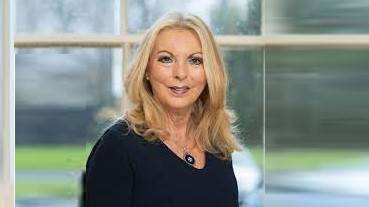
Eithne Scott-Lennon says her sons will continue to uphold Fitzpatrick Castle Hotel’s values of hospitality and excellence.
Taking on the responsibility of running a treasured icon can be a heavy weight on younger shoulders — but one where hard-won family advice can make the transition a more seamless process.
Ireland’s tourism sector accounts for a significant portion of the nation’s employment, and continues to reap rich rewards due to the hotel pioneers back in the 1960s and ‘70s who laid the groundwork for the solid foundation of today.
Being in business for over half a century is a major milestone by any standard, and especially when it comes to the third family generation taking the reins.
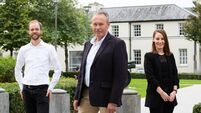
Hoteliers and brothers, Mark and Joseph Scott-Lennon, are now taking control at Dublin’s Fitzpatrick Castle Hotel in Killiney. The two sons of retiring chief executive Eithne Scott-Lennon have plans to invest €10 million in the hotel over the next five years, in addition to the €2 million already spent enhancing the venue over the past five years.
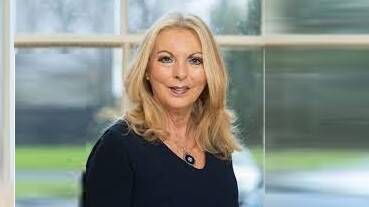
“This hotel has been more than a business to me,” Eithne explained. “It has been a labour of love filled with countless memories. As I retire from my role as owner and chief executive, I have every confidence that Mark and Joseph will continue to uphold the values of hospitality and excellence that have defined this establishment for generations to come.”
Having celebrated its 50th anniversary during the pandemic, the castle first opened to guests as a 13-bedroom operation in 1971, then run by Paddy and Eithne Fitzpatrick. Coming on the market in 1970, Eithne’s father Paddy saw the opportunity to purchase the property as the chance of a lifetime.
“The place was derelict and none of the rooms were habitable — our parents took over a veritable wreck. I can remember physically making the curtains with my mum. To keep costs down, we kept as many jobs as possible in-house.”
By the 1990s, the family-owned hotels in Dublin, Cork, Shannon and New York. But when Eithne’s mother died suddenly, the family were forced to focus on succession planning.
“Each of us had to decide where our focus lay into the future, so Paul took over the Shannon Shamrock, John chose to grow the US business through our hotels in Manhattan, and I took over the Castle. We each had our different styles as hoteliers.”
As the third generation to take the reins, Mark is comfortable with the weight of tradition, and the efforts of previous generations to take the business to its current four-star status.
“My brother and I would of course be very aware of the risks taken by my grandad in buying the hotel in the first place, and the hard work it took to get it to where it is today. It has an established reputation that was carried on and added to by our mother, and certainly is something Joseph and myself would want to continue. We want to maintain the standards already set, and add to that by our ambitions for the business.”
Understanding the work ethic required in a 24/7 industry, Mark admits his decision to become the third generation came about organically: “In the beginning it was about earning pocket money during school and college, but over time I really developed a love of the business.”
Having gone on to take an Economics & Politics degree at UCD, he committed to the business full-time in 2009. After completing the management trainee programme at the Castle, coupled with a Masters in Hospitality Management from Dublin Institute of Technology, he also gained experience overseas in Canada and the USA — another tried and tested route for future management in family businesses.
“I have also been a member of the Irish Hotels Federation National Council and served two years as Dublin branch chairman and as vice-president for two years during the pandemic.” Fitzpatrick Castle is a family business that filters down to the staff — many of whom have been there decades.
“We are very fortunate in having great people, many of whom have worked with us for 30 and 40 years,” Mark explains of the one hundred and sixty full time and part time employees. “It’s the people who make a hotel, they come before the systems and the property — if you don’t have the right people in the right places everything suffers. Having so many people with us for so long has contributed hugely to the success of the hotel, and is a great sense of pride.”
Mark and Joseph Scott-Lennon look to the future with cautious optimism, carrying on the family business into the next half century. “We are a people focused business who try to go above and beyond for all of our guests, trying to create experiences that make their visit a memorable one. We have always been geared to exceed visitors’ expectations, and that will continue into the future.”
“Irish family businesses are each unique; in how they are structured, in how they operate and in the culture they embed,” says Aileen Stephens, private tax director, Deloitte.
“However, whilst each Irish family-owned business is distinctive, this community of companies are operating in a disruptive marketplace where the pace of change and transformation is rapid. Attracting, developing, and retaining talented workers and adapting to changing workplace environments are important agenda items to be a successful Irish family business.”
Based on a Deloitte partnered survey, the findings are clear: great experiences build connections, strong connections create loyalty and loyalty drives business results, she says.
“Organisations that prioritise their workforce with high impact initiatives are 1.6x more likely to achieve better customer outcomes. The message is clear — it pays to invest in your people.
"Creating a culture of employee development and promotion from within the organisation lowers staff attrition rates and provides employees with a clearly defined career path thereby encouraging a shared objective to grow the business.”
Structures that were originally in place in the early phase of a business's lifecycle will likely be outgrown as the business scales, and as such may not be sufficiently robust to provide for the growth of the enterprise and its workforce, Ms Stephens explains.
“Deloitte work with founding shareholders and / or next generations of the family members to assess and provide recommendations on how to bolster, where necessary, the structures that govern the key decision-making strategies and policies.”
The succession-planning process is a critical event in the life cycle of family businesses.
“The important aspect that can often be overlooked is the ‘process’ and it is through this journey that family businesses resolve what is the best succession plan for their unique business. The plan should be aligned to the DNA of the enterprise and to the aspirations of the family members.
“This can, of course, result in the next generation taking over the helm, or indeed can see the passing of the business baton to a professional CEO and or management team where the family members take on a more stewardship role.” Like all things in life and business, timing is everything, she points out.
“At Deloitte, we have the privilege of advising some of the most successful family businesses in Ireland. In these engagements we work with the founders, shareholders and wider family stakeholders to navigate the succession planning assessment process. In our experience, the earlier the process commences, the more likely the outcome delivers family harmony and a strong business driving forward.”
Deloitte has developed a unique offering centred on family business dynamics where they explore with families through a ‘Discovery Workshop’ the many facets and range of issues that should be explored.
“Two outcomes are never the same and there is no template solution — each family business is treated with the care, respect and expertise that it deserves.”
It is widely cited that 30% of family-owned businesses successfully transition from first to second generation. By the 4th generation, it is suggested that 3% of family businesses have survived.
However, when adopting the Deloitte formulated model, family businesses succeed through the generations — achieved through the deliberate management of several factors, including communication, transparency, family member equality, governance, structure and with a keen eye on the next generation development.
“Family harmony coupled with a thriving business is the ultimate prize, and at Deloitte we know that it's there for the taking. We see the world not just as it is, but as it could be — and we are here to help Irish family businesses on the journey of imminent change and to grow in success.”
CONNECT WITH US TODAY



Be the first to know the latest news and updates