Cork Chamber, championing Cork for 200 years
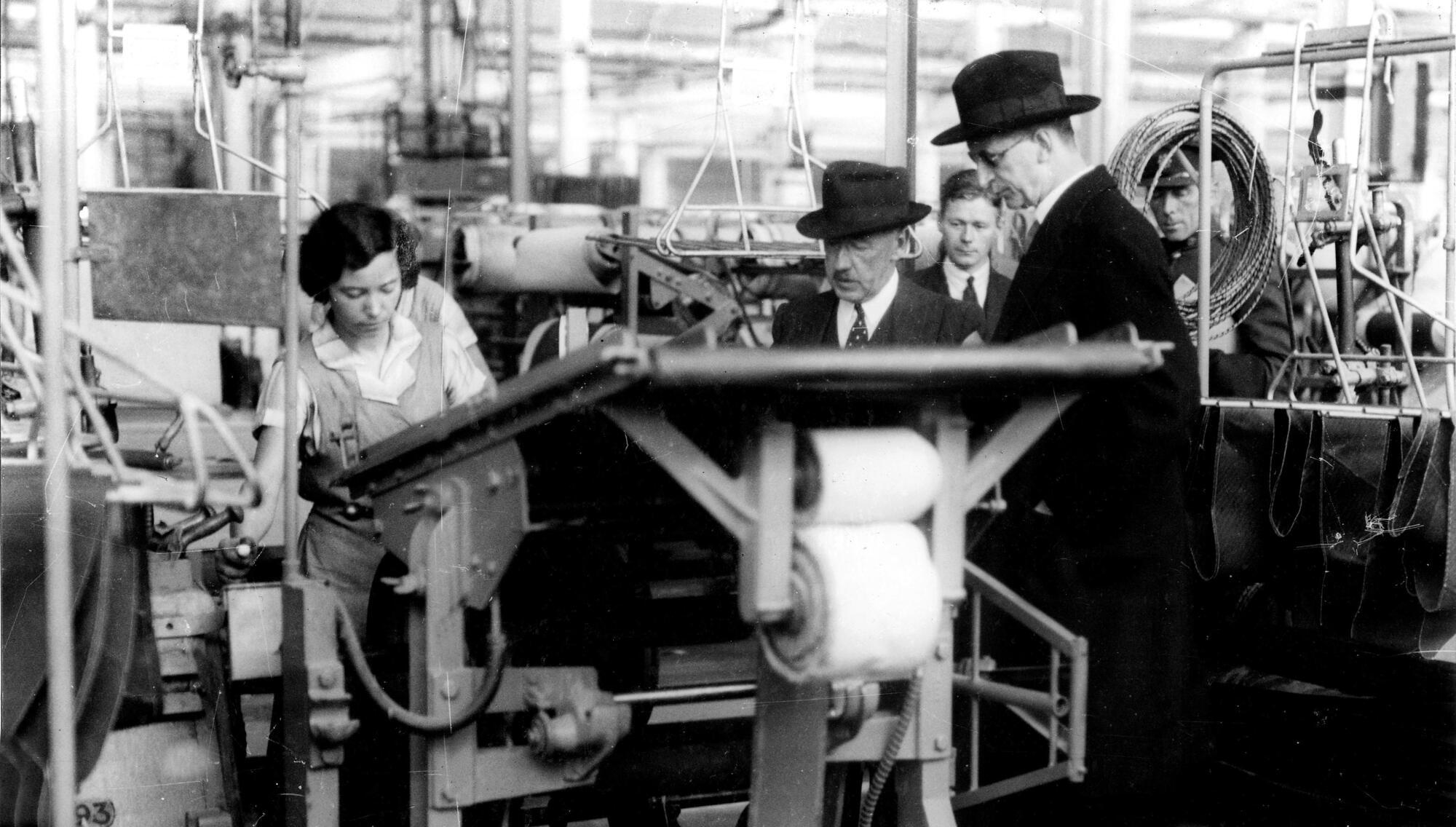
Eamonn de Valera visiting the Fords and Dunlops factories at the Marina, Cork, in 1936. Picture: Irish Examiner Archives
Established in 1819 the Cork Chamber of Commerce has consistently led a mission to be the leading business organisation in the Cork region.
For over two hundred years, it has committed itself to ensure the city and region's prosperity, vibrancy and competitiveness through sustainable development.
Researching the history of the institution through the rich archival material that has survived, every broad period of growth and decline has empowered the institution to carry on to challenge and resolve the issues of the day. The contribution has been immense.
Circa 1819, the Committee of Directors of the Cork Commercial Buildings Company made a rule banning campaigning on political or religious matters and possibly Catholic Emancipation.
This displeased
many of the subscribers who left and formed the Cork Chamber of Commerce. On 8 November 1819 a meeting of subscribers of the new chamber met at Mr Shinkwin's Rooms (later the site of the Victoria Hotel on St Patrick’s Street) to discuss the rules of governance, to be based on “liberal principles”. The meeting was chaired by Mr Murphy while Mr Alex McCarthy presided at the inaugural General Meeting of 13 November 1819.
Established in an economic decline and as a champion of Catholic Emancipation, the Chamber emerged not only to provide a physical space where its members could come and read the up todate news of the day and plan for the future, but also to challenge the status quo. It grew rapidly from 1819 to the Great Famine years campaigning for more rights for the Catholic merchant middle class and more investment opportunities.
Post the Irish Great Famine, the economic decline that followed led to the emergence of new forms of party politics being connected with the Chamber. The quest for Home Rule and the Irish National Land League campaign split the membership in the 1880s with the Incorporated Chamber of Commerce and Shipping appearing on the commercial landscape of the city.
The city now had two chambers that pursued issues such as the need for better and quicker transport modes and more business education. Both of these core issues led the Chambers to the era of the First World War, where once again economic decline ensued. There was a distinct shortage of labour as many Irish labourers went out to fight the war. Following this the Irish War of Independence and the Irish Civil war disrupted business.
It was only in the late 1920s that the two Chambers reframed their strategies to push the future of the Irish Free State and its economic projects. Growth for over a decade through industries such as Fords and Dunlops and reclamation projects such as Tivoli industrial area were again stifled by the advent of war – this time the Second World War.
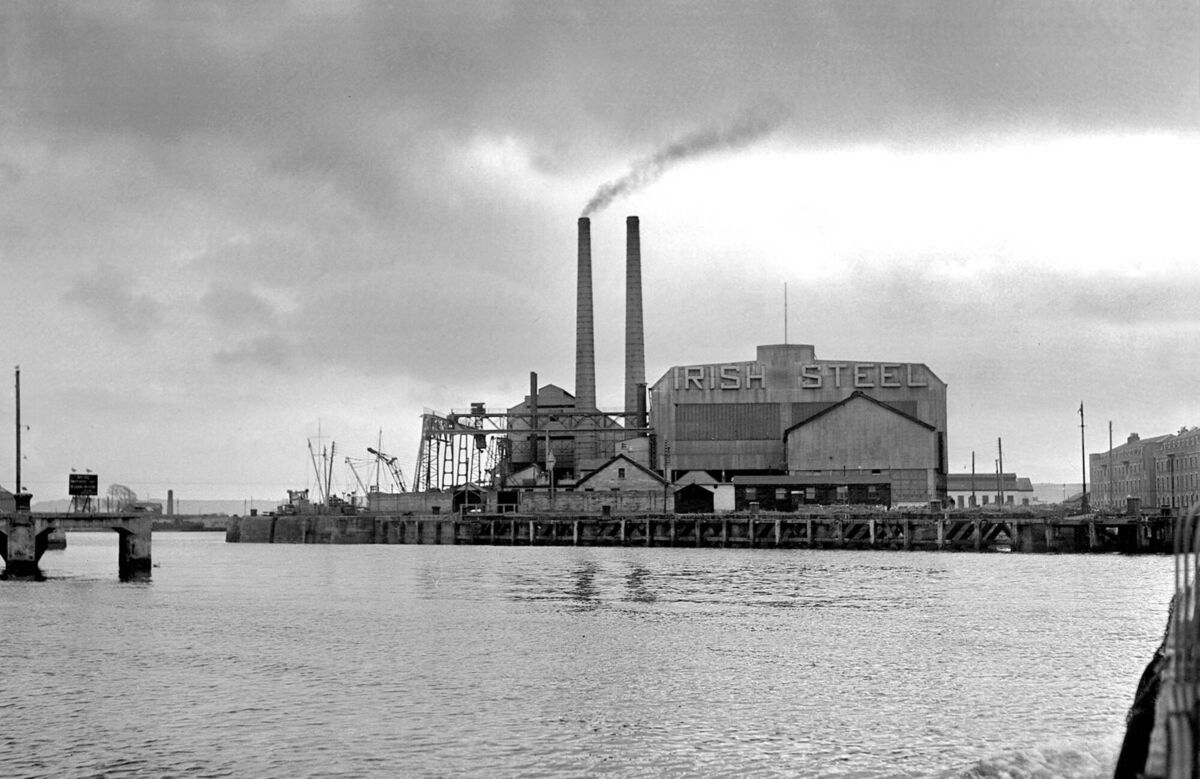
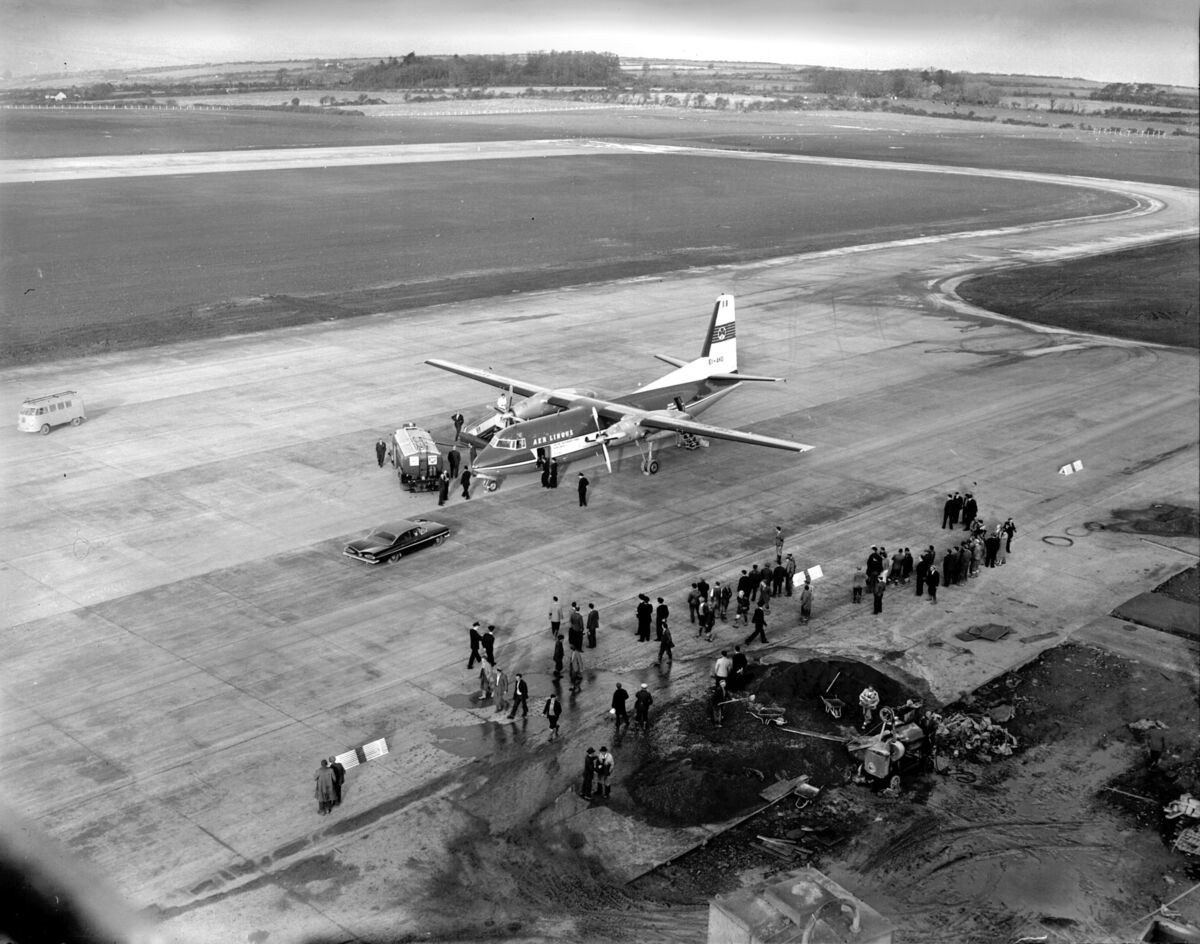
Cork in the decades of the 1950s and 1960s was a regional powerhouse in Ireland as Haulbowline Steel Mills, ESB projects such as the Lee Hydroelectric Scheme and Marina Steam plant came into being followed in quick succession by Verolme Dockyard, Whitegate Oil Refinery, Cork Airport, and a new Regional Technical College.
The decade of the 1980s brought economic decline again and the Chamber once again shifted its focus on strengthening the supports for local business into the late twentieth and early twenty-first century. The creation of a full time Chamber executive team with creative thinking capacities provided platforms to think about the future of Cork as Ireland’s southern capital and region.
Most notably to celebrate the history of Cork’s cultural leaders in early July 1994 a special Plaques Committee (Chaired by PW Fenton), and spearheaded by Chamber President William Cuddy, unveiled their plans for the erection of 30 ornate ceramic mountings. They were to celebrate some of the city's most famous personalities who were born, lived or were otherwise linked with the area.
Among those to be honoured were Seán Ó Faoláin, Nano Nagle, Arctic explorer Jerome Collins and Fr John Murphy, mathematician George Boole, brewer Arthur Sharman Crawford and Irish Ballet Company founder Joan Denise Moriarty. It was hoped that “the venture would enhance the streetscape of the city and encourage native and visitor to broaden their knowledge and appreciation of the lives of the City’s distinguished sons and daughters”.
The red-and-white plaques were the work of County Clare artist, Hannah Arnup. The project was completed during Autumn 1995. Implementation of the project generated a large degree of interest, and the group received representations to similarly market the achievements of additional names.
At the turn of the Millennium the Chamber, representing the interest of Cork businesses, was very active on a range of important issues concerning local/economic developments. These Issues included: National Development Plan 2000/2006, The National Spatial Strategy, Cork Area Strategic Plan 2020, Centre City Development, Waste Management, Euro Introduction, Cork Airport Services & Facilities, Local infrastructure, Public Transport, Broadband Telecommunications and Membership Needs. Representations were regularly made to National and Local Government, State Agencies and Government Departments.
In 2013 improving the region’s accessibility and international connectivity was one of the priorities of Chamber’s president, Gillian Keating. A partner at JW O’Donovan Solicitors at the time of her election, she became the first woman to be elected the Chamber’s president. Speaking at the Chamber’s 194th AGM, on 15 April 2013, she outlined her priorities as Improvements to the region’s accessibility and international connectivity, the strengthening of higher education and industry linkages and a re-evaluation of the rates position to ensure Cork remains an attractive and vibrant place in which to do business.
At the AGM Ms Keating stressed her commitment to the Chamber’s collaborative approach to regional policy development.
“The Chamber is not just the 1,000 members which it represents. It is not just the 100,000 employees our members represent. It represents the power of our 1,000 members plus their one 100,000 employees plus our city and county councils plus our SMEs and larger companies plus our colleges and universities and when we speak with one voice we will ensure that Cork will revitalise faster and better than any other business centre in the country”.
On 1 February 2019 President Michael D Higgins gave the keynote speech at the 2019 Annual Dinner to mark the 200th anniversary of the Cork Chamber of Commerce. In his first address to a business audience since his second term inauguration, the President addressed attendees at a dinner for the city’s business leaders.
President Higgins has played an active part in the promotion of Ireland’s trade links, working with business leaders at home and abroad to encourage investment in Ireland. He joined the Cork business community in celebration of one of the oldest institutions on the island of Ireland, and used the opportunity to commend the Cork Chamber and its member companies for the work they do as they nurture relationships between business and society.
As the Cork Chamber headed into the 2020s, Cork Chamber aspired and aspires to keep its historical value of Championing Cork at its core whilst at the same time ensure that the future strategic direction of the organisation is always mindful of the core goals of sustainability, diversity and inclusion.
The Chamber team are actively engaging in new initiatives that inspire the business community to embrace the UN’s Sustainable Development Goals and to demonstrate how business can play its part in making our communities and our global environment a better place.
Check out Championing Cork, Cork Chamber 1819-2019 by Kieran McCarthy online at the Cork Chamber website:
.
A collection of the latest business articles and business analysis from Cork.
CONNECT WITH US TODAY



Be the first to know the latest news and updates