Employers boost efforts to help people with disabilities get jobs

Eimear Moore, emerging careers lead at Bank of Ireland, with colleagues David Banfield, a graduate of the Trinity Centre for People with Intellectual Disabilities who has joined the bank on a permanent contract, and Nivali Mantramurthy, a participant in Bank of Ireland’s graduate programme. As part of efforts to remove barriers to careers, the bank does not require a Leaving Certificate or college degree from most applicants.
Irish employers are prioritising efforts to increase the employment rate of persons with disabilities, especially young people.
This is an area in which Ireland has some ground to make up. A recent report from the European Disability Forum (EDF) found that Ireland’s rate of employment for people with disabilities stands at just 32.6%, versus the 51% EU average.
That rating currently means that Ireland is joint worst in Europe alongside Greece. However, Greece’s near 15% general unemployment helps explain why people with disabilities are not in jobs. Ireland’s 3.9% general unemployment rate — near full employment in practical terms — raises questions as to why over 67% of people with disabilities in Ireland cannot find work.
Under the European Commission’s ten-year ‘Strategy for the Rights of Persons with Disabilities’ comes in, the EU is working with member countries to deliver concrete progress in key areas making it easier for people to work.
Topics range from adequate transport and healthcare to advice on countering discrimination against people with disabilities. The European Economic and Social Committee (EESC) produced data showing that many young people with disabilities face discrimination in the world of work due to stereotypes portraying them as unproductive.
At one EESC hearing, Daphne Nathalie Ahrendt of Eurofound presented the results of a Eurofound survey which shows the stark differences between young people with and without disabilities: 27% of respondents with disabilities were unemployed, against 12% of respondents without disabilities. 55% of them are also considered financially fragile, against 38% of their peers without disabilities.
Daphne said: “A high majority of respondents with disabilities are more likely to face depression, the feeling of being left out of society and loneliness. They are also less likely to feel optimistic about the future. The latter figures tend to be noticeably lower when the respondents are employed.”
At the same EESC hearing, Anna Kwiatkiewicz-Mory of Business Europe stressed that social services should strive to offer more employment opportunities for young people with disabilities.
Anna said: “Connection between services and education is absolutely crucial, and from this perspective, we need to have targeted employment services for young people with disabilities. We need social services to first come into play, to prepare them to enter the employment market.”
Meanwhile, in Ireland back in April, more than 60 companies signed up to the second Elevate Pledge Annual Report by Business in the Community Ireland (BITCI), demonstrating their commitment to diversifying their workforce.
Of course, the BITCI pledge relates to all forms of inclusion, not just disability. Signatory companies included Bus Éireann, AIB, Diageo, Musgrave, Janssen, PwC and many others.
Workers, it seems, are afraid of bias. One BITCI survey found that less than 1% of employees disclosed a disability, when a rate of 7% would be expected; and only 1.7% disclosed an ethnicity other than white, compared to an expectation of 15%. In the same survey, only three workers identified as Traveller, where 60 would have been expected.
Tomás Sercovich, CEO of BITCI, said: “We continue to see a major gap between skills and people shortages in business and jobseekers that are left behind in our society. We simply cannot afford to lose talent.
“Business must embrace inclusion strategically, not as the right thing to do, but as a fundamental agenda of change. Inclusion is an imperative for all in society and business has the tools and the mindset to make this happen.”
Meanwhile, Bank of Ireland has launched an inclusion campaign promoting its efforts to tackle any barriers to careers in banking. Its initiatives include steps to enhance the Bank’s socio-economic diversity, accessibility, ethnic minority representation, and gender balance.
The Bank has also reaffirmed that a leaving certificate or college degree is not required for most applicants. It is launching a marketing campaign to attract more ethnic minority candidates into the bank’s frontline customer-facing roles.
Partnering with DCU’s Access Programme, students from socio-economically disadvantaged backgrounds will take up a paid internship with the bank while studying for a degree. The bank is hosting number of 8-week work placements and 3-6 month paid internships for students and graduates of the Trinity Centre for People with Intellectual Disabilities (TCPID).
Matt Elliott, chief people officer, Bank of Ireland, said: “Talent is everywhere, but opportunity is not. We want to play our part in changing that. A vibrant, dynamic company needs a diversity of skills, perspectives and backgrounds.
“If we allow conscious or unconscious barriers to act as a blocker to people joining our company, we lose out as a business and talent is squandered, which is bad for everyone. We will continue to evolve our approach to hiring to ensure we attract candidates who represent the breadth of society we serve.”
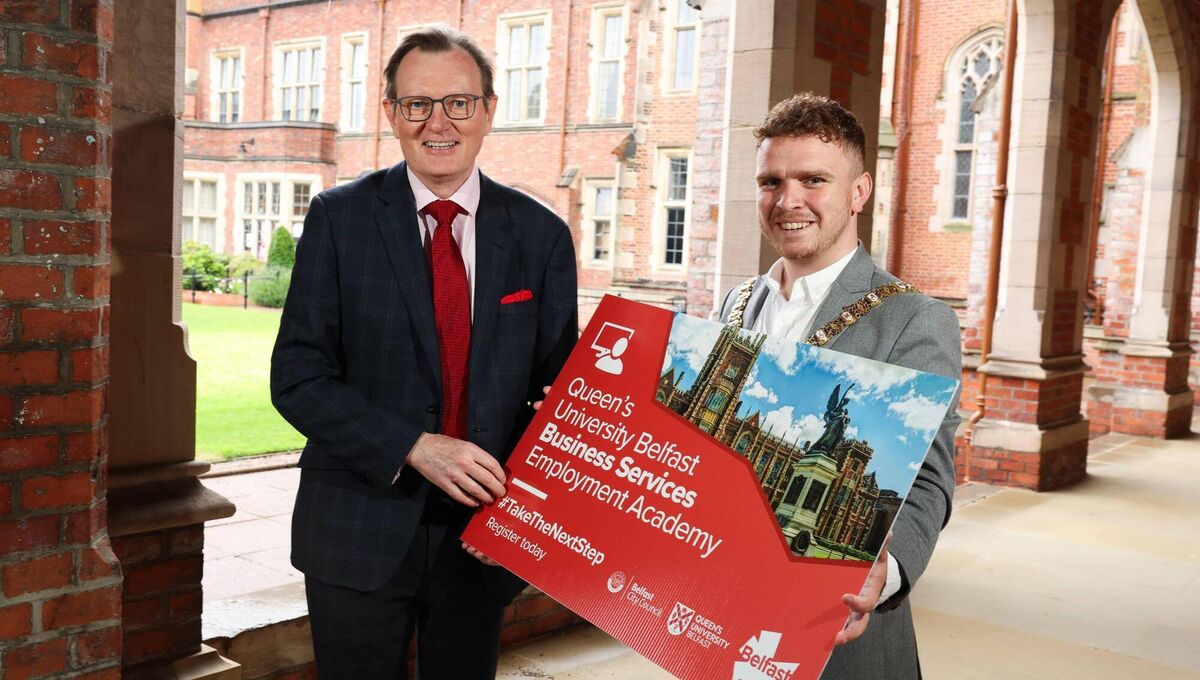
Also encouragingly, a partnership between Belfast City Council and Queen’s University Belfast will remove barriers to employment for 15 people living in Belfast, with few or no qualifications. These 15 people will secure an administrative role in the University, through a new Business Services Employment Academy.
Lord Mayor of Belfast, Cllr Ryan Murphy, said: “Our Belfast Agenda makes a commitment to help people living here achieve their full potential. Our new academy will support 15 residents who have low, or no qualifications, to access a good, rewarding job with one of the city’s largest employers.
“Once employed, academy mentors will engage with participants regularly during training to offer ongoing support, advice, and guidance to help them settle into their new roles.”

CONNECT WITH US TODAY



Be the first to know the latest news and updates