EasyJet reports large part of €1.4bn new shares taken up
The airline said its investors had bought 93% of the new shares on offer in its €1.4bn rights issue, designed to help fund its recovery from the pandemic
The airline's biggest shareholder, the family of founder Stelios Haji-Ioannou, decided not to participate in the rights issue, and their stake is set to reduce to about 15% from 25%. File picture

The airline's biggest shareholder, the family of founder Stelios Haji-Ioannou, decided not to participate in the rights issue, and their stake is set to reduce to about 15% from 25%. File picture

EasyJet said its investors had bought 93% of the new shares on offer in its £1.2bn (€1.4bn) rights issue, designed to help fund its recovery from the pandemic.

The airline announced the cash call, its second during 18 months of Covid-19, earlier this month, at the same time as revealing it had rejected a takeover approach from an unnamed suitor, believed to be low-cost rival Wizz Air.

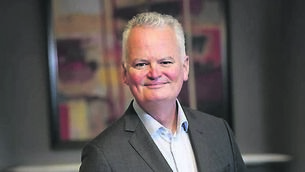
EasyJet's chief executive Johan Lundgren said the extra funds would enable it to take advantage of new opportunities likely to arise as carriers like British Airways-owner IAG , Air France-KLM and Lufthansa retreat.

"The success of this capital raise, thanks to great support from investors, will enable EasyJet to strengthen its balance sheet and accelerate its post-Covid0-19 recovery plan," he said in a statement. 

The airline's biggest shareholder, the family of founder Stelios Haji-Ioannou, decided not to participate in the rights issue, and their stake is set to reduce to about 15% from 25%. 

The founder has in the past clashed with management over its growth plans.

Airlines adding capacity between the US and Europe

Meanwhile, airlines are cautiously adding capacity between the US and Europe over winter, as carriers try to capitalise on looser travel restrictions without over-stretching during the seasonally slower months.

Meanwhile, Boeing forecasts commercial aviation should be back to 2019 levels in two to three years, buoyed by a strong domestic recovery in China and parts of Europe, the US planemaker’s China head said.

Various countries’ vaccination rates and differing quarantine requirements will pose some hurdles but “we’re anticipating in the next two to three years that the aviation market will fully recover to 2019 levels”, Boeing China president Sherry Carbary said on the sidelines of Airshow China 2021 in the southern city of Zhuhai. 

Separately, the number of flights from Western Europe to North America is poised to jump by 7.5% between late October and early November, when the US ban lifts on visits from most European countries.

Traffic will then head for a peak in late December.

While European carriers have built up forward schedules throughout the coronavirus pandemic, only to consolidate when demand fails to materialise, “we’ve seen far fewer cancellations in recent weeks”, said David Doherty, a Bloomberg analyst. 

That “shows that airlines are increasingly confident about load factors”, he said.

The UK and Germany are set to capture the lion’s share of any winter bump, as airlines pare back summer schedules between the US and warmer countries.

US capacity to the UK is set to surge 79% between September and December based on current schedules, according to flight tracker OAG. 

For Germany, the increase is 21%, while seats offered for Spain and Italy decline. OAG expects some of the flights to the UK and Germany to be cut as airlines adjust their schedules. 

• Reuters and Bloomberg

x

More in this section

The Business Hub

Newsletter

News and analysis on business, money and jobs from Munster and beyond by our expert team of business writers.

Cookie Policy Privacy Policy Brand Safety FAQ Help Contact Us Terms and Conditions

© Examiner Echo Group Limited