Zenith chairman is named first Honorary University Fellow MTU
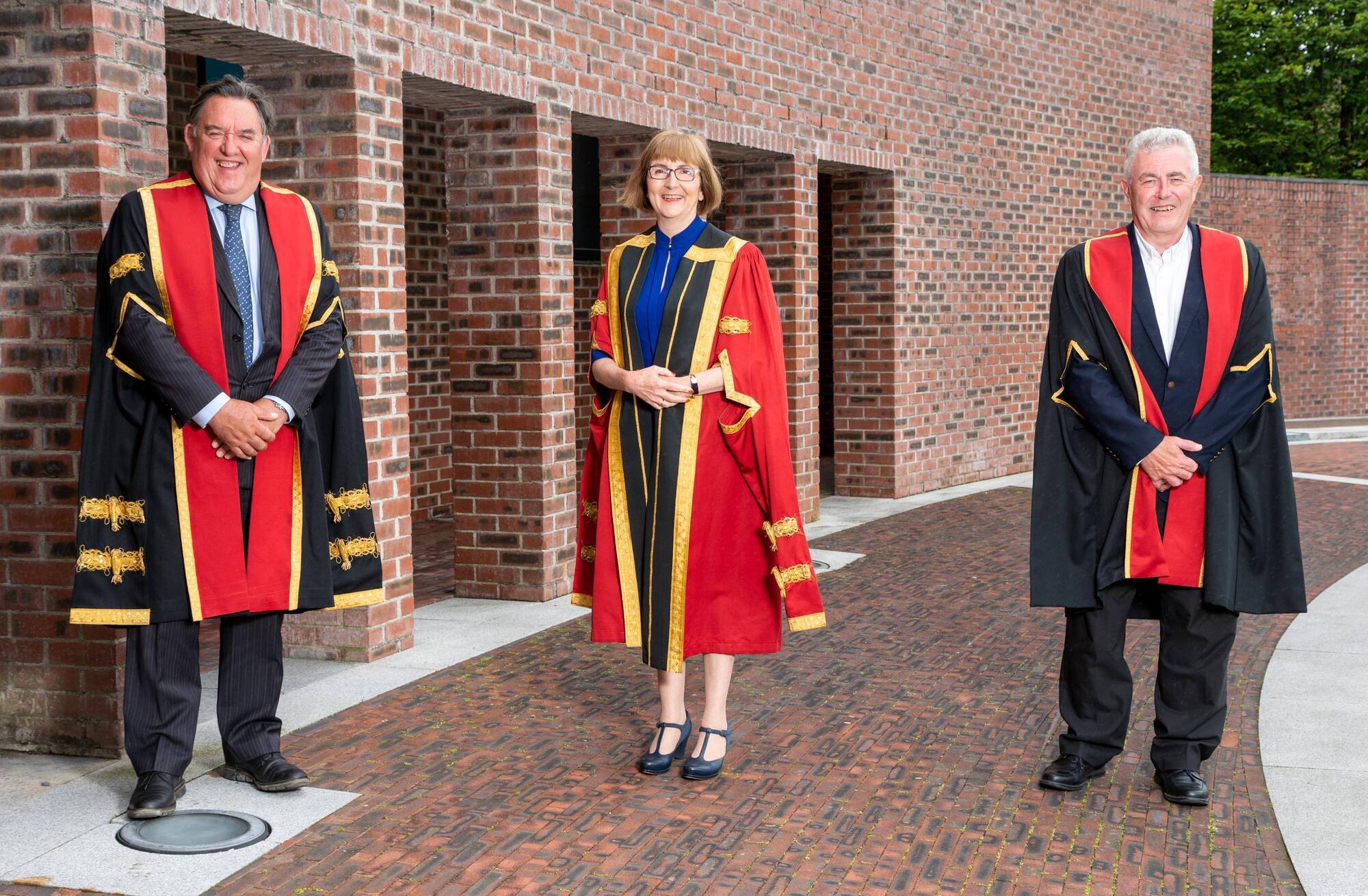
Brendan O’Regan, executive chairman and founder of Zenith Technologies, has been selected as the first Honorary University Fellow of Munster Technological University. He is photographed with Prof Maggie Cusack, MTU president; Bob Savage, chair of MTU governing body, vice president, regional CIO for EMEA and Cork site leader for Dell Technologies.
Executive chairman and founder of engineering firm Zenith Technologies, Brendan O’Regan, has been selected as the first Honorary University Fellow of Munster Technological University.
Mr O'Regan says he is deeply humbled by the MTU tribute: “I am absolutely bowled over. It's a great honour. A lot of people have passed through those doors, people who went on to do great things and who have received far greater international honours than me.
“I built an international business based in Cork, but it wouldn't have been such a success without having MTU on our doorstep. Of the 12 people we had in the management team at the time of selling Zenith to Cognizant, including those leading our operations in the US and Asia, they were all ex-MTU graduates.”
The creation of the Munster Technological University (MTU) earlier this year, following CIT's formal amalgamation with IT Tralee, is just one of the changes that form the backdrop to the ascent of Zenith Technologies.
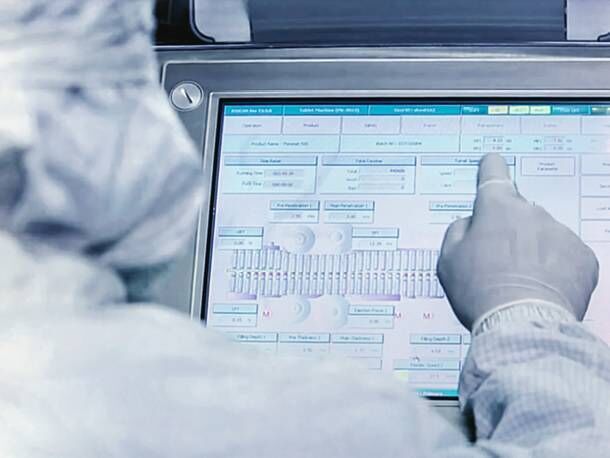
Zenith develops manufacturing facilities and manages projects for the world's largest life science companies. Zenith's engineering expertise includes automation and process control, manufacturing execution systems (MES), life sciences manufacturing, smart factory solutions and a range of data, compliance and serialisation solutions.
Mr O'Regan's role in Zenith has scaled down a lot since the company was acquired by US-based Fortune 500 IT company Cognizant in 2019 for an undisclosed sum. Zenith had reported a turnover of €85m for 2018 and had forecast €100m in sales for 2019. Mr O'Regan would not disclose the exact multiple of turnover that Cognizant paid for Zenith.
At the time, Mr O'Regan still owned the bulk of Zenith, bar the 30% share acquired by US giant GE in 2017. To give a sense of the scale of Cognizant, it reported full-year revenue of $16.7bn for 2020, with revenue growth guidance of 5.5% to 8.5% for 2021.
Brendan O'Regan insists that Zenith only reached this league due to the talents of the 1,000 or so people employed across 16 offices in Ireland, Europe, Asia, and the USA. Many of these would have attended what is now MTU.
“I have always been impressed by the MTU's course material,” he said. “They've always been very helpful in the scale and range of what's being taught to graduate engineers. You need the technical skills; problem-solving is also central to what we do in the pharma space.
“In 1978, when I left Cork RTC, as it was called then, I had a certificate in Instrument Physics. I went to work for O’Sheas Electrical as an instrument technician. Of the 30 people in our RTC class, only three went into engineering. The rest went into manufacturing and other roles.
“I was in a technical role for 15 years. It was hard to transition from a technical role into management, spotting talent and building teams.
“Learning to delegate responsibilities to others can be really good for you. A lot of my peers went on to become technical gurus, and every company in our industry really needs a lot of those people.
“I had developed a good technical grounding. Like when I went to work for Kellogg Continental in The Netherlands, I was responsible for the software development of a large-scale gas treatment and supply system for the delivery of the domestic gas supply to Perth, Australia.
“This was a Honeywell TDC 2000 system and represented state-of-the-art, real-time continuous computer control. As a forerunner in technology, this system in the early 1980s could accomplish large scale control tasks easily and opened up my eyes to the possibilities in real-time computing.”
Mr O'Regan also worked in technical roles with PM Group, IFI and others. He worked in Europe, Australia, Asia as well as Ireland. He worked with teams developing plants for some of the world's biggest life science companies, along with other industries.
He formed Proscon in 1994, but links his own elevation into business leadership to a few years later when he accepted Enterprise Ireland's suggestion that he attend an MBA course in Stanford University, USA.
“Around 25 of us, including four of us in life sciences, who went out to Stanford,” he recalls. “It gave me the leg-up that I needed and a belief in what could be achieved. The course syllabus was very useful. We also made great contacts.
“We got a sense of the kinds of things that were happening in industry. Many of us got into sites, and we quickly signed preferred supplier agreements with multinationals. Those contracts allowed us to think of longer-term plans.
“You learn to work as a trusted advisor, as a partner with these companies. Of course, you must always also be transparent on cost. You should be looking for 10/15% of sales, not 40/50%. You should always open up your books with your customers and be fully transparent.”
Buoyed by the success of his new business model in winning high-grade contracts, Mr O'Regan continued to build skilled teams around him and saw his business scale rapidly.
More than keeping pace, Zenith stayed ahead of how automation and data were driving evolutions across its life sciences customers. For instance, Zenith's customised project management dashboard gave his team global access to info on each site the company was working on. The customer had the same access, so decisions were efficient.
Alongside this transparency with the client, building a real team culture was central to Zenith's success. Team leaders had to feel empowered to solve problems, make decisions. Where errors were made, they were quickly corrected, always with an open window for the client.
“We built in a tolerance for mistakes. When you correct errors in an open way, you mostly find that people don't repeat those errors again down the road. We found that people could relate to this, because there was no blame culture.
“In some companies, you just don't have any culture of understanding. I always believed that culture was very important in business. That was also covered in one of the modules in Stanford. I'll always remember their line that 'Culture eats strategy for breakfast'.
“That's part of becoming a leader. You learn that you can't do it all on your own. You need to develop the soft skills to bring other people along with you.”
While Mr O'Regan is now looking forward to a well-earned break, he expects that he will take on a number of board and advisory roles. He also has a portfolio of investments to manage.
He says that his one regret in business is that he would have liked to have seen more women develop careers in engineering. Zenith had worked with MTU and others to promote STEM roles to women.
He says the women who have risen to leadership roles in Zenith have invariably brought a lot to the management tier.
He said: “In my experience, women are less ego-driven. Men can be more abrasive. Now that I am acting as an advisor for a number of industries, I will continue to promote STEM roles to women.
“Also in my role with MTU, that is also part of what I'd like to promote. I want to also acknowledge the MTU staff, who have always striven to deliver a quality relevant education to the students. Zenith is the happy recipient of the output year on year, and that source of talent has been instrumental in driving the company forward.
“I was truly thrilled and amazed to receive the title of Honorary University Fellow MTU. I also want to acknowledge previous STEM award and Alumni award that I received. Thank you so much MTU for choosing me.”


CONNECT WITH US TODAY



Be the first to know the latest news and updates