Apple exceeds Wall Street expectations on record iPhone revenue as China sales surge
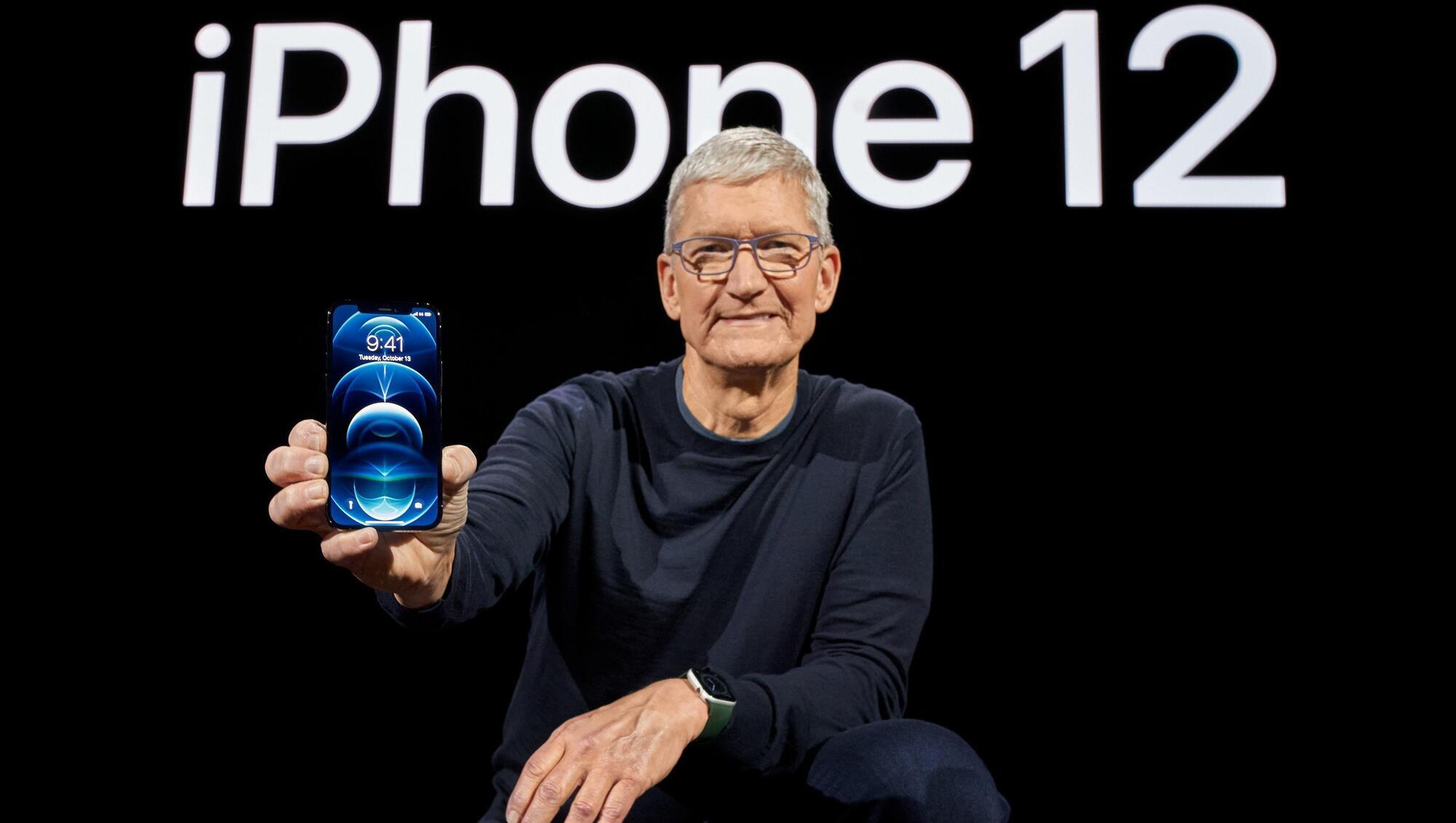
Apple CEO Tim Cook at the unveiling of the iPhone 12 Pro last October, which played a key role in helping the company beat Wall Street expectations. Picture: Apple/PA Wire
Apple on Wednesday reported holiday quarter sales and profits that beat Wall Street expectations, as new 5G iPhones helped push handset revenue to a new record and sparked a 57% rise in China sales.
Apple shipped its iPhone 12 lineup several weeks later than usual, but an expanded number of models and new look appear to have tapped into pent-up demand for upgrades, especially in China. The company also posted strong sales of its Mac laptops and iPads in the quarter, driven by consumers working, learning and playing from home during the pandemic.
Apple’s revenue for the quarter ended December 26 rose 21% to $111.44bn (€92bn). Earnings per share rose to $1.68 from $1.25. Analysts had expected $103.28bn and $1.41 per share, according to IBES data from Refinitiv. Sales of iPhones were $65.60bn, compared with estimates of $59.80bn and beating Apple’s previous quarterly all-time high of $61.58bn in iPhone sales for the first quarter of fiscal 2018.
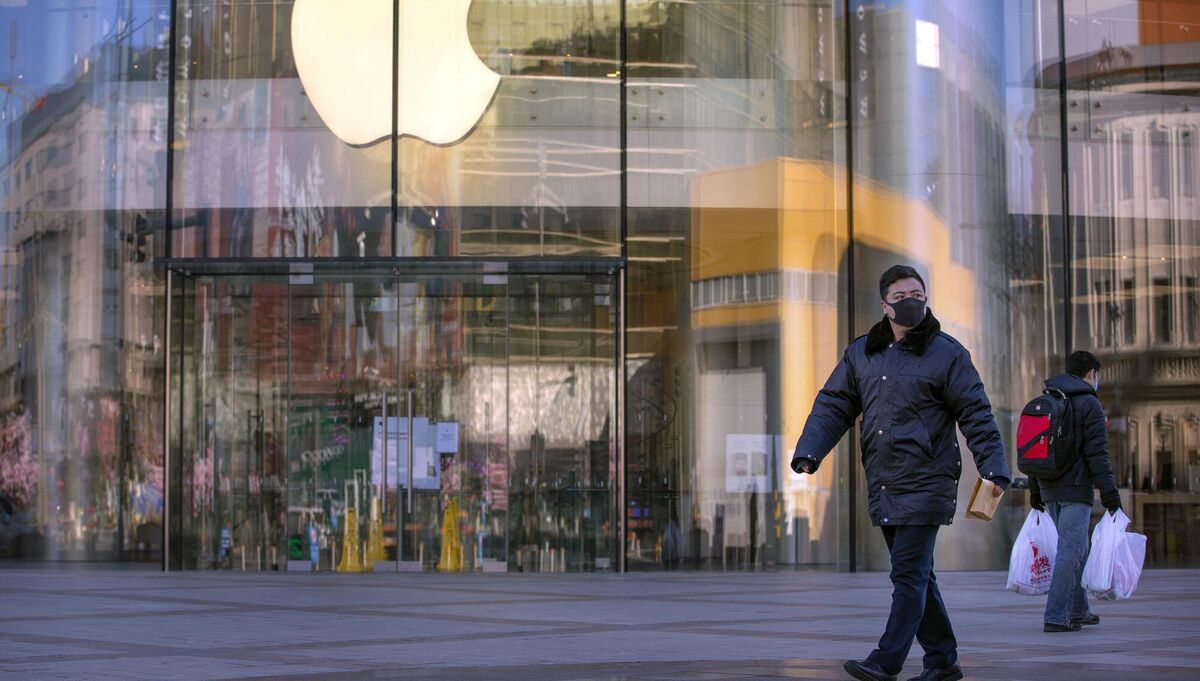
Apple, the biggest US-listed public company by market capitalisation with a value of $2.4tn, has thrived through a pandemic that forced it to shutter many of its stores but prompted many consumers to buy or upgrade devices.
Apple chief executive Tim Cook said the company now has an active installed base of 1.65bn devices, compared with 1.5bn devices a year ago. Mr Cook also said Apple now has an installed base of more than 1bn iPhones, an increase over the 900m the company most recently disclosed in 2019.
The pandemic’s travel restrictions disrupted Apple’s product development cycle, with a late launch of its 5G devices temporarily wiping as much as $100bn from its market capitalisation in October.
But even then, Mr Cook and others were optimistic that the phones would become strong sellers, citing early sales data in China. The prediction proved correct, with fiscal first-quarter sales in China rising 57% to $21.31bn, compared with $13.58bn a year earlier.
“We had two of the top three selling smartphones in urban China,” Mr Cook said, adding that many of the company’s other products and services also sold well. Mr Cook said that Apple gained iPhone sales in China both from customers switching from rival Android devices as well as existing customers upgrading devices, but said “upgraders in particular set an all-time record in China.”
Mac sales reached $8.68bn, in line with analyst expectations of $8.69bn. Apple in November released its first laptop and desktop computers with processor chips of its own design, breaking a nearly 15-year partnership with Intel.
Sales of iPads were $8.44bn compared with analyst expectations of $7.46bn.
Mr Cook told Reuters that sales of Macs, iPads and the iPhone 12 Pro model all ran into “supply constraints". He said that “semiconductors are very tight” but that other areas of the supply chain contributed to the constraints as well.
The company’s services business, which includes its new Apple One bundle of television, music and cloud storage services, had $15.76 billion in revenue, compared with analyst estimates of $14.80 billion.
Apple has been one of the big winners among the mega-tech firms during the pandemic.
Ahead of the earnings, Apple was valued at $2.4 trillion (€1.97trn), larger than the valuation of Microsoft at $1.75trn and Amazon's valuation of $1.7trn.
Google which is owned by Alpahbet trailed with a valuation of $1.29trn, while Tesla and Facebook are relative minnows with valuations of $837bn and around $804bn.
However, there are mounting concerns about frothy valuations across the tech giants and other much smaller tech firms as money flooded.
Some analysts have warned that some of the valuations for some tech companies was approaching the mania ahead of the bursting of the dot.com boom 20 years ago.
Speaking before the release of the results, Ben Bajarin, head of consumer technologies at Creative Strategies, said that Apple had "an extremely good understanding of what their refresh cycle looks like and when waves are possible and whey they are not”.
“Every bit of data across China and Europe has shown that not only was the installed base getting older, but people were not refreshing. I think (Apple) knew it would be heavy refresh cycle,” he said.
Meanwhile, Facebook beat analysts’ estimates for quarterly revenue on Wednesday, powered by increased ad spending by businesses to capitalise on a holiday shopping season driven online by the pandemic.
The results validate the company’s foray into e-commerce with Instagram Shopping and Facebook Marketplace that banked on the trend of social shopping, which picked up pace last year as outdoor recreational activity dwindled due to Covid-19 associated curbs.
The company has launched a slew of new e-commerce products such as Facebook Pay and Facebook Shops that enable in-app purchases across the company’s suite of apps, including Instagram and WhatsApp.
Monthly active users rose 12% to 2.80bn, above the 2.75bn expected by analysts.
Total revenue, which comprises primarily of advertising revenue, rose to $28.07bn in the fourth quarter ended December 31 from $21.08bn, a year earlier.

- Elsewhere, Tesla’s fourth-quarter profit fell short of Wall Street expectations on Wednesday and the company failed to provide a clear target for 2021 vehicle deliveries, sending shares down 3% in extended trade.
The disappointing results capped an otherwise stellar 2020 for the electric carmaker led by CEO Elon Musk, with Tesla shares surging nearly 700% over the past 12 months, making it the world’s most valuable automaker.
The company delivered 180,570 vehicles during the fourth quarter, a quarterly record, even though it narrowly missed its ambitious 2020 goal of half a million deliveries.
- The Irish Examiner and Reuters

CONNECT WITH US TODAY



Be the first to know the latest news and updates