Why is the Irish Government silent on Dubliner Daniel's German show trial?
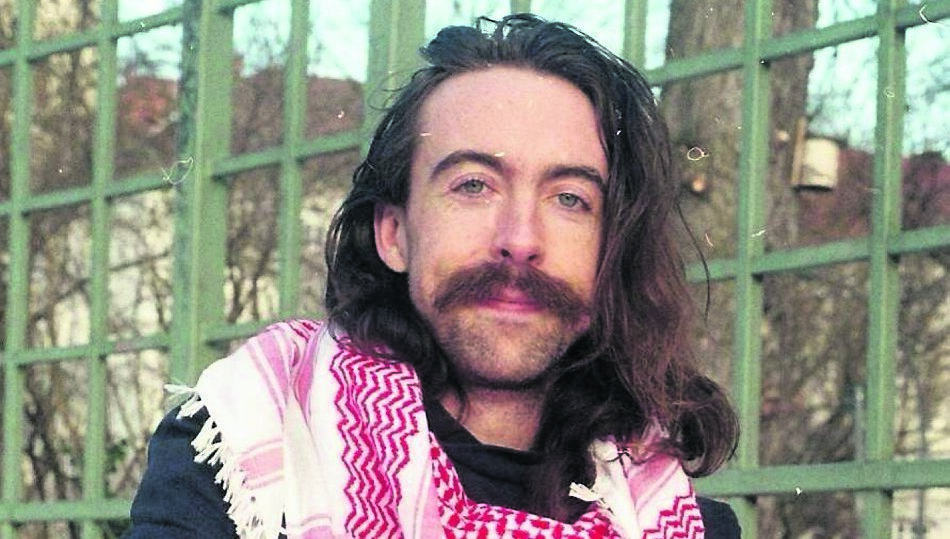
Daniel Tatlow-Devally
Daniel Tatlow-Devally, our son and brother, an Irish citizen from Dublin is one of the ‘Ulm 5’ on trial in Stuttgart-Stammheim. Daniel studied at Trinity and has lived and worked in Berlin for seven years. For two years he and his friends protested the war in Gaza.
They aimed to uphold international law and end genocide in Gaza, where several years of legally-sanctioned means of protest had failed. Germany, despite being a Genocide Convention signatory, is second only to the US in arms exports to Israel.
The five took action in September 2025 and damaged an Elbit Systems Germany site; Elbit provides ‘the backbone’ of arms in Gaza.
The Ulm 5 have been charged not just with trespass and property damage but also with membership of a criminal organization – Germany’s notorious Section 129 which requires little evidence for a charge and which is being used to squash climate and Palestine protest. They have been in pre-trial detention for 8 months now – Daniel in 23-hour lock-up, permitted only two half-hour visits monthly and no phone calls. For the first five months Daniel was locked into a glass box when we visited and we were unable to hug, hold hands or even hear each other easily. All post is surveilled, taking up to 5 months to be delivered.
Defence counsel say this is a show trial and have lodged motions for all five judges’ recusal for bias. The shocking scenes we’ve witnessed – with a presiding judge uncompromisingly hostile to defence lawyers – have eliminated hopes we had of fair proceedings. TDs, Senators, party leaders and family members have repeatedly urged Helen McEntee, Minister for Foreign Affairs, to arrange to monitor it.
So far, there is silence.
The five are not accused of harming or even attempting to harm anyone. None has prior convictions. Although they pose no danger to the public – they were arrested without resistance, processed peacefully, and have all been peaceful in detention – the court, refusing to cite grounds and thus contravening European Court of Human Rights rulings is treating them as if they were dangerous.
Extraordinarily, the court has made profoundly prejudicial statements to German media comparing the Ulm 5 to murderers with previous violent convictions, terrorist coup supporters, and gang warfare participants.
Against all UN, EU and human rights norms, the presiding judge had the defendants paraded in handcuffs, locked in a bullet-proof glass box, for cameras and press, judges, lay judges, and the public. Exceptionally for Germany, she has refused to allow them to sit with their lawyers, making confidential consultation impossible. They must speak via microphones; prison officers (who can be called as witnesses) and even the public can hear.
The judge refused to allow defence lawyers to speak on the first trial date (27th April) – a move defence counsel said was unprecedented. When they protested with a walkout, instead of discussing with them as would be the norm in Germany, she ended the day’s proceedings, threatened to sack them all, and cancelled the next two court dates.
The judge then stood logic on its head, bizarrely ruling the defendants could not sit with their lawyers because the lawyers and public (also behind bullet-proof glass) were too unruly. The second trial day (11th May) had a different tone: an exaggerated, performative round of consultation with the defence. Yet the judge again summarily rejected every single defence application attempt – and again ended proceedings early.
Clearly, this court cannot be considered neutral.
The lawyers, all 11, tell us they have never seen the like.
Here’s why:
Most German trials have no transcript; the judge determines the version of record, tilting power strongly towards the court. The judge refused defence applications for two note-takers and stated everything the defence said on Day 1 would vanish from the record as if it had never happened.
The Ulm 5 harmed or threatened no-one. Why are their trial conditions worse than murder squad members or terrorists?
Handcuffs and glass boxes are prejudicial, according to everyone: Irish law, the UN, EU law and European Court of Human Rights. The judge is refusing to justify this.
The judge has - without justification - staged this in an ultra-high-security Higher Regional Court, a venue so stigmatising the German Basic Rights Committee NGO described it as a ‘declaration of war’. Freedom of Information requests show no Regional Court rooms were sought.
A Higher Regional Court detention ruling, without hearing defence evidence, prejudged the five’s motivation and action and declared the sentence would not be at the lower end of a five-year maximum. Lower courts typically follow such ‘guidance’, so the five find themselves in an Alice-in-Wonderland upside-down world: sentenced before verdict.
German prosecutors should identify not just incriminating but also exonerating evidence. Yet the prosecutor refused defence requests to investigate Elbit Systems Germany’s role in the genocide – claiming without evidence that the five’s motivation was not genocide prevention but rather antisemitism.
Germany outsources its conscience to Israel Why are prosecutor and court so determined to make an example of the Ulm 5? With regret and grave concern, our blended Irish-German-Jewish family concludes this fits in a pattern of Germany’s repression of Palestine solidarity. The Ulm 5 are being pre-emptively punished for undermining Germany’s self-image as a state that implements ‘never again’.
We urge the Irish government to monitor the Ulm 5 trial to ensure fundamental human rights are upheld.
Not just the Ulm 5 - German justice is also on trial in Stuttgart.
The next scheduled trial dates are this Wednesday 20th, 22nd and 29th May.


CONNECT WITH US TODAY



Be the first to know the latest news and updates