State-backed loans for Covid-19 hit firms 'may or may not' be on way: AIB chief
State-guaranteed loans “may or may not be” part of the next package of supports to be agreed with the Government for firms reeling from the “extraordinary” Covid-19 economic crisis, AIB chief executive Colin Hunt has said.
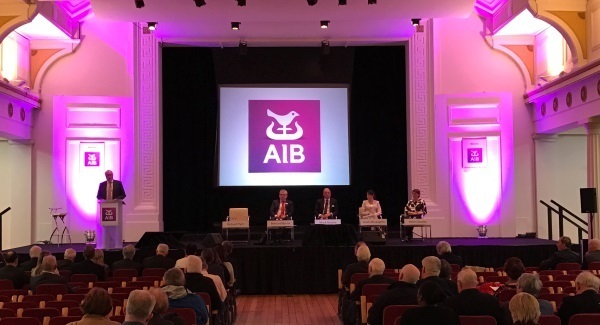
The lender yesterday hosted its AGM by teleconference, saying it had already made more than 40,000 payment breaks to households and businesses. It won’t be releasing the financial implications for the bank until a market update next month.

In an interview, Mr Hunt who took over the top job last year, said there was a need for an extension of the three-months payments breaks because some sectors of the economy won’t be able to return to work after the current lockdown.
He told the Irish Examiner he was confident that the announcement will reduce uncertainty and that lenders will respond “if and when this second payments break will be made available”. Industry group the Banking and Payments Federation Ireland told the Irish Examiner earlier this month an extension of the breaks to six months was on the cards.
Mr Hunt said that the liquidity needs of businesses would reach €9bn when medium-sized companies were included and that a range of new proposals were under consideration by the authorities to help support the 1.1 million jobs that SMEs provide. Asked whether State-guaranteed loans would be part of the toolkit, Mr Hunt said the new measures “may or may not include” guaranteed-loans.
Mr Hunt said it was an “extraordinary” year for the bank with a hardening of Brexit expectations, lower for longer interest rates, trade talks, the long bull market coming to an end and now with having Covid-19 thrown "into the mix”. Asked if the crisis would be worse than the 2008 banking crisis, he said that in terms of the speed of descent it has been more severe. “In terms of longevity it will not be as bad because economic recessions that are driven by banking crises inevitably take a lot longer to unwind," he said, with banks going into crisis in better financial shape. .
He said all the major reports on the Covid-19 crisis for Ireland, including from the ESRI, the Central Bank, IMF, and the Department of Finance, are in agreement over the magnitude of the economic fallout.
For reopening the economy sector by sector, he said in terms of “sequencing” it was a call of the Department of Health and the Government. “I wouldn’t be holding out false hope that someday someone will flick a switch and we will go back to February,” he said.
“You can make a case for construction, manufacturing large scale retail and hospitality and hotels to come back on a phased basis,” he said. “But I wouldn’t be jumping the gun on speculating on that timing,” he said.
“So many parts of the economy are impacted -- hospitality, bars, restaurants, manufacturing to some extent, transport and logistics of course, non-discretionary retail, outside grocery, pharmacy,” he said.
The hospitality and retail sector that depends on discretionary spend face particular challenges. “There is a clear and rational expectation out there that the timing of a return to normality and there are fears that it will last longer on sectors that depend on an influx of tourists," he said.