UK firms and self-employed can defer tax as Sunak unveils 'Covid-19 budget'
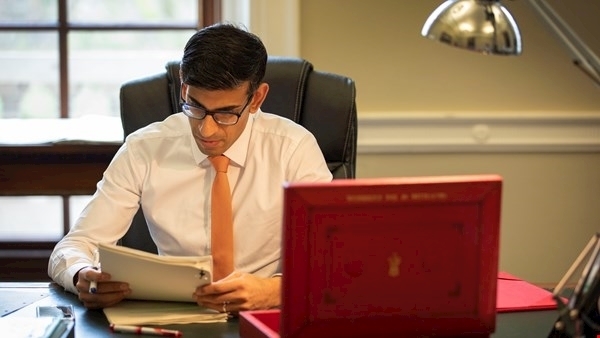
Britain unveiled a £30bn (€34bn) economic stimulus plan to tackle the risk of a coronavirus recession, just hours after the Bank of England slashed interest rates in a double-barrelled response to the crisis.
Prime Minister Boris Johnson’s chancellor, Rishi Sunak, announced the plan as part of a debt-fuelled investment surge for the coming years that budget forecasters said was the biggest stimulus since 1992 after a decade of austerity.
Mr Sunak told MPS in his budget the UK economy was facing a “significant impact” from the virus. The 39-year-old former Goldman Sachs analyst, who has only been in the job for a month, said he would help companies facing a cash-flow crunch, including a year-long suspension of a property tax paid by smaller firms, and funding for sick pay.
He said companies and self-employed people would be able to defer tax payments and he relaxed sick pay qualification rules for workers and people on benefits.
Britain’s health system and other public services would receive an extra £5bn to help counter the spread of coronavirus.
But with medical officials warning of an expected jump in coronavirus cases in the coming weeks, Mr Sunak had to fund new spending priorities.
Public investment of more than £600bn over the next five years, to levels not seen since 1955, represents a turning point for Britain after a decade of austerity to narrow its budget deficit.
Paul Johnson, head of the Institute for Fiscal Studies think-tank, said Mr Sunak’s pledge to increase spending on public services by 2.8% a year was remarkable. “Time will tell if this gamble pays off,” he said.
The Bank of England cut its key rate by half a percentage point to 0.25% and introduced a new programme for cheap credit. Britain’s independent budget forecasters lowered their predictions for economic growth this year.
- The HSE have developed an information pack on how to protect yourself and others from coronavirus. Read it here
- Anyone with symptoms of coronavirus who has been in close contact with a confirmed case in the last 14 days should isolate themselves from other people - this means going into a different, well-ventilated room alone, with a phone; phone their GP, or emergency department - if this is not possible, phone 112 or 999 and in a medical emergency (if you have severe symptoms) phone 112 or 999
Coronavirus in brief
- A female patient with an underlying illness who contracted Covid-19
Read More:
has died in the east of the country - The 10 new Covid-19 cases confirmed in Ireland last night brought the total up to 34 cases
- There are now 50 cases on the island of Ireland - 34 here, 16 in the North
- Schools told
Read More:
not to close unless instructed by Department - A teacher in Cork secondary school is in
Read More:
self-isolation after coming in close contact with someone who tested positive for Covid-19 - Republic of Ireland's Euro 2020 play-off
Read More:
to be played behind closed doors. The Women's qualifierRead More:
in Montenegro also closed to the public - Ryanair and Aer Lingus cancel flights to Italy