Huge demand for all health professionals
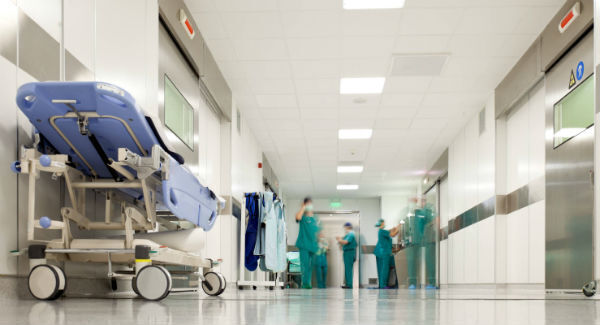
The Irish healthcare sector is booming and career opportunities are at a peak, according to a top healthcare recruitment specialist.
“There really is no qualified medical or health care professional in Ireland who is not in big demand at the moment,” declares Emma Fenton, principal recruitment consultant for the medical and healthcare sector with FRS Recruitment
“The last two years or so have been a very busy time for health sector recruitment. There are opportunities at every level and in every part of the health service, from care assistants to hospital consultants; there’s a huge volume of positions available,” explains Fenton, of award-winning firm, FRS Recruitment which was recently voted the best recruitment agency online.
“This is also a great time for people to earn a health-care qualification; in fact that’s what I’d be advising. Get into this sector,” Emma declares, adding:
Our health care sector is viewed very positively on the international stage. It may be a tough place to work but it is that same rigorous training that makes healthcare professionals with experience in the Irish health sector so much in demand when they go abroad!
Vacancies for registrars
In terms of doctors, the bulk of vacancies available in Ireland is for medics at registrar level, she says: “We recruit from all over the world — we look for doctors with four or more years in a sub-specialty. These range from paediatric to obstetrics, psychiatry, anaesthetics ER or surgery for example.”
The process or registering with the Irish Medical Council is easier, however, for doctors from some parts of the world than others, she points out.
“For example, a doctor who has interned in South Africa can register with the IMC in a very straightforward. However, a doctor who qualified in India and did their internship in India would have to sit exams unless they had done post graduate training.”

Openings in all categories
However, opportunities are equally plentiful for other healthcare job applicants, she says: “With the country’s ageing population, and the demands on the health service, there are great opportunities for people with specific skills.”
Sometimes she adds, professionals with in-demand skill sets are in roles which are not necessarily familiar ones to the general population — there is a really great demand for cardiac physiologists, for example, who work in the area of diagnosis and treatment of patients with heart disease.
“This is a career that not a lot of people know about, yet there are great opportunities for cardiac physiologists in Ireland for example,” says Emma who says there is also a wide range of opportunities for nurses in the Irish healthcare system.
Cardiology, oncology, ICU
“Ireland needs to attract nurse who have gained experience in specialties such as cardiology, oncology, ICU and theatre,” she reports.
While many Irish nurses find it easier to gain such experience in the UK and Australia, she says, many of those who go abroad have come back with that experience “and with a great skillset that we really need here - and they are snapped up,” she declares.
Radiographers too are very much in demand in all areas and with all types of experience, but she says, this applies to many healthcare professionals.

“The last one or two years have been very busy and I would believe that this is the result of a country in recovery from recession.
“Ireland is doing well and it seems that in the last year or two, people have money to enjoy healthcare and get treatment for conditions which they may not have previously had the money before.
“If you have health insurance then you can access additional services such as laser eye surgery or other elective treatments,” she says, adding that this demand has had a gratifyingly strong knock-on effect in terms of demand for staff both in the private and public healthcare sectors.
Brexit windfall
Brexit is also proving to offer windfalls for the Irish health sector: “EU candidates are seeing Ireland as a better bet than the UK because of the uncertainty around Brexit.
“They feel that recognition of their qualifications and their immigrant status are less likely to be a problem in Ireland than in the UK,” she explains.
“The freedom of movement into the EU has allowed movement amongst health personnel; Ireland and the UK were always very popular, but the UK has such a massive health service, it was probably the traditional Number One destination, but Brexit has created some uncertainty for candidates.”

What this means, she says, is that Ireland’s healthcare sector is becoming an increasingly attractive destination for highly qualified healthcare professionals:
“We have a good system in place regarding employment permits and visas — probably better than in the UK so it promote ease of access.”
And then there’s our international renown for being friendly and welcoming.
“In Ireland we are delighted to see nurses and doctors coming from all over the world,” says Emma.
“My job involves helping people from all over the world to come to Ireland.”
Rise in EU health workers
In recent months, FRS has seen an increase in the number of healthcare professionals from Europe and all over the world for whom Ireland is their preferred long-term career destination.
“Most people in healthcare professions have studied for a long time and may have families and they are often not coming for three months, but perhaps for the rest of their lives. In the last 12-18 months we have seen a pick-up in applications from people who in the past may have gone to the UK - they have both Irish and UK registration but they are choosing to come to Ireland.”

Despite the criticism so often levelled at it, she says, the HSE is still one of the best health services in the world: “The training and experience that doctors get in Ireland is among the best in the world and doctors come here from all over the world to gain knowledge and training in our hospitals.
Most doctors who come here and leave again go on to take up higher level posts.
There is a general misconception that the desire by many Irish-trained doctors to leave Ireland is a new concept, she says.
“However, doctors have always left Ireland, to gain experience internationally and become a specialist. They would travel abroad to take up fellowships, returning home to a consultant post some years later.
“We’ve always had doctors doing fellowships, in oncology for example, at the world’s leading oncology hospitals, world leaders in oncology, for example the University of Texas MD Anderson Cancer Centre and the Cleveland Clinic in Ohio,” says Emma.
“They return to take up consultant posts here, bringing that knowledge and experience back with them,” she adds.
While there can be a strong temptation for doctors to stay in the USA and avail of the excellent salaries there, she adds, many return to Ireland.












