Hong Kong shares tumble
Hong Kong’s stocks fell for a third day on deepening concerns about the economic fallout from weeks of anti-government demonstrations that show no sign of easing.
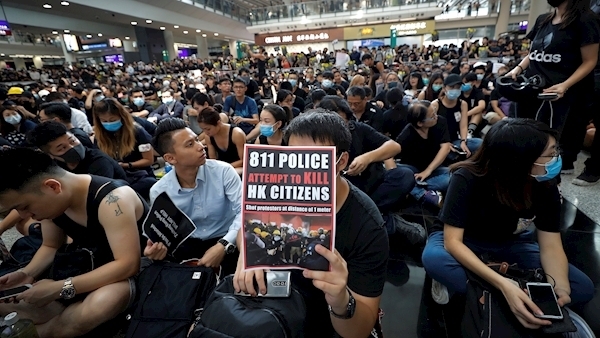
The city’s international airport was severely disrupted for a second straight day, as protesters blocked outgoing gates in a dramatic sit-in. Hong Kong’s embattled leader Carrie Lam warned that the Asian financial center risked sliding into “an abyss,” in a contentious news conference in which she continued to sidestep key questions about the government’s response to weeks of unrest.
The Hang Seng Properties Index fell by over 2%, having dropped more than 20% from an April peak. Cathay Airways, which earlier this week tumbled to its lowest levels in a decade after China’s aviation regulator barred staff who had taken part in demonstrations from flying to the mainland, fell 2.6%.
In a research note, state-run Industrial & Commercial Bank of China cut the shares to a “strong sell” and said the fallout from protests in Hong Kong would hurt the airline’s brand.
“The market is extending declines today and selling pressure is still very huge,” said Linus Yip, First Shanghai Securities strategist. “Names that used to be defensive are falling, such as utilities, MTR Corp. and Reits, which shows investors are very cautious. We haven’t seen the bottom yet.”
MTR, regarded as one of Hong Kong’s safest stocks before the protests began, fell almost 4%. Elsewhere, Prada tumbled by over 7%.
Black-clad protesters swarmed the airport on Monday, causing the biggest disruption yet to the city since the unrest began in June, after a weekend of violence that saw police fire tear gas into a subway station and rubber bullets at close range.
The Hang Seng China Enterprises Index of Chinese firms has lost more than 16% since its April high. The MSCI Hong Kong Index erased this year’s gain. The threat from the US-China trade war and weeks of local unrest is already showing in the property market, as well as tourist numbers, hotel occupancy, and retail sales.
A weak yuan is another cause for concern, as it will damp spending from mainland visitors and pressure earnings for firms that rely on China. Profits for members of the Hang Seng Index are forecast to drop the most since the global financial crisis this year.
“It looks like the situation will get worse,” said Airy Lau, investment director at Fair Capital Management. “Together with the higher global recession risk from US-China friction, the Hang Seng Index is likely to have 5% to 10% more downside.”