Trade tensions could force Fed to cut deeper
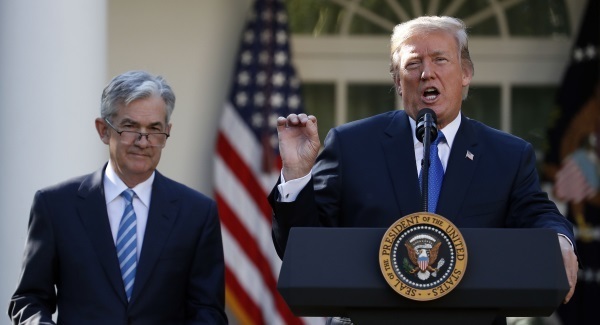
The meeting last week of the US Federal Reserve saw the central bank cut interest rates for the first time since 2008, writes
The target range for the key Fed funds rate was lowered by 25 basis points to 2%-2.25%.
This was, very much, in line with market expectations.
The Fed also announced that it was ending the reduction in the size of its balance sheet.
Fed chair Jerome Powell outlined in the press conference the rationale for the decision to ease policy.
His comments indicated that the reason for the rate cut had more to do with the slowdown in the global economy and heightened uncertainty in relation to global trade rather than any major concerns over the outlook for the US economy.
Indeed, Mr Powell commented that the domestic economy was performing "pretty well" and that the outlook for the US economy "remains favourable" and that "nothing" in the US economy presents "a prominent near-term threat".
Instead the Fed’s assessment is that the main downside risks are "coming from abroad".
Given the Fed’s assessment of the US economy’s performance and outlook, Mr Powell emphasised that the rate cut did not herald the start of a lengthy cutting cycle.
He said that a sustained period of rate cuts was not the current policy outlook for the central bank.
Instead, he described the rate decrease as a "mid-cycle adjustment to policy", and a pre-emptive measure to support the US economy against the prospect of developing external risks.
Incoming US macro data is consistent with the Fed’s view.
While the economy registered a slower pace of growth in the second quarter compared to the first three months of the year, the 2.1% annualised rate nonetheless represented a solid performance.
Meanwhile, last Friday’s payroll data for July indicated that the labour market remains in good health at the start of the third quarter. The boost from tax cuts at the beginning of last year is fading.
However, the strong labour market should support the key consumer side of the economy, which accounts for roughly 70% of US GDP.
The most recent IMF forecasts for the economy are for growth of 2.6% in 2019, followed by 1.9% in 2020.
A key support to investor sentiment since the early part of this year has been the dovish tones emanating from the main central banks, especially in relation to the Fed.
Therefore, the market reacted with disappointment to the Fed downplaying the chances of a long rate cutting phase.
As a result, despite the rate cut announcement, the dollar strengthened and US equity markets fell following the Fed meeting.
Rate cut expectations were also pared back in the immediate aftermath.
In terms of the prospect for further policy easing from the Fed, the central bank was careful to keep its options open regarding the interest rate outlook.
It has attempted to water down expectations for a raft of rate reductions, however, at the same time, it has not ruled out further rate cuts.
In this regard, it stated it will be monitoring incoming macro data and the "evolving risk picture", linked in part to global trade tensions, to assess the appropriate stance for its monetary policy.
In the days since the Fed meeting, there has already been an escalation in global trade tensions.
Any further deterioration in international trade will likely see market speculation for additional US rate cuts intensify.
- John Fahey is senior economist at AIB

CONNECT WITH US TODAY



Be the first to know the latest news and updates