Accountants and hauliers raise warnings as Revenue marks progress in Brexit plans
Revenue has hailed progress in contacting exporters and importers as part of the Government’s plans to prepare for Brexit.
However, accountants and hauliers who are anticipating major disruption in the event of the UK crashing out of the EU next month have said that much more needs to be done.
The number of traders who have applied for the ‘Economic Operators Registration and Identification’ registrations has soared, Revenue said, as it urged more firms to engage in its Brexit plans.
Trader identification and product code numbers are required to ensure that the many firms involved in the hugely valuable trade between Ireland and the UK can conduct business as smoothly as possible whatever type of Brexit the UK chooses in the coming weeks.
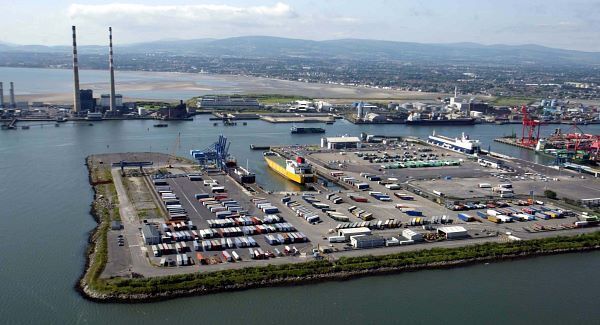
Major disruption at Irish and British ports is widely predicted should the UK and the EU fail to clinch a transition deal by the end of March.
Ireland exported almost €14.1bn in goods to the UK last year and imported €18.3bn worth of goods.
“We have engaged extensively with large economic operators, logistics companies, freight forwarders, haulage companies, customs agents, SMEs, and software providers”, said Lynda Slattery, who is the head of the Revenue’s Brexit policy in its Customs Division.
“Our message has been clear: You need to assess the impact of Brexit on your business and take the necessary action now, to mitigate the challenges that Brexit undoubtedly brings,” she said.
However, Chartered Accountants Ireland said its members at the forefront of planning for Brexit are dealing with firms facing impossible confusion.
We are seeing first-hand the growing awareness of the risk of a no-deal Brexit from the increased demand in information from our members.
"There is no room for any government agency or business organisation to be complacent,” its head of taxation and public policy, Brian Keegan said.
Mr Keegan said: “I think it is premature for Revenue to welcome this uptake in Irish business tax registrations for future trade with the UK post-Brexit.”
Aidan Flynn, head of Freight Transport Association Ireland, a business group of hauliers involved in Irish-British trade, predicted widespread tailbacks and logjams at Irish ports from April, if the UK crashes out. UK authorities will act unilaterally to alleviate holdups at English ports for imports into Ireland but EU authorities will seek to implement checks which could likely hold up Irish exports, Mr Flynn said.
He urges flexibility from officials on this side of the Irish Sea.
“The real test will come on ‘Day 1 No-deal’ where it is inevitable that there will be confusion, incorrect documentation, incorrect declarations and delays at ports.
"How revenue and the other regulatory bodies such as the Department of Agriculture officials deal with these issues will be the real test in keeping trade moving,” Mr Flynn said.
Revenue said that its “over-arching priority” to make sure that trade flows regardless of Brexit.
“Revenue is conscious of the priority for businesses to minimise costs associated with Brexit and is supporting them with clear and timely information, advice and guidance on preparing to trade with a non-EU country,” it said.
CONNECT WITH US TODAY



Be the first to know the latest news and updates











