Report predicts £48bn UK budget deficit
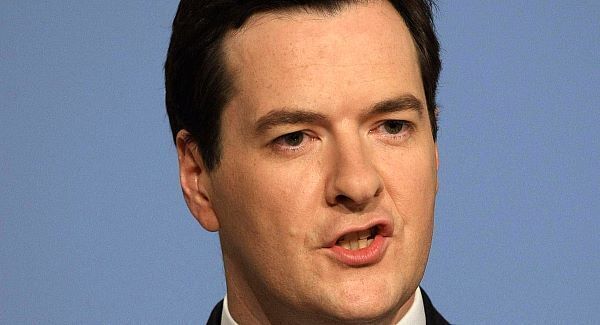
British Chancellor George Osborne will have to fill a £48bn (€60bn) black hole in the UK's public finances if he is to get his deficit-busting plans back on track, a report warned today.
Some British government departments face cuts between now and 2018 on a scale similar to those in the spending review of October 2010, according to the Social Market Foundation (SMF) and the Royal Society of Arts (RSA).
The SMF and RSA said the "small print" of the March budget implied that £26bn (€32.5bn) of new cuts would be required beyond the 2010 spending review.
But the report estimates that, due to the deteriorating economic situation, a further £22bn (€27.5bn) of cuts will need to be found by 2018.
Ian Mulheirn, director of the SMF and author of the economic analysis, said: "According to the OBR's (Office for Budget Responsibility) own models, the economy appears to have less room to bounce back than previously thought.
"Combined with high public borrowing since March this implies a much bigger black hole in the public finances, making the stakes for the next spending review higher than ever."
The report comes after the British Treasury announced on Friday that it is to receive a £35bn (€43.8bn) boost as part of a deal with the Bank of England that will effectively reduce public debt.
The 2010 spending review was supposed to finish the job of deficit reduction by 2014, but the next one in December looks set to lay out "much more pain", the report said.
The British government will need to find additional savings of 23% from departmental spending, compared with an average of 19% following the 2010 review.
Mr Mulheirn added: "Combined with the savings pencilled in at the last Budget, the developments since March mean that the Chancellor will have to lay out some eye-watering cuts at the next spending review and will prolong austerity deep into the next parliament."
Using models published by the OBR, the independent tax and spending watchdog, the report said the structural deficit - the part of borrowing that will not be eliminated when the economy returns to growth - is 1.1 percentage points larger than predicted in March.
The RSA concludes that the Government must use the forthcoming spending review to explore a "radical remodelling" of public service provision if the Chancellor is to stand a chance of tackling the growing hole in the public finances.
The RSA warned that the welfare budget is not a "bottomless pit" for cuts, and the UK will incur a "massive human cost" if it is treated as one.
The pressures of recession have had a huge impact on government borrowing, with tax revenues still coming in below government spending.
Mr Osborne is now widely expected to announce in December that the Government will be unable to start bringing down debt as a percentage of GDP in 2015/16 - a different measure than the structural deficit.
If Mr Osborne sticks to the debt target, he will be faced with the unpopular decision of announcing potentially large tax rises and further spending cuts in December.
The Chancellor and Bank Governor Sir Mervyn King have agreed that the Bank of England will give the Treasury interest earned on Government debt owned under its £375bn (€468.9bn) economy-boosting programme known as quantitative easing (QE).
The cash - currently on the Bank's books - will flatter the public accounts by reducing the budget deficit while also acting as a "small loosening of monetary conditions" equivalent to taking more QE action.
CONNECT WITH US TODAY



Be the first to know the latest news and updates