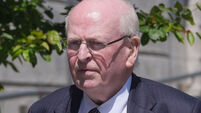
London mayor explains congestion charge to world mayors
London mayor Ken Livingstone told a gathering of world counterparts that they could unclog city streets and fight global warming by emulating the British capital’s congestion charge.
He said making people pay to drive in central London had improved traffic flows and reduced emissions of “greenhouse gases” blamed for raising temperatures and changing weather patterns worldwide.
The £5 (€7.40), soon to be £8 (€11.90), fee had forced people out of their cars and filled the bus and the Tube, Livingstone told mayors gathered for the United Nations World Environment Day Conference in San Francisco.
“We are the only city in the Western world where there’s a notable shift from car use to public transport,” he said during a speech at San Francisco’s Cable Car Museum. “This is the only thing I've done in my political life that turned out better than I hoped.”
In the US, environmentalists have sought similar charges to clear up downtown traffic in cities such as New York and San Francisco, but so far the idea has not gained much momentum.
In San Francisco, drivers already pay €2.40 to cross the Bay Bridge and €4 to cross the Golden Gate Bridge into the city, but commuters who live in the populous southern suburbs can drive downtown free.
Supervisor Jake McGoldrick wants the city to explore the idea of a downtown congestion charge and has applied for a grant to study the proposal.
Livingstone, who was elected to his first term as London mayor in 2000 and re-elected last year, introduced the fee in February 2003 to relieve the city’s traffic-choked streets. Revenues are reinvested in the public transportation system.
Despite protests, Livingstone imposed the fee on drivers entering an eight-square-mile area of central London that includes its financial and entertainment districts between 7am and 6.30pm.
Drivers who enter central London must buy daily, weekly or yearly passes and register their number plates. A network of 800 cameras photographs registration numbers within the zone and drivers who have not paid are fined.
A recent government study found that congestion inside the zone had fallen by 30%.