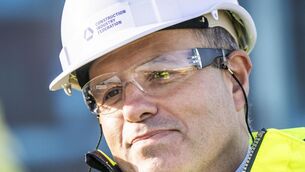
Former Enron boss surrenders to FBI
Kenneth Lay, former chairman and chief executive of Enron, turned himself in to the FBI today to face criminal charges involving the scandal-ridden energy company.
Lay, the founder of the company, was indicted yesterday after a two-and-a half-year federal investigation that has produced charges against some of his once most highly trusted lieutenants, including his hand-picked protégé, former chief executive Jeffrey Skilling.
The indictment was sealed and charges were expected to be disclosed later today.
Lay, accompanied by a pastor, emerged from a car driven by his wife, Linda, and walked into Houston’s FBI headquarters at dawn.
“Nice of you all to show up this morning,” Lay told a throng of reporters.
He said yesterday that he had committed no crimes.
Lay, his hands behind him in cuffs, was later placed in a car with authorities for the drive to Houston's federal courthouse. After arriving there, he was led into the building through a back door.
Enron’s collapse in 2001 cost investors billions of dollars, put thousands of Enron employees out of work and wiped out retirement savings for many. The company, once admired, became a symbol of corporate greed and excess.
“I have done nothing wrong, and the indictment is not justified,” Lay, 62, said in a statement yesterday after he learned of the indictment.
Prosecutors from the Justice Department’s Enron Task Force presented an indictment to US Magistrate Judge Mary Milloy in Houston, and at their request she sealed both the indictment and an arrest warrant, sources said.
The Securities and Exchange Commission was also expected to bring civil fraud charges against Lay, including making false and misleading statements and insider trading, a person familiar with the case said.
Prosecutors have aggressively pursued the one-time celebrity CEO and friend and contributor to President George Bush who led Enron’s rise to No 7 in the Fortune 500 and resigned within weeks of its stunning failure. Lay is the 30th and highest-profile individual charged.
Skilling succeeded Lay as CEO in February 2001 and resigned abruptly six months later, just weeks before the scandal broke. He was indicted in February on nearly three dozen counts of fraud and other crimes.
Waiting to testify for the prosecution is former finance chief Andrew Fastow, who pleaded guilty to two conspiracy counts in January. Fastow admitted to orchestrating partnerships and financial schemes to hide Enron debt and inflate profits while pocketing millions of dollars for himself.
Enron’s collapse led a series of corporate scandals that led to Congress’s passage of sweeping reforms to securities laws. Thousands of Enron’s workers lost their jobs, and the stock fell from a high of 90 in August 2000 to just pennies, wiping out many workers’ retirement savings.
The charges against Skilling and former top accountant Richard Causey concern their actions over several years leading up to Enron’s collapse. But allegations against Lay were expected to focus on his actions after he resumed the role of CEO upon Skilling’s abrupt resignation in August 2001.
Days after Skilling’s resignation, Lay met privately with Sherron Watkins, then an executive on Fastow’s staff, who had sent him a lengthy memo warning of impending doom from Fastow’s myriad schemes to hide debt and inflate profits.
Lay told The New York Times last month that he did not believe the company had serious problems and trusted other senior managers – including Fastow and Causey - when they reassured him that all was fine.
Skilling and Causey are awaiting trial on charges of conspiracy, fraud and insider trading. Both pleaded innocent and are free on bond.