Steve Bannon was hated, but was often a good influence on Donald Trump
STEVE Bannon made many enemies during his stormy, seven-month tenure as the White
House chief strategist.
He clashed with US president Donald Trumpâs son-in-law, Jared Kushner, as well as with top economic advisers and national security adviser , H R . McMaster.
Bannon was also a divisive force for the US, and was instrumental in the travel ban, barring people from several Muslim-majority countries from entering the US; a supporter of building a wall with Mexico, and a conservative blamed for stoking white votersâ resentment towards minorities.
However, his departure could hurt US foreign policy. He added a much-needed voice favouring non-interventionism and the promotion of American economic interests. With him gone, it is more likely that Trump will steer Washington in the wrong direction in places ranging from Afghanistan to China.
Trumpâs announcement that he will send more troops to Afghanistan may be an early sign that Bannonâs absence is already making itself felt. Administration officials have reportedly indicated that 4,000 troops, the mid-range of what the Pentagon was planning, would be sent.
Bannon opposed plans by McMaster and secretary of defence James Mattis to supplement the 8,400 troops already in Afghanistan. As a result, according to a New York Times report, Bannonâs hard questions about Afghanistan sowed doubts with Trump, delaying a decision on a multi-year commitment of American troops in support of the Kabul government.

Bannon was on the correct side of the Afghanistan debate. Almost 16 years, thousands dead or injured, and $1trn after first sending American forces there, the war remains at a stalemate and the militant Taliban now controls more territory than at any point since 2001.
And if the US couldnât pacify Afghanistan with 100,000 troops in 2011, itâs not clear how it could do so with a fraction of this number now. Bannonâs departure may have made Trump more likely to listen to his generals and to dive deeper into the Afghanistan morass.
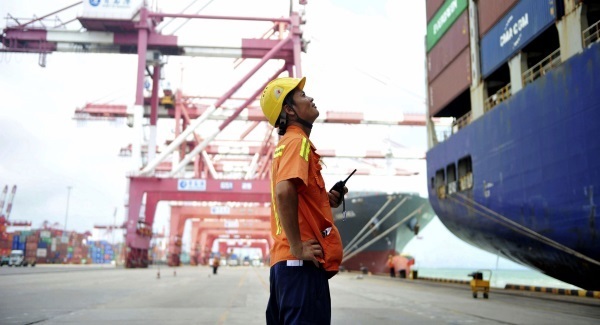
Bannonâs influence also has been visible on trade with China, pushing the US to file a complaint, under Section 301 of the 1974 Trade Act. This would allow the US to impose sanctions against China, for engaging in unfair trade practices. Bannonâs concern about
Chinese trade practices is well-founded.
Chinese companies consistently hack and steal American companiesâ intellectual property, using stolen information to manufacture products that compete against those from the US.
The US loses billions a year from intellectual property theft, most of it perpetrated by China. Moreover, western business organisations â including the US Chamber of Commerce â complain that Chinese authorities are trying to force them out of Chinaâs tech market, by requiring they use only technology developed and controlled by Chinese companies.

Washington also worries that US technology companies â such as Advanced Micro Devices, Hewlett Packard, and IBM â are being forced to turn over key intellectual property to China, in exchange for market access.
Washington now seems prepared to fight back. Trump has instructed US trade representative Robert Lighthizer to determine whether Chinese trade practices need to be investigated. This arguably represents a win for Bannonâs argument, as well as long-suffering American companies.
With Bannon gone, what policy will Trump will pursue on China trade? He has reportedly offered Beijing a better deal on trade, in exchange for co-operation on North Korea, and itâs certainly possible Trumpâs directive to Lighthizer will go nowhere, thus allowing the theft of American intellectual property to continue.
Beyond Afghanistan and China, Bannonâs worldview will also be missed in any future decisions Trump needs to make regarding the use of American military force. For example, Bannon believes that no military solution to the North Korean crisis exists. His departure could increase the chances of Trump ordering a risky strike against Pyongyangâs nuclear facilities.
Trump did not always take Bannonâs advice. Bannon did not favour a US air strike against Syria, after Damascus used poison gas against civilians; Trump ordered the attack anyway.
Nor was Bannon the only influential non-interventionist voice in the administration. Secretary of state, Rex Tillerson, for example, possesses a realist view of the world that prioritises American security and economic interests over the spreading of American values.

And commerce secretary Wilbur Ross shares Bannonâs hard-line views on theft of intellectual property, writing of âthe danger posed by the manner in which Chinese companies and the Chinese government treat Americaâs intellectual propertyâ.
Many people, including Fox News founder Rupert Murdoch and leading Democrats, such as Nancy Pelosi, wanted Trump to fire Bannon. But that doesnât mean there wonât be times when they might secretly wish he still had Trumpâs ear.












