Rising temperatures turn up the heat on human conflicts
WITH India experiencing its worst drought in 140 years, farmers have taken to the streets. At a protest in
Madhya Pradesh this summer, police opened fire on farmers demanding debt relief and better crop prices, killing five.
In Tamil Nadu, angry growers have held similar protests, and lit candles in remembrance of those killed. And at one rally in New Delhi, farmers carried human skulls, which they say belonged to farmers who have committed suicide following devastating crop losses over the past six months.
According to a recent study by Tamma A Carleton of the University of California, Berkeley, suicides among Indian farmers have increased with the temperature, such that an increase of 1º Celsius above the average temperature on a given day is associated with
approximately 70 additional suicides, on average.
Beyond exposing failed farming
policies, this year’s drought-fuelled
turmoil also underscores the threat that climate change poses not just to India, but to all countries.
As global temperatures rise and droughts become more common,
political agitation, social unrest, and even violence will likely follow.
In 2008, when severe weather cut into the world’s grain supply and drove
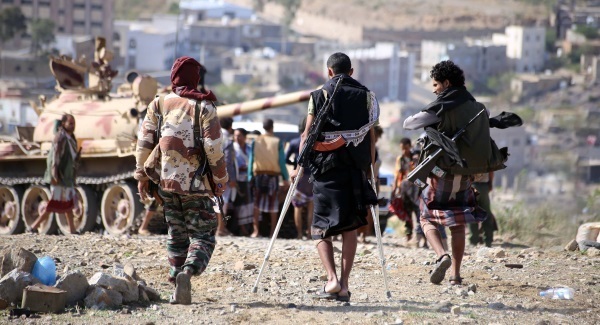
up food prices, countries from Morocco to Indonesia experienced social and political upheavals. More recently, food insecurity has been used as a weapon
in the wars in Yemen and Syria.
According to the Center for Climate and Security (CCS), failure to address such “climate-driven risks” could lead to increased fighting over water, food, energy, and land, particularly in
already unstable regions. CCS identifies 12 “epicentres” where climate change might ignite or exacerbate
conflicts that could engulf large populations, and spill across borders.
It is no coincidence that conflicts
proliferate alongside rising
temperatures. A 2013 study estimates that interpersonal violence rises by 4%, and intergroup conflicts by 14%, “for each one standard deviation change in climate toward warmer temperatures or more extreme rainfall”.
Moreover, psychological studies have shown that when people are subjected to uncomfortably hot temperatures, they show increased levels of
aggression. And new research finding that what is true for the individual also holds true for populations.
In Sub-Saharan Africa, researchers have found strong correlation between three decades of rising temperatures and outbreaks of civil war. If warming trends continue, civil wars and other conflicts will become more common in Africa, the South China Sea, the Arctic, Central America, and elsewhere.
Avoiding such outcomes will require renewed support for multilateral treaties such as the 2015 Paris climate agreement, which has been weakened by the withdrawal of the US.
It will also require increased engagement by countries, cities, and industries on three key areas: Resource
management, disaster mitigation, and migration. In largely agricultural societies, farm productivity affects the entire economy. As we’ve seen in the Horn of Africa and India this year, changes in temperature and rainfall can reduce crop yields, and thus rural incomes. Under such conditions, in the absence of other economic opportunities, communities may resort to
violence as they compete for resources.
International aid bodies, working with state and federal governments, should go beyond addressing immediate causes of poverty to develop long-term strategies to help agricultural communities survive bad harvests.
Additionally, new strategies are needed to co-ordinate disaster-relief
efforts. As the climate changes, weather-related calamities such as floods, hurricanes, landslides, and
typhoons will increase, undermining livelihoods, and the broader economy.
Governments must work together to mitigate these risks, and to respond forcefully to disasters when they happen. Otherwise, the fallout will
disproportionately hurt poor and
vulnerable communities, perpetuating the cycle of poverty and violence.
Finally, we need better policies for managing human migration, much of it related to severe weather and drought.
In 2015, the number of international migrants reached a record high of 244m.
As the climate shifts, entire regions could become uninhabitable, and many more people will be uprooted. Parts of the Middle East, for example, could
become too hot for humans by the end of this century; and heavily populated cities such as New Delhi could
experience temperatures over 95º F (35º C) up to 200 days out of the year.
Scientists agree that climate change poses a grave danger to the planet. But politicians and government officials have not connected the dots between a changing climate and human conflicts.
Among the many threats associated with climate change, deteriorating
global security may be the most frightening of all.
Gulrez Shah Azhar is an Aspen New Voices fellow, assistant policy researcher at the RAND Corporation, and PhD candidate at the Pardee RAND Graduate School.
Copyright: Project Syndicate, 2017.

CONNECT WITH US TODAY



Be the first to know the latest news and updates