Cost of 9% Vat rate is €2.2bn, says tax body
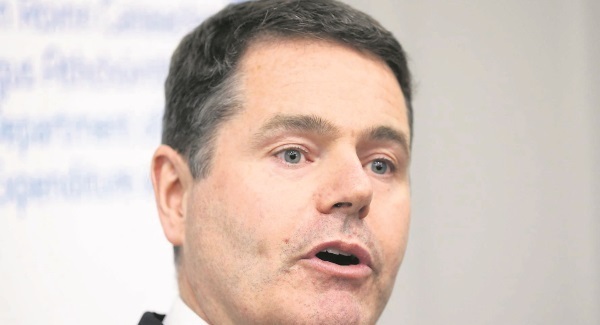
This is one of the findings of the Tax Strategy Group — the unit in the Department of Finance responsible for throwing light on the costs of potential budget measures by Finance Minister Paschal Donohoe — as he prepares for his first budget in October.
The documents cover all sorts of taxes and policy, including corporation tax for multinationals and business incentives for small firms, personal taxes, including the Universal Social Charge, and potential incentives for small landlords to help ease the housing crisis.
The 9% hospitality tax was introduced in 2011 to bolster employment. But then finance minister Michael Noonan had warned hoteliers against hiking prices.
In the latest documents, the Tax Strategy Group again found that the 9% rate is the lowest in the EU for hotel accommodation and restaurants combined, the fifth lowest in terms of restaurants alone, and the eighth lowest for hotel accommodation.
“In terms of the UK and Ireland, Dublin (€147) was the fourth most expensive after London (€177), Bath (€167), and Oxford (€157).
For the rest of the world, Dublin was the 10th most expensive city for hotel prices surveyed, in late 2016, with Dublin and London expected to have the highest occupancy rates in 2017 and 2018, the group reported.
On the USC, it presents options for the Government to make a start towards its long-term aim of phasing out the tax altogether. Those costs range from €2.7m in a full year from increasing the entry point to €177m from reducing the 8% USC level to 7%. Alternatively, increasing the 8% level to 9% for earners on more than €70,044 would yield an additional €177m a year.
By sector, financial firms and insurers in 2016 paid the largest amount in corporation tax, at over €2bn, followed by manufacturing firms, at over €1.87bn, while information and communication firms paid €1.23bn.
In the same year, accommodation and food services paid €84m in corporation tax, with agriculture, forestry and fishing accounting for €39m.
In the short term, possible tax measures to help landlords might include bringing forward full restoration of mortgage interest reliefs; allowing landlords to deduct local property tax from rental profits, at a cost of €28m; and helping so-called accidental landlords.
The research and development (R&D) tax credit, was “among the best in class internationally” and was used by 1,534 firms in 2015, at a cost of €708m, equivalent to 10% of all corporation tax receipts.
“However, it does appear that the pool of firms who could potentially claim the credit has been largely exhausted”, the tax group said.
On the so-called Knowledge Development Box, it said 2016 costs of the measures were not yet available. The 6.25% tax “could encourage multinational corporations to put additional substance in Ireland”, including IP or intellectual property transfers. Claims, it said, for capital assets have increased from €2.7bn in 2014 to €28.9bn in 2015, mainly because of “the onshoring of IP” which also led to the huge revision in GDP growth in 2015, to over 26%.
CONNECT WITH US TODAY



Be the first to know the latest news and updates