Kathleen O’Toole wants to ‘press the reset button’ on An Garda Síochána
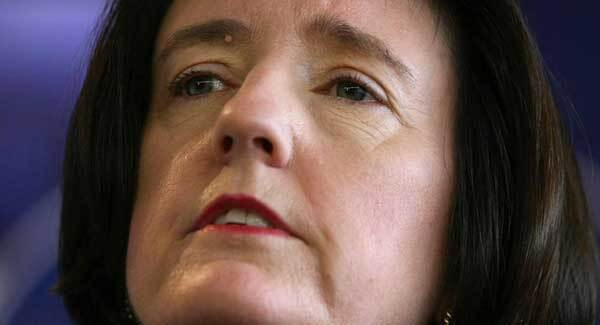
She is an experienced police chief. She has been brought in by the US Department of Justice to lead reform in certain states.
She is a former boss of the Garda Inspectorate. And she was on the Patten Commission in Northern Ireland — itself the template for the Commission on the Future of Policing in Ireland.
At a press conference yesterday, following their first commission meeting, she was assured in her comments and dealt with questions in a calm, knowledgeable fashion.
Her tone was upbeat — a missing quality in recent times.
To use her own phrase, she is “hitting the ground running”.
This is a big plus because if a foreign expert came in, who was ignorant about policing in Ireland, it would delay the workings of the commission for probably a year as she or he would have to read all the previous policing reports.
Ms O’Toole told the media she knew a lot of work had already been done and that they would not be “reinventing the wheel”.
She said there was a fundamental issue regarding the implementation by Garda HQ of recommendations made by the inspectorate and others.
But she said it was not just about making sure the changes are implemented, but ensuring Garda HQ has the “capability” to do the implementing. She said she knew this from her own work as a police chief trying to reform.
She said this was one of the “immediate” issues that they would address.
She said she was delighted with her fellow commissioners (12 in all, including herself).
She did not agree with suggestions that it was heavy with legal, academic and management experts or believe it was a failure in not having an experienced community representative and a serving or former garda on board.
She said the commission — similar to the inspectorate and Patten —would consult widely, both in garda stations and in communities.
She said there was “a crisis in confidence” in policing in Ireland and a “sense of urgency” to address it.
Ms O’Toole qualified that heavily to say that she thought the “average” person supported their local guards and that their issues were with management and systems.
She said she wanted to commission to “shift the commentary” dominating public discussions and have “constructive dialogue”. She wanted to “press the reset button”.
She appeared to take some risk in entering the debate on Garda Commissioner Nóirín O’ Sullivan when asked about constant calls for her head.
“I don’t think it would make a difference if it was Nóirín O’Sullivan or someone else,” she said.
“I think this management team inherited a poisoned chalice and I think we need to get beyond the finger-pointing and the name calling. We’re certainly not going to engage in that. We are looking to the future.”
That foray aside, she insisted this commission’s report would not just lie on a shelf and gather dust.
“I’m convinced we can get this done,” she said.
She said that to some extent garda reform was “unfinished business” for her, given her previous role in the inspectorate.
She accepted the scale of the commission’s work sounded like a “Herculean” effort.
She and the others will need that mythical strength, and then some.
CONNECT WITH US TODAY



Be the first to know the latest news and updates











