Theresa May has called a snap election and placed the biggest bet of her career?
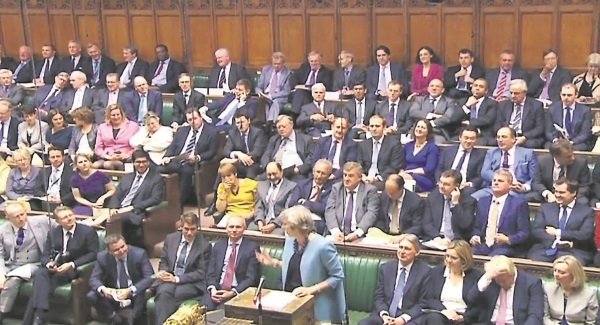
The British Prime Minister used the day Parliament returned from the Easter recess - part of which she spent walking in North Wales - to say she had "recently and reluctantly" concluded that she would call a snap general election.
The decision to call an election marked a screeching U-turn after repeated denials that she would go to the country at a time when the UK's future relationship with the European Union was up for negotiation.
But in the end it was the headache caused by Brexit, and the risk of trying to take deeply divisive measures through the Commons with a working majority of just 17, that forced her hand.
"Our opponents believe that because the Government's majority is so small, our resolve will weaken and that they can force us to change course. They are wrong," she said defiantly.
But she acknowledged that "what they are doing jeopardises the work we must do to prepare for Brexit at home and it weakens the Government's negotiating position in Europe".
Her decision will also have been influenced by the clear opinion poll lead she enjoys over Jeremy Corbyn's Labour, with senior Tories urging her in recent weeks to take advantage of the disarray in the opposition ranks to secure a stronger mandate.
Mrs May - who was derided as Theresa Maybe by the Economist magazine in January - is also anxious to avoid comparisons with Gordon Brown, whose dithering over whether to call an early election after entering Number 10 in 2007 left him damaged.
Like Mr Brown, she took over in Downing Street without winning a general election. She was sensitive to the comparison whenever it was made and it appears she has decided not to make the same mistake he did.
While Brexit may be the reason Mrs May cited for her decision to seek a strengthened Commons majority, she has also faced difficulties with rebellious backbenchers on domestic policies.
Her Chancellor, Philip Hammond, was forced into a humiliating U-turn over his Budget when it emerged that his plans to increase self-employed National Insurance contributions faced resistance in the Tory ranks.
And Mrs May's flagship education reforms, including a new generation of grammar schools, would also be vulnerable to a rebellion by a handful of Tory critics.
The prospect of election expenses investigations in a series of seats won by the Tories in 2015 may also have influenced Mrs May's decision to hold a fresh ballot.
The bookmakers have already installed the Tories as firm favourites to win the most seats in the general election.
But as the EU referendum and Donald Trump's victory in the USA showed, any election is a gamble.
The British Prime Minister has just placed the biggest bet of her career.
CONNECT WITH US TODAY



Be the first to know the latest news and updates