State can still lead the way
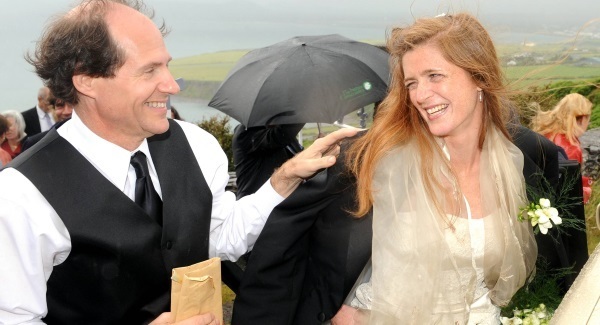
Cass Sunstein, the man known as former US president Barack Obamaās āregulatory Czarā, visited Dublin the other day. At an event hosted by the Economic and Social Research Institute, Mr Sunstein set out his views on how best to persuade the population to accept reforms that are worthy but difficult to stomach.
The Sunstein diet involves coming up with a host of different ways to dress up the policy equivalent of green vegetables so as to make them palatable. As he put it, default rules ā such as pre- enrolment in pension schemes ā are the āgold standard of behavioral rules.ā
By way of background, Cass Sunstein is a behavioral economist and author of a host of books. He served as director of the Harvard Law School Program on risk regulation before taking over, in 2009, as director of the White House Officer of Information and Regulatory Affairs. His job, in essence, was to road test a wide variety of reforms.
He lasted three years in the post, quite a long time given the swampy nature of politics in Washington DC. It helped that his wife is Samantha Power, the Irish-born former US representative to the UN.
In Dublin, he outlined some examples of successful reforms where the public have been won round through innovative approaches based on the idea that human inertia is a powerful obstacle in the way of change and that measures must be put in place to overcome this inertia.
The Harvard academic is sceptical about the effectiveness of approaches centered on financial incentives. Instead, he argues, techniques such as auto enrolment should be adopted.
This approach has already been adopted in Australia and latterly in the UK, in relation to pension savings. The key outcome is that far more employees find themselves putting a bit of money aside for that rainy day.
This idea has been tried in US schools where people below certain income levels have been automatically signed up to free school meal programs boosting take up by almost 750,000 pupils.
A key finding is that once the enrolment takes place and the facts have been established on the ground, the level of ācustomerā withdrawal is low.
It is the inertia factor kicking in. Mr Sunstein argues that too much money in the US has been wasted on financial incentives aimed at promoting personal retirement provision.
Mr Sunstein identified behaviours that act as roadblocks in the way of adequate personal pension provision ā peopleās limited attention span. Their āpresent biasā, leading to inertia and procrastination. Their āunrealistic optimismā. Finally, the loss aversity to which we are all prone. Why forego income and by extension lifestyle, now, in order to provide for a future that might never arrive?
Cass Sunstein is a big believer in what is in effect, manipulation for the common good.
He is both extremely clever and articulate yet he springs from a lost heroic of active government, that of Franklyn Roosevelt, John F Kennedy and Lyndon Johnson, though it is active government on a smaller, more subtle, scale.
The core vision is that of the little guy with a cloth cap raised along with the rest of the family above their station.
This idea has been discredited, but a lot of good has gone with it.
Sunstein suggests we create behaviour insight teams within government so that we can begin setting what could be a generation long task of tackling problems such as obesity.
Using data collected by Amarach Consulting, he concludes that in Ireland, there is strong support for more subtle āauto enrolmentā style interventions as opposed to mandatory instructions, or outright bans.
The Irish mind appears to respond well to such back door prompts.
A big exception is charitable donations and organ donations ā here, people, it seems, wish to retain control over personal decision making.
Some libertarians might view the Sunstein approach as meddling and as a subtle assault on human freedom, but whereās the freedom in lives ruined by ignorance and neglect?
With so many commercial enticements now being beamed at people, through social media and other channels, the very idea of personal choice seems to be contested.
Perhaps, it is now time for Government to get back in the ring so as to act as our protector.