Britain faces Brexit hit on consumer spending
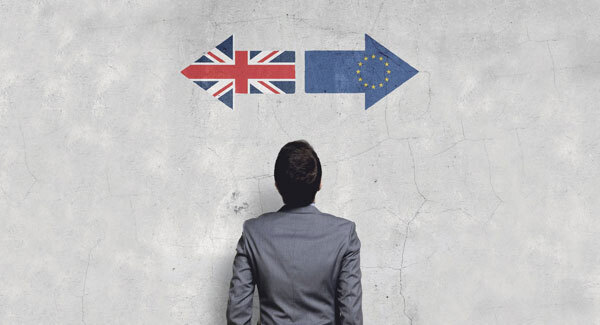
Households ran down their savings to a record low as their spending power shrank sharply in the last three months of 2016, official data showed.
In another indication that the world’s fifth-biggest economy has lost some of its resilience to last June’s shock vote to quit the EU, the dominant services industry contracted in January for the first time since March last year.
Separately yesterday, a survey showed consumers were worried about the outlook for the economy.
And there was a surprise fall in house prices.
The latest signs of some sort of slowdown will likely raise fears here that Irish firms selling goods and services across the Irish Sea will face even more challenges.
The slump in the value of sterling against the euro since the UK’s Brexit vote last June has made it difficult for small Irish exporters to sell into Britain.
Britain’s economy last year defied forecasts that it would slow sharply after the referendum decision to leave the EU.
The UK’s Office for National Statistics — ONS — confirmed GDP grew by a quarterly 0.7% in the October-December period. Growth for 2016 as a whole was 1.8%, the strongest among all Group of Seven rich nations bar Germany.
But a quick rise in inflation, caused in part by the fall in the value of sterling, is expected to crimp spending by consumers, the main drivers of the economy, just as the UK begins its EU divorce.
Real household disposable income — a measure of spending power — shrank by 0.4% in the last three months of 2016, the steepest quarter-on-quarter drop in nearly three years.
And while consumer spending remained strong, the savings ratio sank to 3.3%, its lowest level since records began in 1963, raising questions about how long households can maintain their spending.
The ONS said the fall in the savings ratio in part reflected changes in pension fund holdings rather than a big shift in the real incomes of households. But economists said the figures were reason for caution.
“For consumption to continue to grow at current levels, the UK needs the savings rate to drop further. Yet today’s data show there is not much further to fall,” HSBC economist Elizabeth Martins said.
Supermarket chain Asda said its gauge of disposable income showed the weakest growth since June 2014 during February.
Companies are also wary.
The ONS said business investment fell by 0.9% in quarterly and annual terms in the fourth quarter, roughly in line with a previous estimate.
The fall in the pound is not all bad news for Britain’s economy and the data showed it was helping to ease one of its biggest vulnerabilities — its wide balance of payments deficit with the rest of the world.
The ONS said the current account deficit more than halved in the fourth quarter to £12.1bn (€14bn) — and stood at 2.4% of GDP, down sharply from 5.3% in the third quarter.
Reuters and Irish Examiner staff
CONNECT WITH US TODAY



Be the first to know the latest news and updates