The world’s elite need to listen before it’s too late
The World Economic Forum happens to coincide with the accession to power of Donald Trump in the US.
One guesses that the expense account brigade will be feeling more than a touch queasy when they gather to listen to the inaugural address of the new leader of the Free World.
The Davos event has come in for more than its share of criticism in recent years. Some view the event as an enormous schmooze-fest. For the record, the theme of this year’s Davos World Economic Forum is “Responsible and Responsive Leadership”.
Good luck with that.
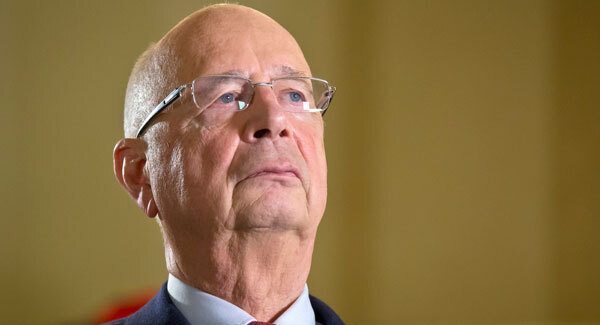
Swiss entrepreneur Klaus Schwab first started to put Davos on the map in 1971 at a time when Richard Nixon was in the White House, and the oil price was set to soar, bringing a new era of stagflation. Last week, Schwab said: “Economic globalisation has entered the critical stage.”
He said that a backlash is underway and that “a mood of helplessness and anxiety helps to explain the rise of a new brand of populist leaders”.
In a neat twist, Schwab said that these were the quotes from a speech made by him 21 years ago. However, this is not simply a case of the more things change, the more they remain the same.
Asset prices have soared, greatly exceeding income growth since the mid-1990s while globalisation has hollowed out whole industries.
Admittedly, this process was well underway in places like the American Midwest and the north of England in the mid-1970s. The difference now is that, these days, the political backlash appears much stronger.
At the same time, threats to a whole new set of employments emerge on an almost daily basis. They call it the fourth industrial revolution, the successor to the IT third wave.
Drones, self- driving cars, artificial intelligence, immunotherapy. One can only stand and watch, jaws open, marveling at their sheer ingenuity.
However, these innovations could have the same impact on communities as the great land grabs of the 18th and 19th century that swept farmers out of much of Scotland, or the impact of the spinning wheel on countless weavers working in cottages.
The inventions of Arkwright and Stevenson led to the s moke-choked cities of Victorian England.
We can only guess at the impact of the next wave, not least on east Asia where jobs are disappearing by the hundreds of thousands because of automation.
Klaus Schwab believes that economic development must be accompanied by a sense of social responsibility, but are the business leaders prepared to listen to this message?
Chinese leader, Xi Jinping, is attending Davos for the first time with a large entourage. Is he here to listen, or simply to announce?
His address, three days ahead of the Trump inauguration, will be followed closely. He will restate China’s commitment to globalisation.
However, the conference participants may also be studying the other emerging power in the form of those leading the technological new wave.
They will wonder whether they have, along with their new wealth and power, acquired a sense of responsibility. Certainly, Microsoft founder Bill Gates has, but then he is almost old hat, these days.
Do the hugely successful promoters and managers of the social media industry, in particular, care about the consequences of ongoing failure to carefully curate the content on their sites ? Not very much, one suspects.
Do they concern themselves with the way the web is being used by enemies of freedom from IS to hackers employed by dubious powers? Or are they happy to shirk their responsibilities while concentrating on revenues?
It is now time surely to direct plain unvarnished words at those who now wield the real power.
At Davos, the elite should be told that it is about time that they sink their hands more deeply in their pockets so that the causes of the mass migration into Europe can be more effectively tackled.
People like Warren Buffett and Chuck Feeney have set a fine example, but how many have followed in their wake?
One man who knew well how to speak truth to power was Irish mandarin Ken Whitaker, who died last week.
This was made amply clear by historian Ryle Dwyer when he recalled Whitaker’s trip as department secretary in 1957 to see his new boss, Jim Ryan, incoming minister of finance, in 1957.
Whitaker was just 40 at the time. The meeting could have gone badly for him, but fortunately, Ryan was a person with the vision to listen to uncomfortable revelations. He took on board the young civil servant’s warnings about the state of the country and the pressing need to introduce reforms.
Civil servants these days appear to lack the self confidence of the people of Whitaker’s generation. Officials may be hard working, but it seems they follow orders rather than opting to speak out.
In the months and years ahead, we will need more people with vision and courage in the public service, in politics and in business, to be willing to call out those in positions of power.
In Ireland, we are facing into a period of momentous change with Britain and the US. We will remain on in the European Union which is also facing huge internal challenges. Concern is being expressed about the degree to which our leaders and top officials have a handle over matters.
In the 1980s, we were lucky to have exceptionally able diplomats, people like Sean Donlon, Noel Dorr and Michael Lillis, who were adept at building alliances in Washington DC and London.
Since then, the Department of Foreign Affairs has lost some of its clout. This is no reflection on the current generation.
It is simply that matters of trade and investment have taken precedence.
In truth, we need a new generation of public officials and politicians who can see far beyond the nearest corner.
Perhaps such people only emerge in a crisis. It is in times of greatest danger that the best sometimes emerge to show their hand.
Times such as these.












