Mario Draghi: No special favours on single market for UK
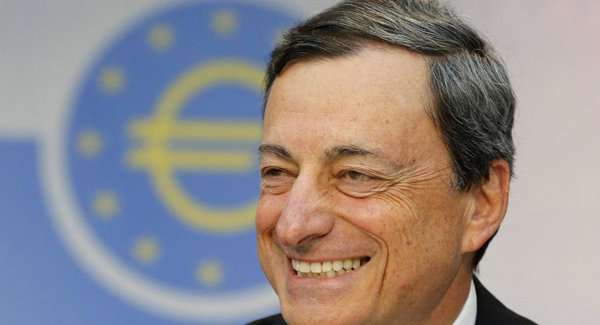
âAny outcome should ensure that all participants are subject to the same rules,â the European Central Bank president told European Parliament lawmakers yesterday.
âIt is very hard to imagine that any agreement that will be perceived as discriminatory against some subjects or in favour of other subjects could be a source of stability for the future of our EU.â
Since Britainâs referendum on June 23, the nationâs government has been trying to work out whether it can retain access to the single market without accepting all of its conditions, most notably the free movement of labour.
Poland, the biggest exporter of workers to the UK, last week joined a chorus of voices from the EUâs eastern nations in signalling it may veto any agreement that would erode the rights of its citizens to live and work throughout the blocâs single market.
Draghi said that while the ECB doesnât have an official role in the Brexit negotiations, it could act in an advisory capacity. He also noted that the ECB has jurisdiction over the payment system.
His comments came as he urged governments to act to stem rising public discontent, in his latest warning that monetary policy canât sustain the regionâs recovery alone.
âEuropeans are calling on our institutions to bring tangible benefits to their everyday lives,â he said in the testimony in Brussels.
âActions by national governments are needed to unleash growth, reduce unemployment and empower individuals, while offering essential protections for the most vulnerable.â
Draghi has grown increasingly vocal in his calls for elected politicians to boost spending and reform their economies as the ECB struggles to stoke inflation.
The ECBâs programme to buy âŹ80bn a month of debt faces scarcity concerns and its negative interest rates have prompted criticism by banks and savers.
Executive board member Benoit CoeurĂ© said in a speech in Rome that national governments needed to live up to their responsibilities: âIf fiscal and economic policies do not in fact play this role, we risk being trapped in a low growth, low interest-rate equilibrium...
"Moving from interest rates being âlow for longâ to being âlow foreverâ would severely limit the room for manoeuvre for conventional monetary policy tools but, even more worryingly, it would threaten the contract between generations as well as risk tearing up our social fabric.â








