Euro rises as Mario Draghi resists economic stimulus
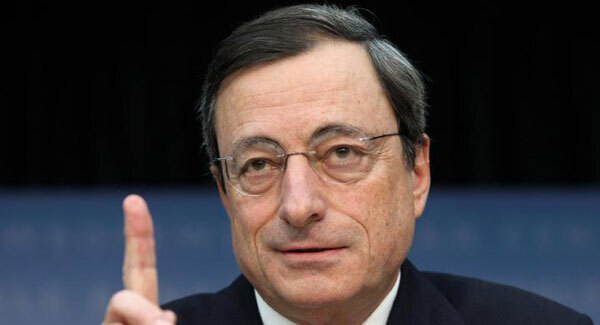
“A lot of people wanted to see a bit more stimulus from Draghi,” said Hassium Asset Management chief executive Yogi Dewan, referring to the ECB’s decision to keep all its rates steady and the revelation that the ECB did not discuss an extension to its bond-buying programme, known as quantitative easing, at yesterday’s meeting.
“The decision to maintain rates was certainly no surprise, yet by noting that the committee had not even discussed the notion of lengthening their quantitative easing programme beyond March, the bank finally showed markets a glimpse of what a future without ECB easing might look like,” said Joshua Mahony, market analyst at IG, an online trading firm.
“For all the talk of their policies being successful, the ECB presides over an annual inflation rate of 0.2% despite sitting on a balance sheet with over €1tn of assets.”
Mr Mahony said that, with the ECB running out of options, market expectations could spark stock market weakness in Europe.
The ECB kept its deposit rate at -0.4%, charging banks for parking cash overnight, and held the main refinancing rate, which determines the cost of credit in the economy, unchanged at zero.
Keeping rates deep in negative territory and printing money at a record pace, the ECB is hoping to revive inflation and growth in a region weighed down by nearly a decade of economic malaise and crises.
After 18 consecutive months of buying government bonds to pump up the economy and raise inflation, the ECB’s holdings hit a landmark €1tn last week — yet prices are seen rising a mere 0.2% this year, well below its target of near 2%.
Prolonging the bond purchases is controversial because it risks further distorting market prices and even running out of eligible bonds. The ECB has already had to stop purchases in Estonia and found no bonds to buy in Luxembourg last month.
The massive bond-buying programme has pushed most European government bond yields to record lows, and some eurozone governments can tap markets at negative interest rates.
Here, the National Treasury Management Agency yesterday morning had sold €1bn worth of 10-year bonds at a yield of 0.33% before the ECB gathering.
Car makers posted the biggest drop of the 19 industry groups on Europe’s Stoxx 600 index, as the rise in the euro hurt prospects for profits of European exporters.
Daimler and BMW fell at least 1.6%, dragging Germany’s Dax Index to the second-worst performance among western European markets. The Dax yesterday became the first major eurozone equity index to recoup its losses for the year.
The ECB stopped short of confirming a specific extension of its €80bn monthly asset purchases, reaffirming its existing line they would continue until next March or beyond if necessary.
Mr Draghi unveiled a modest downgrade of the bank’s eurozone growth forecasts and warned of downside risks, among them Brexit- related uncertainty, but said no action was required for now.
CONNECT WITH US TODAY



Be the first to know the latest news and updates








