SMEs need to make the connection with an online strategy
As citizens, we live in a digital, connected world, where borders do not apply. Through the internet, it’s easier than ever before for consumers to buy goods from anywhere in the world in their own time.
However, few of our SMEs are truly tapping into these benefits.
In April, IEDR (the dot.ie Domain Registry) commissioned a new wave of research for the latest edition of our dot.ie Digital Health Index which measures the health of 500 Irish SMEs’ digital presence by analysing the number of digital assets (like websites, apps and social media accounts) owned by them, and their perceived quality.
Across many areas of the survey, we’ve witnessed some encouraging trends, even in the seven months since our last fieldwork in September 2015.
An increasing number of SMEs have websites (72%, up from 65%), while more and more report a positive impact on their business thanks to social media.
But elsewhere, some big problems endure: one in six Irish SMEs still have no online presence whatsoever.
That’s 1 in 6 SMEs without so much as a website or a Facebook page. Among those without a website, over half — 55% — said they have no intention of building one in the near future.
When questioned further, 60% of offliners said there was simply “no need” in their industry to build a website.
Having an online presence can fundamentally alter the way a business sells products, relates with its existing customers, and acquires new ones.
At the very least, a website lets customers know a bit about you, like your opening hours and contact details.
In our DHI, we also delved into the other side of the equation: consumers and their attitudes to engaging with Irish businesses online.
As much as 71% of consumers said they found it “extremely frustrating” when they couldn’t find information about a business online.
Only 29% of Irish SMEs can actually take sales orders online, and even fewer (25%) can process payments.
Irish consumers are not waiting for businesses here to catch up. Instead, they’re purchasing from e-commerce-enabled businesses across the world who are willing to sell them goods and services, regardless of geography.
Indeed, as a nation we’re so committed to buying online that we spent €6.5bn in 2015.
The reality is that for the majority of Irish SMEs who aren’t selling online, they’re losing out on potential local business.
However, more than one in four of the offline SMEs we surveyed said that lack of high-speed internet is preventing them getting online. There is a clear need for greater rural broadband infrastructure.
It is baffling there are still urban centres without access to reliable broadband.
In 2016, a business without an internet connection is like a business without a phone or a postal address.
It means being cut off from the rest of the world, effectively being ‘ex-directory’.
Billions of euros worth of trade is conducted via the Internet each day, and to be without reliable, fast access to this international business network is to be denied opportunities for growth.
Many SMEs are, indeed, aware of the benefits of being online, but believe that building a website will take too much time or require skills that they do not possess.
Particularly in areas outside Dublin, Local Enterprise Offices must continue to offer advice and courses — preferably free ones — in digital marketing and online business to local SMEs interested in connecting and selling to the world beyond. Increased peer-to-peer mentoring might also be useful in this regard.
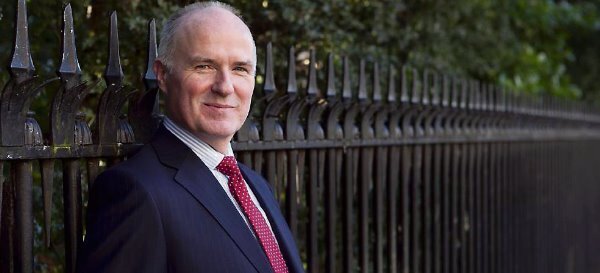
David Curtin is chief executive of IEDR (dot ie Domain Registry)

CONNECT WITH US TODAY



Be the first to know the latest news and updates