More upbeat ECB keeps ammunition in reserve
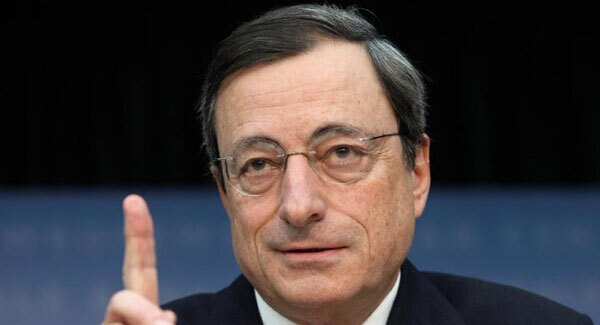
Keeping rates unchanged deep in negative territory, ECB president Mario Draghi argued that more stimulus was still coming from measures approved but not yet implemented, effectively dismissing calls for more ECB action and maintaining his argument for patience.
The ECB already plans to buy âŹ1.74trn worth of assets in an attempt to revive inflation and kick-start growth.
It had been worried the 19-member eurozone was at risk of falling into a hard-to-break deflationary spiral.
Next week it starts buying corporate bonds and will offer ultra-cheap loans in late June, both measures aimed at cutting funding costs for corporate clients to induce investment and boost hiring.
Yet, Mr Draghiâs carefully nuanced statement underlined how fragile that recovery remains and how vulnerable it is to risks, including a slowdown in the global economy and possible fallout from Britainâs June 23 EU referendum.
âAdditional stimulus... is expected from the monetary policy measures still to be implemented and will contribute to further rebalancing the risk to the outlook for growth,â Mr Draghi said.
âThe risks to the euro area growth outlook remain tilted to the downside, but the balance of risks has improved on the back of the monetary policy measures taken and the stimulus still in the pipeline,â Mr Draghi added, inserting a slightly more optimistic description of risk than recently seen.
Mr Draghi also said the bank has not seen low oil prices feeding into wages, a key concern for policymakers as such a second-round effect would signal a loss of confidence in the ECBâs ability to return inflation back to its target of close to 2%.
âOverall, the statement chimed with the âpatienceâ ECB president Mario Draghi mentioned in April,â BNP Paribas economist Luigi Speranza said.
âThe changes in the ECBâs June press statement gave us the sense the ECB is becoming more confident in its central scenario of a moderate, but steady euro zone economic recovery.â
The ECB upgraded its 2016 eurozone growth forecast after first-quarter growth beat all expectations, seeing a 1.6% expansion, above the 1.4% it predicted in March.
It kept its forecast of 1.7% for next year unchanged while trimming it for 2018 to 1.7% from 1.8%.
It also raised its 2016 inflation forecast to 0.2% from 0.1%, citing factors including the base effect of a recent rise in oil prices.












