Technological skills shortages must be addressed

The latest edition of the Hays Salary and Recruiting Trends Guide, which surveyed over 1,300 employers and employees across Ireland, showed that 79% of organisations predict increased business activity in 2016, while 86% plan to recruit over the next year.
Employees share this same confidence in the market.
Good news stories about economic growth and investment are inspiring many to make new career moves that they would have postponed during the recession years.
As much as 81% of surveyed employees said they plan to look for a new job in the coming two years while 62% expect their salary to increase in the next year.
It’s a startling rejuvenation and represents a genuine departure from the grinding uncertainty of the jobs market and Irish economy of just a few years ago.
Recent CSO figures suggest over 1,000 Irish emigrants are returning home every month.
Furthermore, 58% of all honours degree graduates now go straight into employment after college, according to a Higher Education Authority (HEA) report published last week.
But despite the vibrant jobs market, Irish employers continue to suffer severe skills shortages, particularly in fast-growing industries like technology and construction. It’s a problem that shows little sign of abating.
A quarter of Irish employers believe that they do not have the skills required to meet their current business objectives and nearly three quarters (73%) said hiring the right skills is a key issue.
To fill these skills gaps, particularly in more specialised areas, many businesses are forced to look abroad.
In the last year alone, demand for IT skills grew by 15% and there simply isn’t a sufficient pool of indigenous talent to meet this demand. This skills shortage has become increasingly acute as more and more tech companies expand their operations in Ireland.
The Irish education system is not keeping pace with the changing demands of business, nor are businesses pushing hard enough to upskill and develop their employees for technical roles.
While the economy has shown remarkable improvement in recent years, bouncing back from recession to a relatively speedy growth in a short space of time, salaries have grown only modestly.
The consequences of this sluggishness were reflected in our survey: only 47% of employees said they were satisfied with their pay.
Some 35% of employers said salaries have increased by 2.5% or more in the last year, while the rest said salaries have either increased by less than 2.5%, remained the same, or even decreased.
Some sectors are bucking the trend — construction, IT and finance are the most competitive industries in the country, and experienced professionals in these sectors are enjoying the fastest rates of salary growth.
In construction and property; site engineers, project managers, quantity surveyors, building services engineers and architects have seen salary increases as high as between 5% and 10% in the last year.
Despite the sector’s collapse in 2008, economic resurgence has hoisted it up from the brink and set it back on the path of prosperity. A steady filling up of state and private coffers means public and private sectors are more willing to invest in long-term infrastructure.
Similarly, in finance, demand for senior accountancy and finance professionals has increased in recent months and is now close to pre-recession levels.
In 2015, the majority of senior appointments in this sector at salaries of over €65,000 took place in multinational companies, although we are now increasingly seeing indigenous plcs and SMEs vying for the best talent and offering salaries to match.
After a competitive salary, career progression is the most important factor when choosing a job, followed by a clear work-life balance, with a benefits package considered the least important.
Interestingly, Generation Y workers (born 1983-1995) are least likely to seek a change in the next six months, and indeed show similar levels of commitment to their current employers as older workers, including Generation X and Baby Boomers.
Years of economic uncertainty may have instilled a more conservative attitude to job moves and career progression in these young people.
On the whole, Ireland’s economic outlook is positive. Just recently, the European Commission predicted Ireland will be the fastest growing European economy in 2016 with 4.9% GDP growth.
Skills shortages must be addressed, however. Business leaders and Government should use this recovery to make Ireland more competitive on the global stage by promoting technical training for Irish professionals and building a school curriculum to equip children for the technological economy of today.
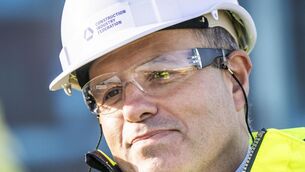
Richard Eardley is managing director of Hays Ireland.

CONNECT WITH US TODAY



Be the first to know the latest news and updates