The Small Business Column: The games industry in Ireland
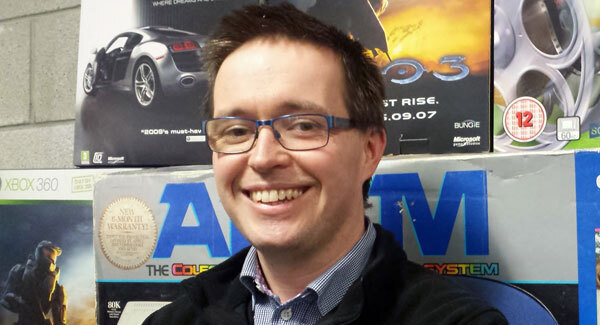
In this week’s article, Kehlan looks at the games industry in Ireland and why a trip to the Games Fleadh held LIT Thurles showed why more has to be done to support domestic games developers in Ireland.    

The Small Business Column: The games industry in Ireland

Few people realise just what goes into the games that we play — from teams of more than 2,000 people developing parts of juggernaut games like Fifa, to a group of nine working 14 hours a day to get their work ready for launch on game sellers like STEAM.

Everything that goes into a game needs a line of code and somebody has to write that code.

The user enjoys the end product without a hint of what really goes into it.

A lot of hard work is the simple answer.

Recently I had the pleasure of attending the Games Fleadh which is held every year on the LIT Thurles campus in Tipperary.

Big tech companies like Dell and EA Games were in the same space as domestic games developers like 9th Impact or RetroNeo Games.

It was refreshing to see kids as young as 13 try to see what it’s like to develop a game. Some even asking about internships or work placement.

There was a buzz that seemed to suggest this was something more than a game conference. This was about looking into the real heart of the industry.

One of the co-ordinators of the event, Liam Noonan spoke about the enthusiasm of the young people who attend.

“It’s a real eye-opener for many of the kids who come here,” he said.

“Not only do they get to meet some of the best names in the industry, but they also get a full appreciation of what goes into the game.

“Upstairs for our coding competition, many were surprised that the average time taken by the teams would have been over two thousand hours. Then imagine what goes into full-scale games development.”

It was also interesting to catch up with some Irish game developers there too.

9th Impact Games has recently launched a virtual reality game based on the Biker Mice from Mars cartoons from the early 1990s. For a small company, having just one project won’t pay the bills. This year alone, 9th Impact will release 11 or 12 games. Mark Quick talked to me about the fun they have developing games, but also the challenges that domestic games makers face.

“It’s a really tough industry to be in. We all look at the likes of Rovio or Supercell games.

“But, much like the music industry, there are a few stars and a lot of young hopeful musicians trying to break through. For us at 9th Impact, this is very much a business.

“We have seven people in full-time employment. We aren’t depending on one of our games being a smash hit and pouring all our time and money into it.

“The reality is that nobody knows if their game will be successful or not, because it depends so heavily on the user. Only their opinion matters in the end.”

Many of the developers argued their case for getting the same tax breaks as those in the arts industry.

For games developers, what they do encompasses a lot of different artistic skills.

Graphics, storyboards and music are essential parts of the make-up of a game.

They then have to go out and market it in much the same way as a movie or a TV show.

Irish games developers have yet to find a system that regards them as artistic or creators. For the industry to grow, that system will need to change and change rapidly.

Ireland’s gaming ecosystem is improving too.

Finland has managed to create a game development ecosystem. Backed by big name domestic developers like Rovio and Supercell, the Finnish games development startup scene has grown, large and small feeding off one another to ensure a rich system which works.

For the Irish industry, the reality is that it’s still in its infancy. As Mr Quick pointed out: “You have to think about it. Games development has been driven by the likes of the iPhone and the mobile market.

“We’ve really only had smartphones for a decade, so we need to understand that the industry in this sense is still new”.

The Games Fleadh was a place to bump into industry legends as well. John Romero from Romero Games was on hand to share his wisdom. He was behind such classic games as Wolfenstein 3D, Doom, and Quake. He has created several companies and co-owns Loot Drop and Romero Games.

I asked him about the key to success within the games industry. With a wry smile, he answered: “Well, you have to make things that people want to buy, otherwise you are not going to make any money.

“There are lots of ways to make money from games development. You can have a company pay to develop a game. A lot of the time, companies with intellectual property will pay you to develop a game based on that IP. So we did that with Loot Drop. With Romero Games, we’re more interested in developing in-house games. We’re already with Adult Swim and Cartoon Network in the US and developing something for them.”

His son took a front seat in bringing the game forward.

“Our nine-year-old son actually came up with the game design. It’s featured in the Wall Street Journal and VentureBeat. He lives in games.

“That’s all he does and that then led him to find out about games and what we call core loops. So he found out how these worked and how they worked for different games.

“He then made a game that made sense to him and how he played games. So we decided to make this game and show him how important games design is. So we have artists and programmers working on this and it’s nearly finished.”

I have to admit that I do like gaming and reading about the games industry.

To be there at the Games Fleadh was a refreshing look at what really happens behind that gameplay or the great graphics.

Meeting the people who put their hearts and souls into making something for us is a very worthwhile experience.

While the Irish games industry still has a long way to go, it is certainly filled with people ensuring that there is a future to be had.

How that future plays out depends on how we support the industry itself.

These aren’t just games developers, they are creators of entertainment, fun and how some of us pass our free time.

Without even knowing it we have brought them into our everyday lives.

The organisers’ t-shirts on the day said ‘The Best Defence Is Offence’; well the time is right for the Irish gaming industry to go on the offensive.

More in this section

The Business Hub

Newsletter

News and analysis on business, money and jobs from Munster and beyond by our expert team of business writers.

Cookie Policy Privacy Policy Brand Safety FAQ Help Contact Us Terms and Conditions

© Examiner Echo Group Limited