Exposed gold loses its safe haven lustre
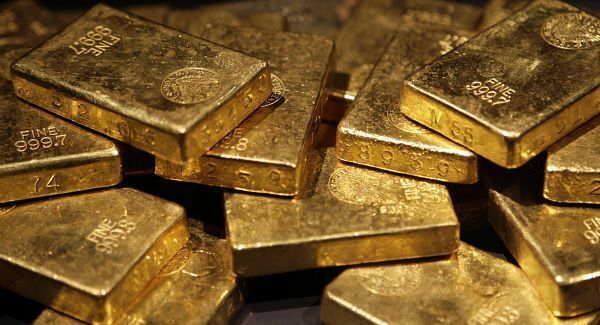
Those buying gold as prices approached a record $1,920.30 an ounce were not seeking protection or even diversification; they were looking to make a quick buck on what has become just another financial instrument.
This means gold is exposed to the same factors as other instruments, such as equities, without the traditional support of being regarded as a safe haven from political and financial instability.
The participation of these new investors contributed to the ferocity of gains between 2008 and 2011, which at an annual $183 an ounce dwarfed the $80 an ounce between 2001 and 2007.
“When the market was rising, the number of clients investing in gold funds grew by 185%,” said Adam Laird, an investment manager at Hargreaves Lansdown.
“The soaring price clearly lured many new investors into the metal, and they saw it more as a growth generator than a safe haven.”
Mr Laird does not expect gold to rise in the short or medium term.
“Slowing growth in emerging markets can’t help demand and interest rates are a constant threat,” he said.
Since the record high set in September 2011, gold has slumped about 40% to around $1,180.
However, the largest losses of nearly 30% were seen in 2013, when the Fed said it could soon start tapering its bond-buying programme, seen as a precursor to higher interest rates.
Tensions over Ukraine between Russia and Europe, security risks in the Middle East, and the Greek debt crisis, which in previous times would have been a plus, have done little to improve gold’s fortunes.
Even more worrying for the bulls, the prospect of a hard landing in China this year and the possibility of it leading to another financial crisis have not helped, an indication that gold’s role as a safe place to park assets is not so relevant.
This idea is backed by recent research from economists at the Bank of England (BoE), which contradicts the idea of gold as a hedge against risk and uncertainty.
“Investors require additional compensation for holding gold relative to risk-free government bonds,” BoE economists Michael Chin and Zhuoshi Liu said in a paper.
“Our findings contrast with the common view that gold offers a high degree of insurance, in the sense that returns are countercyclical.”
Bullion’s rally at the turn of the 21st century was sparked by a series of events including the dotcom bubble bursting, 9/11, US rates hitting historical lows in 2003, and the invasion of Iraq, also in 2003.
CONNECT WITH US TODAY



Be the first to know the latest news and updates







