China cuts rates, reserve limits after stocks dive
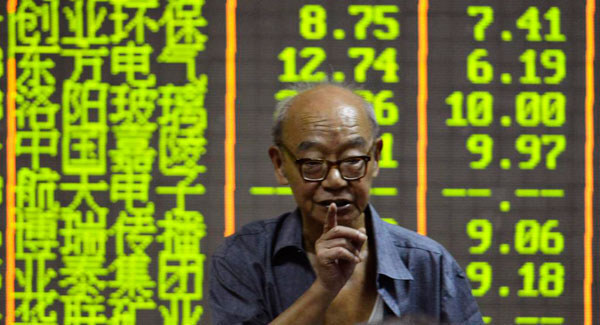
The moves came after Chinese stocks tumbled again yesterday, as investors despaired at the lack of policy action from Beijing in response to recent data suggesting the downturn in the world’s second-largest economy was deepening.
The People’s Bank of China said it was cutting the one-year benchmark bank lending rate by 25 basis points to 4.6%; cutting one-year benchmark deposit rates by the same amount, and reducing reserve requirements (RRR) by 50 basis points to 18% for most big banks.
Major Chinese stock indexes nosedived more than 7% yesterday, hitting their lowest levels since December, following a more than 8% plunge on Monday.
The slump had resumed last week despite Beijing’s efforts to arrest a 30% crash earlier in the summer with hundreds of billions of dollars of state-backed share purchases.
This time, the government appeared to be sitting on its hands until yesterday’s response, which aimed more at shoring up economic fundamentals than underpinning stocks.
“Although this has some elements of giving comfort to the market, this is more about giving a real boost to the real economy so the government can continue to have its 7% growth rate fulfilled,” said Liu Li-Gang, China economist at ANZ Bank in Hong Kong.
Liu said the RRR cut was the most significant element of the PBOC action, as it would inject 650bn yuan (€88.7bn), into the economy and ease concerns of a “hard landing”.
China, one of the main engines of the world economy, has overtaken Greece at the top of the worry list of global investors, who fret its economy is growing at a much slower pace than the official 7% target for 2015.
“Currently, there is still downward pressure on China’s economic growth,” the central bank said.
“There is also relatively big volatility in global financial markets, which require more flexible usage of monetary policy tools.”
German finance minister Wolfgang Schäuble said the situation in China would be discussed by G20 nations.
The CSI300 index of the largest listed companies in Shanghai and Shenzhen dropped 7.1% yesterday, while the Shanghai Composite Index fell 7.6% to close below the psychologically significant 3,000-point level.
Underscoring the panic gripping the retail investors who dominate China’s stock markets, all index futures contracts fell by the maximum 10% daily limit, pointing to expectations of even deeper losses.
Though the PBOC move came after domestic markets had closed, stock markets in Europe jumped, and US stock futures were also given a lift.

CONNECT WITH US TODAY



Be the first to know the latest news and updates