Greece and lenders clinch bailout deal
The agreement, reached after a 23-hour session of talks, must still be adopted by Greece’s parliament and eurozone countries. Finance ministers are due to meet on Friday, giving time to finalise the deal before a major debt repayment next week.
The negotiations appeared to have resolved all the main outstanding issues, after Greece’s leftist government effectively capitulated last month to creditors’ demands for deep austerity measures in order to receive loans.
“Finally, we have white smoke,” a Greek finance ministry official said after officials emerged in a central Athens hotel to announce the two sides had agreed on terms. “An agreement has been reached.”
Finance minister Euclid Tsakalotos confirmed only “two or three small issues” were pending. Greek shares rose, with the banking index surging 6%, while two-year bond yields fell more than 4 percentage points.
“The institutions and the Greek authorities achieved an agreement in principle on a technical basis. Now as a next step, a political assessment will be made,” said European Commission spokeswoman Annika Breidhardt.
Still, officials in sceptical northern European countries remained cautious, pending final approval of the deal. “There remains work to be done with details,” said Finland’s finance minister, Alexander Stubb. “We must take one step at a time. Agreement is a big word.”
Approving the agreement would close a painful chapter of aid talks for Greece, which fought against austerity terms demanded by creditors for much of the year before relenting under the threat of being bounced out of the eurozone.
After a deal in principle last month, the latest round of talks began in Athens three weeks ago to craft an agreement covering details of reform measures, the timeline for their implementation and the amount of aid needed.
A Greek finance ministry official said the pact would be worth up to €85bn in fresh loans over three years. Greek banks would get €10bn immediately and would be recapitalised by the end of the year. Greek officials have said they expect the accord to be ratified by tomorrow and then vetted by eurozone finance ministers on Friday.
This would pave the way for aid disbursements by August 20, when a €3.2bn debt payment is due to the ECB.
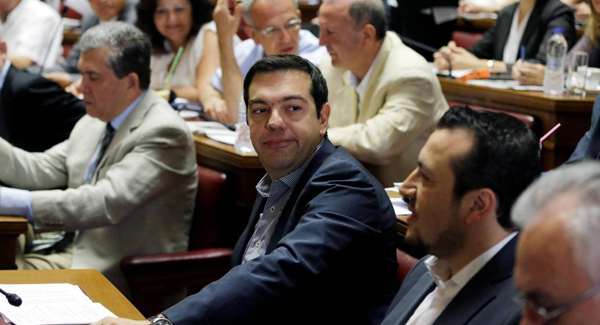
Facing a revolt from the far-left of his leftist Syriza party, prime minister Alexis Tsipras is expected to again rely on opposition support to push the package through parliament. Even then, doubts remain about whether a leftist government elected on a pledge to reverse austerity can implement the terms of an agreement.
CONNECT WITH US TODAY



Be the first to know the latest news and updates