NYSE outage a sign to slow down trading
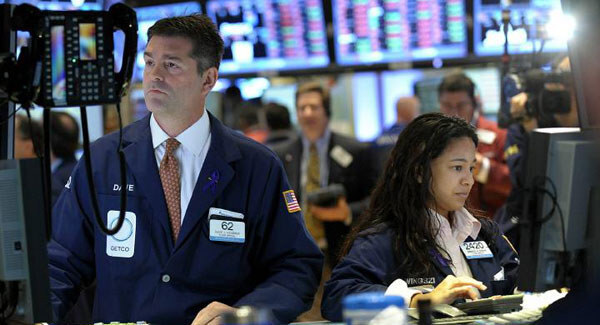
Last week the New York Stock Exchange, the largest and arguably most influential stock exchange in the world, was closed for a few hours. 

NYSE outage a sign to slow down trading

And nothing happened. The global economy went chugging along without a problem.

Perhaps the time has come to consider whether we need to have trades taking place in time intervals measurable only by CERN and comprehendible only by Dr Who.

A related issue is that when we think of the stock exchange we are not thinking of the whole market by any means. Just as in other areas, stock traders are increasingly resorting to trade in what are called ‘dark pools’, trading centres outside stock exchange rules and regulations.

Some studies put the volume of stock traded on these in excess of 40%. The ultra high frequency trading game, characterised by some as an arms race, may exceed 30% of all trades made on exchanges.

While the consensus of research is that there are undoubtedly private, individual gains to be made from shaving a nanosecond here and a millisecond there in executing share trading, the consensus is also that the social benefit is very hard to find if it exists at all.

To some extent, high frequency trading does increase liquidity of stock transactions, and increases pricing efficiency measures.

However, a question that can be legitimately asked is whether or not this matters. Economically, if we are spending hundreds of millions on something that doesn’t yield an overall economic or social benefit, it is wasted expenditure.

Some research suggests that this high speed game is exactly that — wasted. There is some evidence that high frequency trading is associated with increased quote stuffing (submission of lots of offsetting orders to increase congestion and, thus, advantage the first mover) and increased volatility.

Given all this, it may be time to consider slowing down the pace of financial trading. If there is little social benefit, and if the economic benefits are unclear, why have we gotten ourselves into this “arms race”.

A number of proposals and analysis have emerged over the last couple of months which address the extent to which financial trading could be slowed down without any loss of liquidity; along with proposed new methodologies and approaches to ensure that financial trading can continue.

In essence, the proposals are that instead of trades being processed as they arrive, they be processed perhaps once per second.

Trades would still be executed in the order in which they arrive, so there will still be a significant incentive for companies to invest in high speed trade positioning. But the actual trades would only be executed once per second. That’s still nearly 25,000 opportunities to trade per day.

It is unclear whether or not this is possible; it would require co-ordinated regulatory change on a global basis.

Just as a financial transactions tax, a great idea in principle, founders (on the fact that, so long as one major player opts out, trade will move towards the area where there is no tax), so too an environment where ultra high-speed trading is slowing down requires all major players to agree.

More in this section

The Business Hub

Newsletter

News and analysis on business, money and jobs from Munster and beyond by our expert team of business writers.

Cookie Policy Privacy Policy Brand Safety FAQ Help Contact Us Terms and Conditions

© Examiner Echo Group Limited










