Trichet: ECB sent economic ultimatums to Spain and Italy
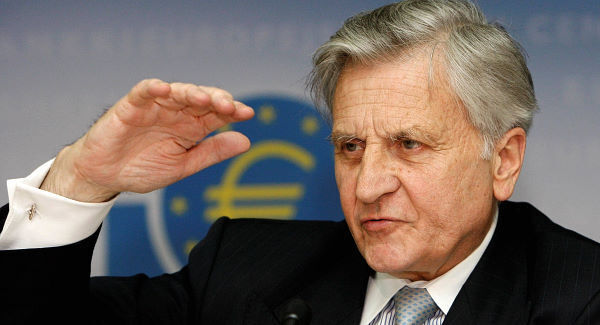
He has insisted the ECB did not force any country into a bailout, contrary to what many in Ireland believe, and given the letters he sent to the late finance minister, Brian Lenihan released only earlier this year.
But in a memoir written for The Nikkei in Japan, Mr Trichet told how he issued an ultimatum to Italy and Spain, the eurozone’s third and fourth largest members in what he described as “extraordinary” letters to force them to make changes to the workings of their countries.
These changes in Italy’s case ultimately resulted in the downfall of Silvio Berlusconi and his government, which was then replaced by the technical government of EU insider, Mario Monti, who carried out many of the demanded reforms.
Just nine months before, Mr Trichet had written a series of similar letters to late Mr Lenihan, which were officially made public just a few months ago. These ultimately led to Ireland applying for a bailout and deciding not to burn senior bondholders — which would have seen depositors also losing their money.
In his memoir, the former head of the ECB spells out clearly that because the eurozone prime ministers were unable to deliver what he saw as the essential reforms to calm attacks on the euro’s weakest members, he acted.
“As in May 2010, the governments were not able to act immediately. And as in the previous moment of heightened tension, the ECB would not let its monetary policy be disrupted. But two other conditions had to be met for the bank’s strategy to succeed in the medium term: appropriate adjustment decisions by the countries concerned, and convincing action of the euro area as a whole. My colleagues and I strongly wanted to have all conditions met.”
Cork-based economist Seamus Coffey said: “The ECB drew up the plan and the response of governments had to fit in with that.”
Mr Trichet wrote, “There were no negotiations between the ECB and the two governments; no promises, no quid pro quo conditions under which the ECB would act. The governments were, of course, free to do whatever they deemed appropriate”.
Mr Coffey described the claim as “absurd”, given that he sent a list of conditions to Rome and Madrid on August 5, 2011, and requested them to commit to them.
DISCOVER MORE CONTENT LIKE THIS
DISCOVER MORE CONTENT LIKE THIS

CONNECT WITH US TODAY



Be the first to know the latest news and updates