Osborne bids to woo voters with tax cuts as election looms
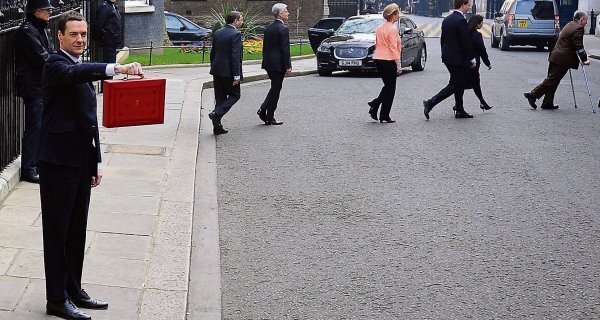
He delivered an effective tax cut to 27m voters — and took 3.7m out of income tax altogether — by announcing rises to £11,000 in the personal allowance and £43,300 in the threshold for the 40p higher rate over the next two years.
He abolished tax on the vast majority of savings accounts with a new £1,000 tax-free allowance, and offered government help worth up to £3,000 for first-time home-buyers saving for a deposit, through the creation of a new Help to Buy Isa.
Improved economic forecasts allowed Mr Osborne to declare that Britain could “walk tall again” after years of austerity. To Tory cheers, he announced that he had met his 2010 target to have debt falling as a share of national income by the end of this parliament and that public spending cuts will now end a year earlier than predicted in 2018-19.
He attempted to kill off Labour claims that a Tory government would take spending back to the 1930s by declaring that by 2019-20 public spending as a share of GDP would be at the same level as 2000 — when Tony Blair was in 10 Downing Street.
Labour insisted this was achieved by intensifying the spending squeeze in the next three years, which shadow chancellor Ed Balls said would now be far deeper than those experienced during the austerity programme of the past five years and would almost certainly require Mr Osborne to impose cuts on the NHS or increase Vat. Under the chancellor’s plans, day-to-day spending as a share of GDP would be as low in 2018 as in 1938, he said.
In his sixth budget, Mr Osborne missed no opportunity to take swipes at Labour’s difficulties with second kitchens, white vans and pink buses. And he made a point of poaching Labour’s plan to cut the maximum size of a tax-free pension pot from £1.25m to £1m.
Delivering his statement to the House of Commons after official figures showed joblessness falling to levels last seen in 2008 and employment rising to a record high of almost 30.1 million, Mr Osborne said Britain was the fastest growing advanced economy in the world, with living standards now higher than they were in 2010.
“The hard work and sacrifice of the British people has paid off. The original debt target I set out in my first budget has been met,” he said. “We will end this parliament with Britain’s national debt share falling. The sun is starting to shine and we are fixing the roof.”
Labour leader Ed Miliband condemned Mr Osborne for failing to mention investment in the NHS and public services and said there had never been such a large gap between his rhetoric and the reality of people’s lives.

CONNECT WITH US TODAY



Be the first to know the latest news and updates