Bruising high-stakes game of finances in a low-key arena
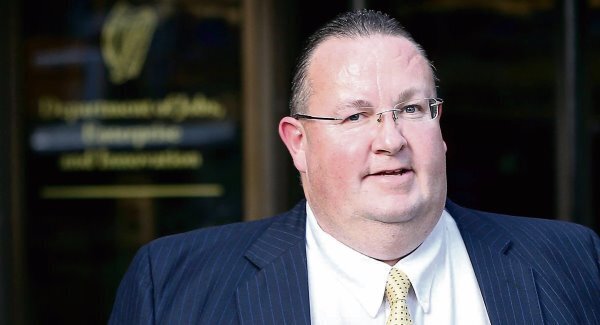
The red brick offices of the Employment Appeals Tribunal could hardly be more different than the Four Courts, the venue for most high-stakes commercial legal encounters.
There is a civil service feel to the place. Strip lighting adorns the rooms where oxygen is at a premium on warmer days. The canteen staff are friendly, with fresh baked quiches.
All very jolly.
However, there was little that was cosy about last week’s five-day long encounter between the former RSA Ireland boss Philip Smith and his one-time employers. RSA, or Royal Sun Alliance, is the product of one of the many mergers that have impacted the insurance industry in recent years. However, its presence in this country can be traced back to the 1930s.
This is a grey enough industry, but Philip Smith was one of the bouncier figures, cultivating a high legal profile and leading what was initially, at least, a largely successful assault on the marketplace, more than doubling the business from his appointment in 2007.
Like so many in the financial world, he was ultimately undone by the recession.
General insurers like RSA can hoover up premium income, but they need to manage risk, and provide for those rainy days when the claims come pouring in.
In November 2013, Mr Smith left his job following what was, in effect, a profits warning concerning the Irish operation delivered by the group to the stock exchange. Such a term is not favoured in the industry, but an announcement that €70m was being pumped into the business could hardly be viewed in any other light.
Mr Smith is now suing his former employer, insisting that he had no alternative in the circumstances but to resign from his post.
An action for constructive dismissal such as this can be difficult to sustain. The burden of proof rests with the claimant; in the case of ordinary dismissals, it is on the employer.
The storm clouds really began to gather with an upsurge in claims relating to the professional indemnity side of the business, and, in particular, relating to solicitors’ firms, some of which hit choppy waters in the wake of the property crash and an upsurge in claims brought by clients.
Mr Smith is charged with having presided over a situation where inadequate reserves were provided in respect of a certain number of large claims. RSA called witnesses — former colleagues working on the underwriting side — who insisted they had recommended much higher provisions but that their chief executive, obsessed with presenting a positive financial picture for the Irish operation, had objected.
Mr Smith responded that there was considerable uncertainty about the likely out turn in the cases involved.
RSA executives in Ireland, according to what emerged during the tribunal hearings, were pretty poor at keeping minutes of meetings and the UK group appeared to take a hands-off approach to matters despite a system of reporting designed to ensure that underwriting specialists kept tabs on what was happening here.
Mr Smith has been painted as a man who could be charming but also a bully if needed. He points to close relationships, and to a lot of good things that were said about him by colleagues when he was in charge.
Matters really came to a head when the RSA Ireland internal auditor quite correctly insisted on going ahead with a prearranged meeting with the Central Bank in late 2013. This serves as a reminder, if any were needed, that any return to light regulation of the sort presided over by the Central Bank under John Hurley and the now defunct IFSRA under Pat Neary simply cannot be contemplated.
Five years after the financial crisis began, a key Irish player was still, it seems, being run with short-term profit considerations largely in mind. Mr Smith has defended his position vigorously against some stiff questioning from a top barrister, Brian O’Moore, yet one is left with the question humming in one’s mind: Do these guys not yet get it ?
The tribunal is not being called on to decide who, Mr Smith or RSA, is in the right. It will rather decide on the fairness of the treatment of Mr Smith, focusing on matters of process. That is its job.
Certainly the stakes are huge. Mr Smith took home around €600,000 a year, €400,000 of it basic income, the rest in bonuses, pension payment, and the like. He argues that his reputation has been trashed and that he now earns around €25,000.
The tribunal’s decision, when issued, will be studied closely by employers, lawyers, and by RSA executives.
The tribunal’s most high-profile judgment was delivered in 1999 when crime reporter Liz Allen successfully sued for constructive dismissal, arguing that her life as a reporter and had been made impossible.
The Smith case could turn out to be equally memorable.
What one can say is that the chairwoman, Niamh O’Carroll Kelly, has shown calm expertise, presiding over a sometimes charged affair, intervening pointedly when counsel were appearing to drift into forbidden territory. One of her tribunal colleagues, the former trade union leader Mick O’Reilly, has also made a couple of pointed interventions.
Only time will tell if anyone emerges on top or whether the spoils could be equally divided.












