AIB seeking new CEO as Duffy moves to UK
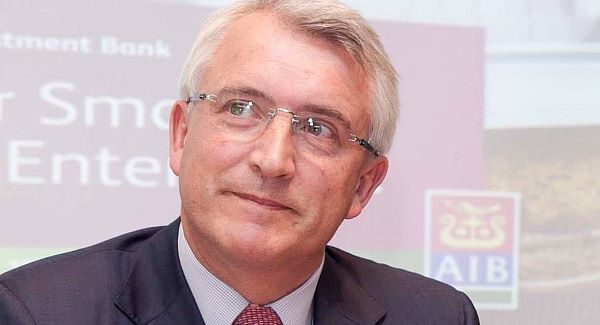
AIB chief executive David Duffy is leaving the State-owned bank to take up a position with UK-based Clydesdale Bank.

AIB seeking new CEO as Duffy moves to UK

The move caught market analysts by surprise. Last summer, Mr Duffy signed a permanent contract with the bank. Moreover, the Department of Finance has just hired Goldman Sachs to advise it on the part sale of AIB, which is 99.8% Government-owned.

Mr Duffy joined AIB during the height of the financial crisis in 2011. The once-largest domestic Irish bank needed a €21bn taxpayer bailout to stave off a collapse. Finance Minister Michael Noonan expects to recoup the full cost over time. The part privatisation of AIB will not be derailed by Mr Duffy’s departure, he added.


“I’d like to thank David Duffy for his great service to the bank. He came in three years ago and we set certain objectives for him. If you were ticking boxes, he has fulfilled every objective.

“In terms of the bank’s profitability, he has surpassed expectations. If he were to stay on, he would have to stay in the next phase, which will probably take four or five years. In the interest of his own career and personal life, he thought that commitment was too long,” said Mr Noonan.

“He’s staying on in the bank for about six months, and I’ll be meeting the chairman later this week and be discussing with him and Finance officials, the process and procedure for seeking out somebody to replace David Duffy.

“I hope we get somebody as competent and as efficient and somebody at the end of the term that has such sterling results as David Duffy has shown.”

The State currently owns €1.6bn of contingent convertible (CoCo) notes in the bank as well as €3.5bn in preference shares. The National Treasury Management Agency valued the State’s stake in AIB at €11.7bn at the end of 2014, which was a €1.7bn increase on the previous year.

The consensus among analysts is that AIB will redeem the CoCo notes this year, which will be financed by the issuance of alternative tier-one and subordinated debt.

Moreover, there will be a part repayment of the €3.5bn in preference shares held by the Government, with the balance converted into common equity, and 25% or more of the bank will be sold in a market flotation sometime this year or next year.

Merrion Capital credit analyst Ciaran Callaghan said: “Although the bank’s reprivatisation is not expected to commence in earnest until later this year or early 2016, the resignation of AIB’s CEO is likely to be an unwelcome development in the Government’s sales plan and highlights the difficulties of retaining a stable management team in nationalised institutions [the bank previously cited government-imposed wage constraints for losing key staff].

“With AIB’s prospects and outlook improving, we would hope that its board will move swiftly to appoint a replacement, reducing the period of uncertainty at the helm of the organisation,” said Mr Callaghan.

Since the banks were bailed out, there has been a €500,000 executive pay cap.

Clydesdale Bank is a subsidiary of National Australia Bank, which hired Morgan Stanley last November to oversee an initial public offering of its UK operations.

Mr Duffy’s new salary is not known, but it is likely that he would benefit from a successful IPO of Clydesdale.

More in this section

The Business Hub

Newsletter

News and analysis on business, money and jobs from Munster and beyond by our expert team of business writers.

Cookie Policy Privacy Policy Brand Safety FAQ Help Contact Us Terms and Conditions

© Examiner Echo Group Limited