Realising the dangers of a property bubble
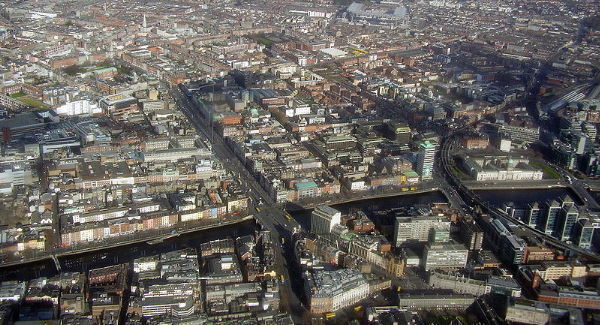
While those outside Dublin might bemoan their lot, in reality they should be grateful. Rising house prices are not a good thing. We should know this now. High residential costs are a bar to most economic activity, at least that which does not revolve around rent seeking (rent in an economic sense, not just property rent).
The peak in house prices in Dublin was earlier, by a few months, and higher, by about 10% than the peak nationwide excluding Dublin. This is typical of booms — one area moves ahead and pulls the others along. In the case of the property boom, buyers and investors forced out of the Dublin (and to a lesser extent Galway and Cork) markets, moved out to the suburbs and beyond, bidding up prices and further exacerbating the problem.
Dublin prices started showing a year-on-year increase in early 2013, and that has accelerated massively. House prices in the rest of the nation have started to show year on year rises since the beginning of this year. House prices nationally now stand at around €150k, in Dublin at around €80k.
What we do not wish to see, and do not need to see, is these prices following the Dublin path. Dublin prices have been rising by double digit figures for nearly a year now, and in fact have accelerated.
By contrast incomes have been more or less static, and will continue to be so. House price rises in the capital are in other words massively outstripping the capacity to service them. This at a low point in the interest rate cycle cannot end well
I have previously expressed concern at this. What is of most concern is that the government are seemingly insouciant. They have in fact dismissed concerns of a bubble, and have put in place mechanisms to stoke prices.
Dublin prices are rising for a combination of reasons. There is scarcity of supply. Banks will not lend to developers (wonder why) and developers who can build are suspected of hoarding. Zoned land is not available to build on due to lack of services, and services depend on land development levies. Social housing has been slashed to the bone forcing those in that target demographic into the private rented market. Mortgage credit continues to contract resulting in the paradox that as only the best borrowers will get credit they may overbid. Overall it is a mess, a gigantic morass of non-joined up thinking.
We may not be in a formal bubble in the Dublin region. Where a bubble would emerge would be if as supply eases the rate of price increase does not ease, or even fall back. Worse again would be if mortgage lending were to pick up, allowing the re-igniting of a credit led house price boom .
Government can and should do something about the danger of a bubble. Making planning permissions ‘use it quickly or lose it’ ; introducing a land value tax; removing the principle residence capital gains tax exemption; increasing the serviced land availability ; increasing density while forcing family friendly approaches from developers and local authorities; increasing spend on social and affordable housing, etc. None of the problems that are underlying the Dublin housing boom are insurmountable. What seems to be a problem is the paralysis that overtakes Irish governments of all stripes as they come into the second half of their tenure in office. With one eye on the election they will not take any action that may offend anyone (that counts). This ill serves us. The consequences, of a further generation of overmortgaged persons, would serve us worse.










