Draghi urged to tap bailout funds debt
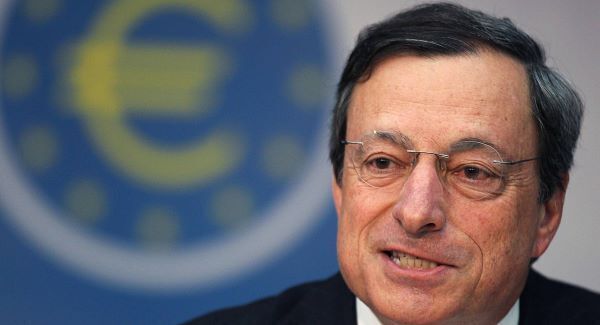
That’s the analysis of Guntram Wolff, director of the Bruegel institute in Brussels, who is a frequent contributor to closed-door meetings of eurozone finance ministers. He proposes that the ECB president tap a €490bn pool of debt issued by agencies that include the region’s two bailout funds.
ECB officials faced with a stumbling economy and inflation stuck at less than half their goal have floated the idea of adding stimulus via asset purchases, akin to quantitative easing, only to be confronted with a shortage of suitable instruments. The complexity presented by 18 government debt markets means Draghi is instead priming investors for more limited action such as interest rate cuts for now.
Debt issued by the bailout funds represents “the only ‘European sovereign bonds,’ if you wish; they’d be European assets which have European quality, and therefore would be of low risk,” Wolff said in an interview in Berlin yesterday. “My feeling is that the ECB is still very shy. The easy thing will be to lower the deposit rate. We all know the effect of this is not very big.”
Bruegel is a European economics research institution established in 2005 and currently chaired by former ECB president Jean-Claude Trichet, according to its website. It is funded by a mix of private and public-sector subscriptions.
Eurozone figures yesterday showed gross domestic product expanded just 0.2% last quarter, half as much as economists predicted, with France unexpectedly stagnating and economies from Italy to the Netherlands shrinking. Inflation has been below 1% since October, compared with the ECB’s goal of just under 2%.
Draghi said last week that officials are “comfortable” with acting at their next monetary policy meeting, and ECB executive board member Yves Mersch said yesterday that policymakers are working on a broader range of instruments that “might even strike the most fertile imagination.”
Any measure is unlikely to resemble the QE programmes deployed by the US and UK, where central banks bought swathes of domestic public debt to boost prices, according to Wolff.


CONNECT WITH US TODAY



Be the first to know the latest news and updates