Asset managers next ‘too-big-to-fail headache’
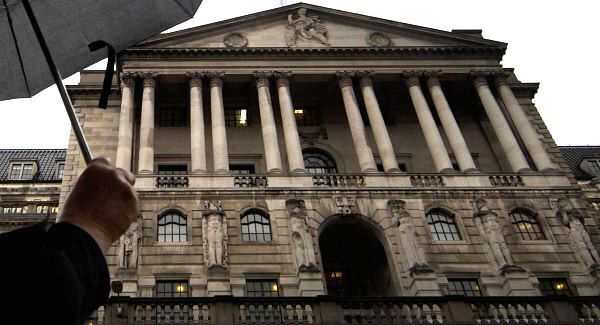
Are asset managers the next too-big-to-fail headache? The Bank of England’s Andy Haldane worries they could be too big. The risks sound similar to banking crises — yet need different answers.

Asset managers  next ‘too-big-to-fail headache’

Asset managers and banks are different beasts. Banks take credit risk on their balance sheet; managers leave risk with end investors. If management companies blow up, individual funds and investors may not be hurt. Even so, the way the industry is changing and growing creates risks.

Passive investing through indexes or exchange-traded funds is mushrooming, and managers are growing bigger and burrowing deeper into less liquid investments.


Haldane sees two key problems. One is size: the asset management sector, currently $87tn (€63tn), could reach $400tn globally by 2050. The bigger managers, funds or both get, the more an investor exodus or manager implosion could cause bank run-style dis-ruption. Asset manager blowups are usually one-off events — or may be isolated in single funds — but a future crisis may be systemic. The top 10 managers account for 30% of the sector, against 20% in banking.

Second, asset management can have pro-cyclical effects through investor herding. Like banks that lend too much, asset management flows drive up asset prices to irrational levels, and cause exaggerated falls on the way down. Industry and investor short-termism, such as benchmarking and passive investing, and regulatory and accounting changes, all exacerbate herding.

Unfortunately, Haldane is sceptical that this is just a matter of adding extra capital, as with banks. Making managers stronger may not protect their funds, or investors, or make markets safer.

His suggestion of tackling liquidity weaknesses looks practical. That could be done by encouraging fund structures that lock in investors’ capital. One option, not mentioned by Haldane, is to let central banks act as a market maker of last resort to cushion manager runs, as the Federal Reserve did indirectly in 2008 to help US money market mutual funds, though that brings its own moral hazard risks.

Harder still is tackling pro-cyclicality. One idea is simply to use monetary policy aggressively to tame animal spirits, by pushing up rates sooner. Haldane makes a case for the “first line” of defence, or macroprudential policy, yet he doesn’t specify how this would work.

It’s not all doom and gloom. If managers of assets can be forced or prodded to be less short-termist, they can make the economy more resilient to shocks.

When it comes to the too-big-to-fail discussion, there’s also the question of whether it’s the size of managers, individual funds, or a bit of both that presents systemic risks. Better for Haldane, other global regulators and the industry to think it through than to wait for an asset management crisis to find out.

The volume of assets managed by asset managers may reach $400tn globally by 2050 from $87tn in 2013, based on current levels of economic and population growth, according to a speech by Andrew Haldane, executive director at the Bank of England. Haldane said the asset management industry had fundamentally changed shape over the last decade and would get larger still. He added that the assets it manages were increasingly being allocated into illiquid assets or indexed strategies.

And the risks on these asset allocations were increasingly being borne by what he said were “perhaps trigger-happy” end-investors.

These trends raised the risk that manager failures could have systemic consequences, he said.

Reuters

More in this section

The Business Hub

Newsletter

News and analysis on business, money and jobs from Munster and beyond by our expert team of business writers.

Cookie Policy Privacy Policy Brand Safety FAQ Help Contact Us Terms and Conditions

© Examiner Echo Group Limited