Euro to stay strong until US and UK hike rates
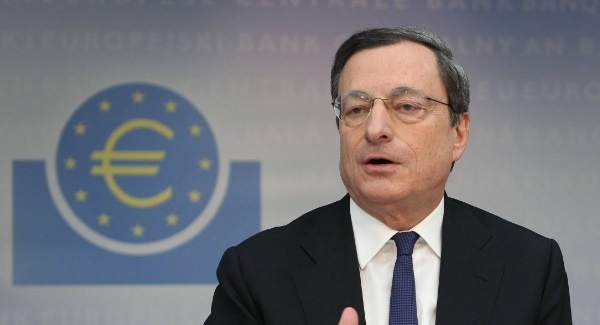
The ECB left interest rates unchanged at last week’s governing council meeting. In justifying the decision not to alter policy, ECB president, Mario Draghi, stated that the economy is developing in line with its expectations for a moderate recovery, together with a prolonged period of low inflation.

Euro to stay strong until US and UK hike rates

Indeed, president Draghi cited specific examples of the macro news being on the “positive side” since the council’s meeting in February, which confirmed that the economy is proceeding in line with the ECB’s previous assessment.

These examples included the composite PMI in February rising to its strongest level for two and a half years, a narrowing in the gap in consumer confidence levels between Germany and the periphery, signs of stabilisation in eurozone unemployment and a pick-up in GDP growth in the fourth quarter of last year.

There had been some speculation in the run-up to the meeting that the ECB might announce an end to the sterilisation of its SMP bond buying programme as a means of injecting additional liquidity into the monetary system.

President Draghi, though, stated the council did not observe any developments that would have justified this policy change. However, he did not rule out the suspension of sterilisation as one of the potential instruments that the ECB could use if conditions warranted it.

He repeated that the ECB would maintain an accommodative monetary policy stance for as long as necessary. The latest set of ECB staff quarterly economic forecasts showed the need for a continuing loose policy stance. They point to modest growth of 1.2%-1.8% for 2014-16 and continuing low inflation, where the HICP is expected to be still below the ECB’s 2% target at the end of 2016.

Overall, it would appear that ECB policy is on hold and could remain unchanged for a prolonged period. Any further loosening of policy seems unlikely unless the ECB projections on inflation and growth are in danger of being significantly undershot, or there is an unwarranted tightening of monetary conditions.

The euro made good gains in the immediate aftermath of the ECB’s decision to hold off on any new monetary stimulus, while also giving strong signals that policy is now on hold. The currency rose to its highest level in more than two years against the dollar, breaching the $1.39 barrier at one stage.

Meantime, the euro climbed to above 83p against sterling, having dropped below the 82p level in mid-February. It made good gains against the yen too, rising above ¥143 from around ¥139 a week ago. It is now well above the ¥136.50 low reached in early February.

The gains by the euro are all the more remarkable given that the current dispute between Russia and Ukraine represents the most dangerous political crisis facing Europe in 25 years. The crisis has had little impact on the single currency.

Furthermore, the eurozone remains the laggard amongst the world’s major economies in terms of its slow economic recovery. While monetary policy is now on hold, the ECB still retains an easing bias as set out in its forward guidance on interest rates staying at current or lower levels for an extended period of time.

We continue to doubt whether the euro’s strength will be sustained over the medium term, given that interest rates are likely to be hiked in the UK and US in 2015, well ahead of the eurozone. However, it seems that until these rate hikes come clearer into view, the euro may retain its strength.

We expect better US economic data in the months ahead, and continuing strong figures from the UK, which should give the forex markets food for thought.

— Oliver Mangan, Chief economist, AIB

More in this section

The Business Hub

Newsletter

News and analysis on business, money and jobs from Munster and beyond by our expert team of business writers.

Cookie Policy Privacy Policy Brand Safety FAQ Help Contact Us Terms and Conditions

© Examiner Echo Group Limited