Deflation risks easing
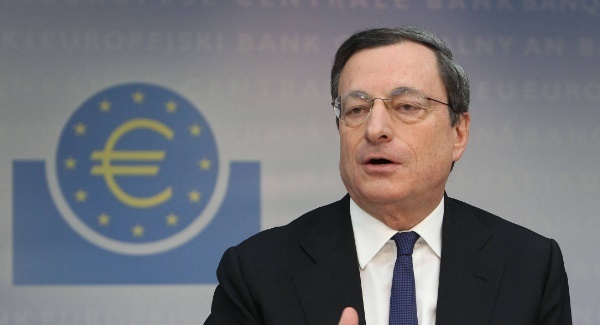
“The news that has come out since the last monetary policy meeting are, by and large, on the positive side,” he said in Frankfurt yesterday after the central bank kept its main interest rate at 0.25%. He also indicated that money markets are under control at the moment, lessening the need for emergency liquidity measures.
Draghi is facing down the threat of deflation in an economy still recovering from a debt crisis that threatened to rip it apart less than two years ago. New ECB forecasts underscore his view that the 18-nation bloc will escape a Japan-style period of falling prices, as momentum in the economy improves.
“Given that the central bank did not cut its key rate, it is likely to leave it on hold also in the coming months,” said Joerg Kraemer, chief economist at Commerzbank AG in Frankfurt. “A rate cut is off the table for now. Nevertheless, bouts of weak macro data or low monthly inflation figures can always lead to easing speculation in the context of forward guidance.”
Mr Draghi said “incoming information confirms that the moderate recovery of the euro area economy is proceeding in line with our previous assessment”, adding inflation should be around 1.7% by the final quarter of 2016, consistent with the ECB’s goal of keeping price gains below but close to 2%. That’s more than double the rate in February, when consumer prices rose 0.8%.
Officials have also stressed their determination to keep market rates low as part of their strategy to protect the economy. Yesterday, Draghi said policy makers didn’t see any need to fight “unwarranted tightening” in markets.
Governing Council members, including Germany’s Jens Weidmann, had supported releasing liquidity linked to the sterilisation of crisis-period bond purchases as part of the Securities Markets Program.
However, Draghi played down the suitability of such a move.