Short-term pain for banks ‘will be alleviated’
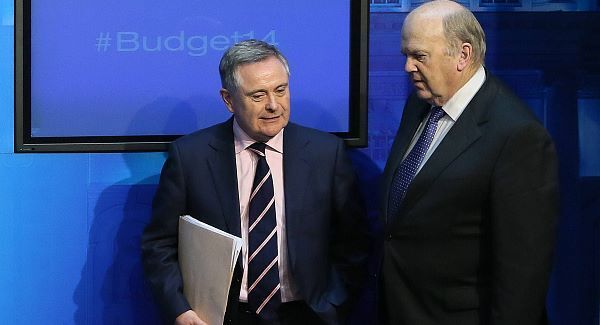
Finance Minister Michael Noonan announced in the budget that a bank levy would collect €150m each year over a three-year period from 2014.
Mr Noonan said banks had played a prominent role in the economic crisis and “it is about time that the banks helped out”.
The levy will be based on the amount of deposit interest retention tax (DIRT) collected by the banks. It will be applied to all banks with a retail presence in the country, including foreign-owned banks such as Ulster Bank, Danske Bank, and ACC Rabobank, as well as the three domestic banks.
“While all retail banks in Ireland will contribute, the ‘pillar’ banks, Bank of Ireland and AIB, will shoulder the majority of the burden as the largest players in the market,” said Investec chief economist Philip O’Sullivan. “A rough estimate suggests that Bank of Ireland will account for approximately one third of the levy, implying a liability of €50m [per annum].”
Goodbody Stockbrokers analyst Eamon Hughes estimates the bank levy will reduce Bank of Ireland’s net income forecast from €414m to €385m over the 2014 financial year and he expects AIB’s net loss to widen from €258m to €287m.
However, over the medium term, changes to the deferred tax asset rules will more than compensate for this short-term hit.
AIB and Bank of Ireland both incurred substantial losses when they transferred loans to Nama. Originally, the banks could only write off 50% of these deferred tax assets against future profits. Mr Noonan said the 50% cap has been lifted and the banks could write off 100% of deferred tax assets against future assets.
“Profits rebuilt strongly over the next few years at BoI, meaning the levy and tax savings are in balance by 2015 and 2016 and modestly positive beyond,” said Goodbody stockbroker analyst Eamon Hughes.
“At AIB, the balance is achieved slightly later. Notwithstanding the P&L account impact, the removal of the deferred tax asset restriction means the banks can utilise the deferred tax assets faster than originally envisaged, which could be worth an estimated 70bps of capital to BoI by 2018. While the levy grabs the headlines, the removal of the tax loss restriction is a counterbalance and will allow faster utilisation of deferred tax assets, which is helpful for capital ratios.”
Mr Noonan also announced the possible sale of the Government’s €1.8bn of preference shares in Bank of Ireland. If the shares are not redeemed by the end of March, there is a €450m step up in value.
However, the Government and Bank of Ireland are still waiting for a ruling from Brussels on whether the preference shares would still be deemed as core tier one equity capital if they were transferred to third party ownership.
Bank of Ireland that said it is looking at a range of options about what to do with the preference shares.
CONNECT WITH US TODAY



Be the first to know the latest news and updates











