Honohan: Strategic defaulting claims untrue
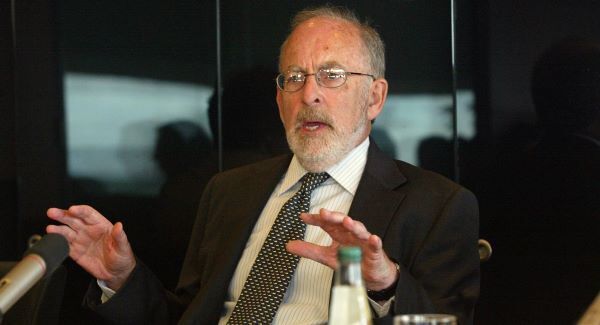
The term strategic defaulter was first used by AIB chief executive David Duffy, before the Oireachtas Finance Committee in August, who claimed that one in four of AIB’s mortgage arrears customers were strategic defaulters because when the bank probed individual borrowers’ circumstances they found that they could meet their mortgage payments but chose to prioritise other obligations.
“We have all heard the anecdotes about well-heeled borrowers flatly refusing to pay their mortgage instalments despite having plenty of money in a current account to do so, and still taking expensive holidays or buying new 132 reg cars.
“I don’t deny that there may be such people who feel that is possible to rationalise such behaviour. But does it really characterise the attitude of most arrears cases?” said Mr Honohan.
“I suspect that most such households are not simply refusing to pay on a ‘won’t pay: come-and-get- me-if-you-can’ strategic default basis.”
Mr Honohan, speaking at a Society of Actuaries in Ireland event, said most fell into the “wait and see” category, which can be broken down into four groups:
* Slow to face facts. People who are slow to accept or acknowledge their changing circumstances. They have a a sense of moral outrage directed at others: co-decision-makers, lenders, the wider political and economic system. Though they know their legal obligations will likely catch up with them sooner or later, they choose to wait-and-see.
* Management of multiple debts. People may choose to prioritise short-term debts — they may, for example, fear utilities being switched off.
* Repossession of one’s home can seem a remote risk in the face of more immediately pressing financial issues resulting again in wait and-see behaviour.
* Consumption-smoothing. It can appear to households that, for a time, accumulation of mortgage arrears is the cheapest form of borrowing, in the hope that the income shock might prove transitory. Given the passivity of Irish banks, such households can be tempted to postpone adjustments to their consumption pattern; to wait-and-see.
But, for good reasons, mortgage contracts do not contain “wait-and see” clauses.
“Wait-and-see erodes the remaining life-time resources of the household available to service long-term debt, it heightens aggregate economic uncertainty, and can have spillover effects on the behaviour of others, ultimately undermining the functioning of the economic and financial system,” said Mr Honohan.

CONNECT WITH US TODAY



Be the first to know the latest news and updates