Leader executives ‘paid far less’ than similar public sector roles
Ms Walsh was responding to recent media reports citing her own salary as being €116,000 per annum. She said the figure, which was issued by a government department, was wrong by about €23,000 in her case.
Salary figures were also released for two other executives, cited at €82,000. Ms Walsh said the figures were inaccurate, and were at least 23% too high in each case. She added that the range for a principal officer in the civil service is between €78,000 and €105,000.
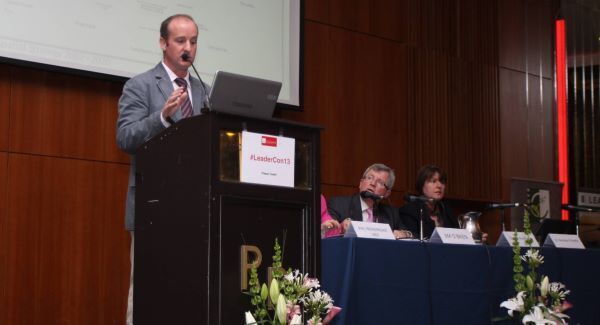
Ms Walsh was responding to questions at a rural development conference yesterday in the Rochestown Park Hotel, Cork. The event was run by the Irish Local Development Network (ILDN), and sponsored by South Ireland MEP Phil Prendergast.
“The salaries of all the CEOs that the department published are not accurate,” said Ms Walsh. “They are exaggerated.
“The salaries of all the CEOs were laid down by Pobal on behalf of the department. The salary scales are pitched at a level slightly under the principal officers in government departments, and they are well below comparable grades in the local authorities.”
Ms Walsh added that each Leader group has a cap on salaries and overheads; no more than 20% of its total budget over the life of a programme can be spent on salaries, heating, rent, rates, stationary, etc.
“In my eyes, this was a bit of disingenuous publicity that was pitched in order to set communities against the staff that they employed, but it hasn’t worked. No one here today said it was too much money.
“Leader companies are private companies. We are in receipt of public funds, but so too are a lot of the multinationals. You could not imagine any government department that provides funding to multinationals gathering information on their salaries.
“A man phoned me from one of my communities and told me to keep my head up high, that the action of giving this information out was scurrilous. He said that they should have looked at the rates per hour; given the long hours that we work, he felt we were worth every penny that we got.”
Yesterday’s ILDN conference was organised to express resistance among local development companies (LDCs) against Environment Minister Phil Hogan’s proposals to give county managers new controls over Leader funding distribution. This proposal centres on creating new social economic councils (SECs), in which LDCs would lose autonomy and be answerable directly to county managers.
The SEC proposal is causing rising rural unrest. More than 300 people gathered for the conference in Cork yesterday, including busloads from Meath and other counties. One of the speakers, Dr Brendan O’Keeffe of the Geography department at University of Limerick, said he had addressed more than 3,000 people at meetings in Clare in the past week or so.
Dr O’Keeffe has also just issued a position paper entitled ‘Stronger Local Democracy: Co-ordination, Development, Deliver and Participation’, produced with Prof David Douglas of the University of Guelph, Ontario, Canada.
Dr O’Keeffe’s report suggests that Ireland’s approach to rural enterprise would be better suited to a social economic commission. This model would see LDCs collaborate with local authorities, each taking on clearly defined roles, and see the governance of LDCs retained within local communities.
The EU has indicated that its future grant envelopes will include a 10% bonus for what it deems genuine devolution of local development finances to local communities. The ILDN argues that Minister Hogan’s SEC proposal could see Ireland lose around €100m in future payments.
“Everywhere that countries have tried devolution and decentralisation, it has worked,” said Dr O’Keeffe. “We need to be doing that at a local and at a regional level. Local authorities should be given powers to make state agencies talk to one another.
“The Indecon evaluation of the County Development Boards said these boards have created some synergies, but there is no mechanism to feed these efficiencies back up the chain to national level. You can get all the information you seek from LDCs, but you can’t access information from the Forfas database and other state agencies.”

CONNECT WITH US TODAY



Be the first to know the latest news and updates