Business body says crisis offers Europe opportunities
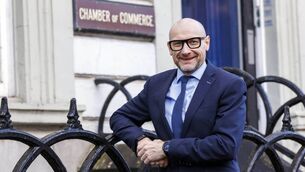
He took the helm at the Brussels-based organisation on Jan 1, as the group battles with change and the effects of the crisis.
He hopes his experiences in his home country of Austria will help ease the way.
Competitiveness is the key to emerging from the crisis but the EU has just a relatively short window in which to make the changes necessary, he believes.
Due to address Ibec’s CEO conference in Dublin tomorrow, which focuses on the European business model, the former chief economic adviser toAustria’s former chancellor Dr Wolfgang Schüssel said that people are at least willing to agree on the headlines.
“This was not the same before the crisis. But the time slot is not long, we have this year only in which to move things forward”, Mr Beyrer said.
While everyone has agreed for years that competitiveness is key, it has not been not high enough on the list in the past.
Every measure must be competitive and proofed from energy, competition, State aid, trade — all must be tested to ensure they will enhance competitiveness, he said.
“We have had many approaches that were not sustainable — which the crisis has illustrated. Now we have an opportunity to reverse the situation and come back to the key questions and tackle them,” Mr Beyrer said.
With the debate on energy and climate change policies to the fore again, he warns that it was not a good idea to allow energy policy to be driven only by climate change considerations.
There must be a balance between the three pillars of energy cost, security of supply, as well as climate change, he said. “We totally agree that the fight against climate change is as important, but not more important, than the other two,” he said.
The EU needs a real energy policy, he said, and the urgency of this has increased given the US shale gas revolution that has cut gas prices by three to four times while Europe’s increased by 28% between 2003 and 2011.
At the same time, Europe’s contribution to emissions is decreasing and will be just 4% of the total by 2030.
BusinessEurope has commissioned a study to analyse the issue, including impact on the environment and industry, and the cost and security of supply. It will produce a range of solutions in time for the EU leaders summit in May when they discuss energy.
They want to identify and foster the right technologies for a low carbon economy, as the US and China has done more effectively than the EU. Mr Beyrer believes the EU’s research fund should contribute.
Unit labour costs are another important element in competitiveness which rose faster than productivity, particularly in many of the countries that are now suffering the worst from the crisis.
Ireland prioritised regaining competitiveness and was rewarded with increased exports, he said.
Re-industrialisation is part of the key to recovery in the EU, but often the public is not aware of how much economies depend on industry.
A survey in his native Austria found that most people thought the country’s wealth came from tourism and agriculture, which in fact contributed less than 7% between them compared to 30% from industry. The ensuing debate helped awaken people to the facts, Mr Beyrer said.
Another lesson he believes people can learn from Austria is the area of youth employment which is among the lowest in the EU thanks to the country’s dual learning schemes and apprenticeships which help close the gap by giving experience and skills.
There are clear rules allowing the work experience period to be renewed just once to eliminate exploitation.
However, there is no one scheme that fits the conditions of every country, he warned, but sharing best practices and adapting will be a significant help.
CONNECT WITH US TODAY



Be the first to know the latest news and updates