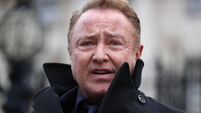
Tensions high ahead of Greek election
Tensions were high about how to manage the eurozone’s debt crisis — epitomised by Greece’s bankruptcy and need for international aid — and a rare fight broke out between Germany and France, normally the glue that keeps the bloc together.
German chancellor Angela Merkel criticised France’s economic performance, effectively taking a swipe at Socialist President François Hollande, who has called for more emphasis on economic growth and less on budget austerity.
The feeling of crisis was real. “We must do everything possible to prevent the eurozone from falling apart,” Dutch prime minister Mark Rutte said on television.
ECB President Mario Draghi, one of many policymakers gearing up for trouble after tomorrow’s vote in Greece, said his bank was ready to step in and fund any viable eurozone bank that gets in trouble.
He painted a picture of a deteriorating eurozone economy with no inflation danger — conditions for monetary easing.
“There are serious downside risks here,” Draghi told the annual ECB Watchers conference in Frankfurt, two days before the vote that could set Athens on a path out of the eurozone and stoke turmoil in financial markets.
“This risk has to do mostly with the heightened uncertainty.”
Japan’s top financial diplomat, Takehiko Nakao, warned that authorities in Tokyo would respond to unwelcome currency moves as appropriate, a clear threat of intervention if investors seeking safety push the yen too high.
It was an echo of strong pledges from the Swiss National Bank on Thursday that it would do what it takes to protect the franc from soaring. The Bank of England followed up on Thursday’s joint announcement with the government of a £100bn (€124.1bn) offer of loans to banks by saying it will start next week with a charge of just 0.75%.
Officials from the G20 nations, whose leaders are meeting in Mexico next week, say that numerous central banks are preparing to take steps to stabilise financial markets — if needed — by providing liquidity and prevent any credit squeeze.
European Council President Herman Van Rompuy convened a conference call yesterday afternoon with the leaders of Germany, France, Italy, and Britain, officially to discuss preparations for the G20 summit, expected to be dominated by the eurozone debt crisis.
Depending on the depth of any turmoil, an emergency meeting of ministers from the Group of Seven developed nations could be held on Monday or Tuesday during the summit in Los Cabos, Mexico.
The focal point for all is tomorrow’s repeat general election in Greece, a knife-edge race that could be won by parties vowing to tear up the harsh economic terms that the EU and IMF imposed as conditions of a bailout for the near-bankrupt state.
Such an outcome could drive Greece into default and possibly out of the eurozone, a prospect that could undermine faith in the currency bloc and add to pressure on the finances of bigger economies such as Italy and Spain.
CONNECT WITH US TODAY



Be the first to know the latest news and updates