Solving airline pension deficit ‘key’
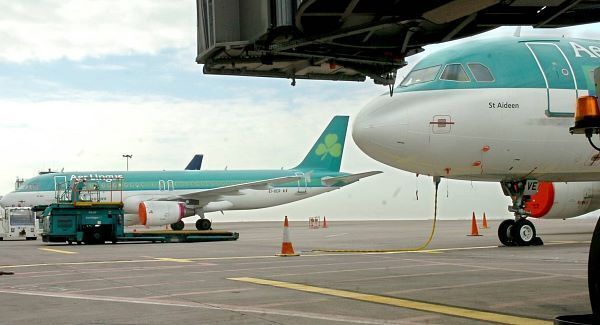
Aer Lingus’ share price opened this year around the €1.07 mark, but is now down at between 64c and 65c. In a detailed report on the airline’s short-term prospects, Merrion said that a relatively swift resolution of the airline’s pension deficit issue could propel the company’s share price by as much as 72%, to €1.10 in the next 12 months.
“Solving the IASS [Irish Aviation Superannuation Scheme] pension deficit is the key issue for Aer Lingus and could trigger a re-rating if successful. From speaking to management, trade unions and actuaries, we consider that Aer Lingus has a strong legal position but some form of burden-sharing may be necessary to avoid costly industrial action,” says Merrion analyst, Gerard Moore.
The Aer Lingus board is hopeful of solving the deficit by the end of 2011, but is yet to open negotiations with unions.
Mr Moore, who still rates the airline’s stock as a ‘buy’ option, added: “Aer Lingus employees have already accepted wage cuts of 10%. Accepting a large pension cut or paying in more contributions on top of this would be unpalatable for many. Industrial action such as work-to-rule or strikes, possibly co-ordinated with DAA employees, would hit Aer Lingus and Ryanair. We estimate a month-long strike would cost Aer Lingus around €30m. However, if members don’t compromise, the IASS could be wound up. Pensioners would then be prioritised and active employees could see their benefits halved.”
Aer Lingus’ pension scheme is quite convoluted — being a multi-employer scheme (including Aer Lingus, the Dublin Airport Authority/DAA and, to a lesser extent, SR Technics) and being a defined benefit scheme, classified as a defined contribution scheme. While union threats of industrial action are expected, all-out strike action is not anticipated as all parties require a swift-enough solution.
Mr Moore said: “Aer Lingus and the DAA will need to find a solution that satisfied their owners; namely Ryanair, the state and the market. The trade unions will need to find a solution that satisfies the members of the scheme. The trustees of the scheme will co-ordinate this process and ultimately present a solution for the Pension Board’s approval.”
He added that the Government — looking to sell its 25% stake — could be in a delicate position.
“It would achieve a better price [for its stake] if there was no deficit. An over-generous solution could also provide a dangerous precedent for semi-state bodies. The state is also currently looking to curb pension benefits for civil servants.
“On the other hand, industrial action at the airport would be deeply unpopular and the Government would likely come under pressure to help find a resolution,” he added.












