The Old Lady is down but not out
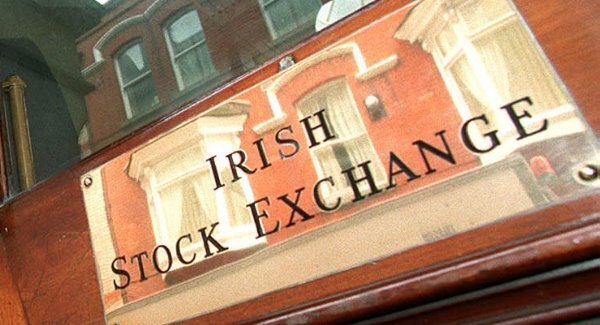
The Irish Stock Exchange, heavily influenced by outside forces like most elements of our economy, has seen some hard times of late. However, the stock exchange could become an integral part of our recovery, writes Kyran Fitzgerald

The Old Lady is down but not out

THE summer has been less than balmy. Equity markets, worldwide, have caught a chill. Is the Irish Stock Exchange (ISE) on the point of contracting pneumonia?

The portents appear not to be good.

Activity is down. Turnover is under pressure, down by almost 20% in the second quarter of the year. One by one, established Irish quoted companies have been disappearing from the main list.

Both Irish Life & Permanent (formerly Irish Life), and Greencore are departing after twenty years. AIB, once a pillar of the Exchange, has been demoted to the junior market, the ESM.

Other recent departures include McInerney Group and Boundary Capital. Everyone, it seems, is headed to the exits. It was all very different around the turn of the Millennium when the Tech boom was at its peak.

Six technology companies floated during a six month period, including Riverdeep, Conduit, Datalex and Parthus.

The Irish Stock Exchange had recently launched an exchange aimed at smaller companies called ITEQ designed for IPO (initial public offering) candidates without a track record.

By mid-2001, the tech bubble was bursting and the focus was shifting to the property market.

Stockbrokers continued to thrive, however, amid the euphoria of the roaring Noughties.

In 2008, confidence in stock markets and in the ISE received a hammering. Events at Anglo Irish Bank and in the banking sector generally dealt a hammer blow to confidence both at home and abroad.

Despite this, the ISE has remained profitable. It has reaped the rewards of a strategy of diversification that has made it a major player in the international funds business. It is the second largest centre behind Luxembourg when it comes to the listing of funds.

The stock exchange has endured long lean patches before; between 1973 and 1986, there were no new listings of significance, but then came a flurry led by Kerry Group.

These days, as in the wider economy, growth is externally driven.

The ISE claims to be a “global leader in the listing of specialist fund and debt securities.”

According to Aileen O’Donoghue, the ISE’s director of strategy, international services account for 80% of its revenues. Its success in this area can be traced back to the opening up of financial markets across Europe.

While the large stock exchanges across the globe focus on mega deals, and on attracting of large cap companies, the ISE has targeted funds (much as the IFSC has done, in the area of funds administration).

The emphasis has been on “bespoke products” and competitive pricing.

Over the past fifteen years, the funds business has developed and more recently has become a growing trade in debt instruments. Coca Cola, Porsche, Santander and Barclays all list securities with the ISE.

O’Donoghue acknowledges that this business has come under pressure with the onset of the financial crisis. The number of new issues has tumbled. “There has been quite a dip, but our market share — in debt — has gone up. We do have a lot of ambitions around listings.” She is coy about revealing these plans, however.

“This is the toughest environment we have seen in Ireland and globally for fifty to sixty years, yet we actually made a profit of €5m in 2010, €6m in 2009 — we expect a similar profit (to that in 2010) this year.”

The ISE employs 87 people and has 41 member firms, including 33 international organisations.

It is owned by Irish stockbrokers, ABN Amro, Bloxham, Campobell O’Connor, Dolmen, Goodbody, Davy and NCB (Goodbody was recently acquired by the Kerry based firm, Fexco)

Since 2000, it has been in a technology alliance with the Deutsche Borse, using its Xetra electronic trading technology.

In Aileen O’Donoghue’s view, a rise in the number of companies seeking a stock market listing will depend in a large part on a revival in the broader economy and the emergence of home grown firms of sufficient scale.

Since 2005, the Enterprise Securities Market, or ESM, has existed as a home grown alternative to the London AIM (alternative investment) market.

It has enjoyed mixed success. Its most recent entrant is the Continental Farmer Group which was admitted in June, raising €16.7m in the process.

Dublin’s stock market certainly lags behind Tel Aviv in Israel when it comes to acting as a funder for entrepreneurs in the growth phase. The Israel stock exchange, TASE, lists over six hundred companies. Elsewhere, stock exchanges have engaged in consolidation, notably in Scandinavia.

However, this is not a route the ISE plans to go down. Listings will remain the focus along hopefully, with a renewed drive to attract new entrants as Irish export success stories hopefully emerge

AT EU level, there is growing interest in the role of stock markets as a means of generating finance for growth companies given the ongoing blockages in the banking system.

The chief executive of the London Stock Exchange, Xavier Rolet, has called for steps to promote direct investment in SMEs through the equity markets and he has called for a shakeup in AIM.

As Rolet has noted, three quarter of funding for the corporate sector comes from the markets as opposed to bank lending: in Europe, just a quarter comes from the markets, leading to over reliance on broken-backed banks.

O’Donoghue agrees that the stock exchange, here, could play a greater role in the enterprise funding chain. She insists that the ESM is very competitive on pricing. The real clincher lies in the ability of local stockbrokers in Ireland to guarantee proper research coverage for small to medium sized stocks, coverage which they would not receive if they opted to float in London or New York.

According to Frank O’Dwyer, director of the Irish Association of Investment Managers, the ISE is more necessity than luxury. “A well developed economy needs a stock exchange.” He believes that the ESM has worked out “reasonably well’ and predicts a solid future for the Irish Stock Exchange, with growth in its funds business.

He agrees that the ability to secure research coverage from local brokers could well persuade entrepreneurs to opt for a home listing.

“We do need to find ways of ensuring that SMEs are properly covered by researchers on a pan European basis.”

Of course, memories of recent investor travails will not fade easily. Many retail investors, particularly those attracted to highly leveraged instruments, so called “contracts for difference”, have been badly burned.

Regulators took their eye off the ball. The fault lies with the Central Bank and with the financial regulator, which took over responsibility for the oversight of the stock exchange and member firms in 1995. The ISE retained a residual oversight role until 2005.

It must cope with the fallout of a crash without precedent in our lifetimes while also persuading businesses that a public flotation is worth the inevitable hassle in terms of added publicity, trans- parency and investor short-termism

Nevertheless, despite appearances to the contrary, it seems that the Old Lady of Anglesea Street will be hanging out her washing for a long time to come ...

Fact file:

- ISE: Founded in 1793

- CEO: Deirdre Somers (born in Cork)

- Markets operated: Main Securities Market; Enterprise Securities Market; Global Exchange Market (specialist debt market for professional investors)

- Equities market capitalisation: €50.9bn (June 30, 2011)

- Funds listed: 7,566

- Top companies by market value: CRH , Ryanair, Kerry Group

- Member firms: 41 (33 — international)

- Equity: Funds raised: €2.5bn (2011 — first half). €5.3bn (2010) €2.1bn (2009)

x

More in this section

The Business Hub

Newsletter

News and analysis on business, money and jobs from Munster and beyond by our expert team of business writers.

Cookie Policy Privacy Policy Brand Safety FAQ Help Contact Us Terms and Conditions

© Examiner Echo Group Limited










